Octopod update…..

The octopod is on its way to becoming a fully fledged octopus once I get his body dried out and somehow attach it to the tentacles.  Looking at images of these creatures I’ve got some work to do making bulging eyes before I attempt the joining of the two parts.  I’ve photographed him on the resist I used for the body to show the amount of shrinkage involved.  Having spent longer than usual on the felting and fulling its resulted in the thickest, toughest piece of felt I have made so far.

Wet felted vessel….

Yesterday I decided to make another vessel, along the lines of my yellow and grey one, but this time I wanted a simpler, more rounded finish.


I started by making several strips of green Merino, wet felted (very lightly) onto organza.

By laying a sheet of Lutradur over a piece of Vilene and applying paint, the paint soaked through and gave me two options to use as the body of the vessel.

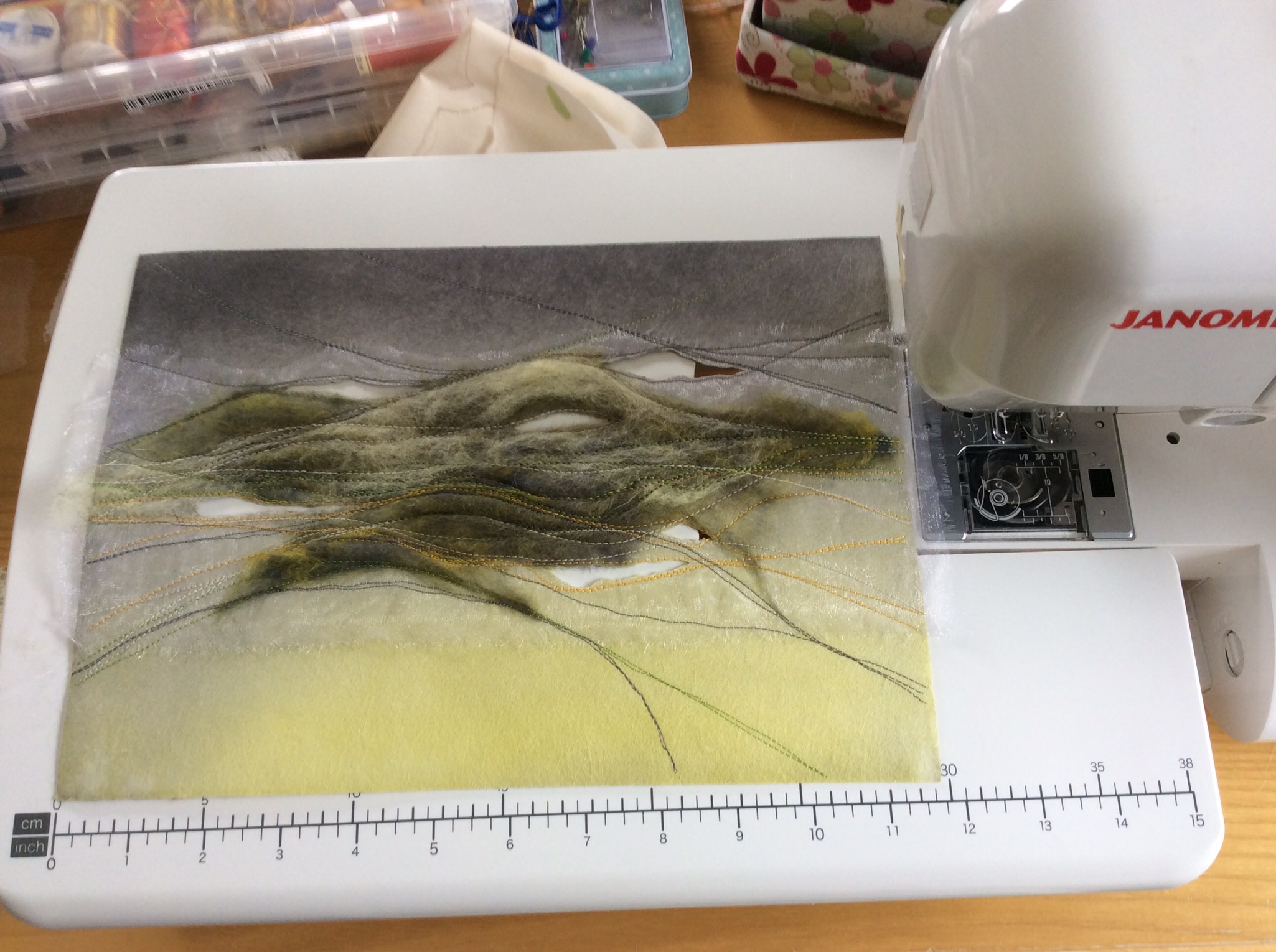
I chose to work with the Vilene and attached the felt and organza by machine before using a soldering iron to make cutouts.

This is the finished vessel.


Wet felting with a book resist….

A few weeks back I read Ruth’s review on the Felting and Fibre Studio about the fascinating wet felted items that members had created using a “book resist”.  I’d never heard this term before but when I read the Book Resist Tutorial by Teri it all made sense and I realised how a lot of the 3D items I had seen previously in exhibitions and on-line had been made.  Wet felting with a book resist opens up new possibilities allowing you to create seamless complex shapes in one piece.
I was particularly interested in the amazing octopod.  I am planning to make an explorers outfit for the Asylum Steam Punk Festival in August and a felted octopus could be one of my accessories…..maybe draped over a shoulder or clinging to the skirt!

Unfortunately I got so carried away with the felting I forgot to photograph the resist before covering it.  It had to be cut to remove it but this shows you roughly how it looked.  It was made from 4 sheets of A4 acetate, cut into 8 sections and sewn together in the centre as a “book”.

resist made from A4 acetate sheets

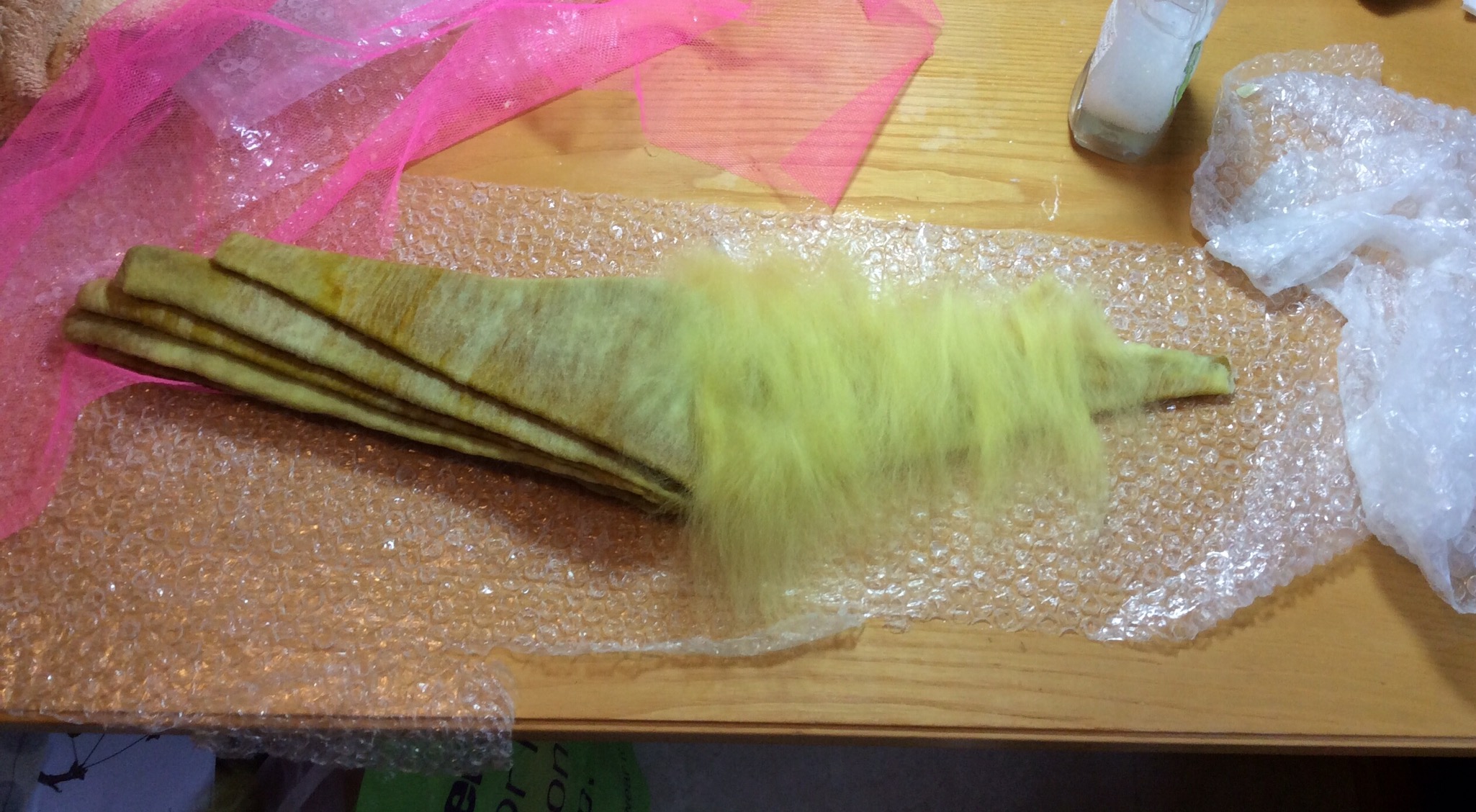
Each section was covered in turn with three layers of varying shades of yellow Merino and gently rubbed.

covering the resist with Merino

prior to removing the resist

resisit removed and rolling complete

After removing the resist the octopod was rolled, rubbed and thrown around to finish the felting process.  The tentacles are now done but I will add a wet felted body later in the week to take him from octopod to octopus.

the finished octopod waitng for a body

Wet Felting Using Resists……

I’ve just completed two pieces of work in response to the first quarter challenge from the Felt and Fibre Studio.  The challenge was to make a felted piece using resists in a way you wouldn’t normally use them.  If you check out the F&F site here you will see some amazing work which has been made with “book” resists and my first reaction was to have a go at one of those.  It then occurred to me that maybe I should go back to basics first and have a play at making craters and holes before getting too adventurous!

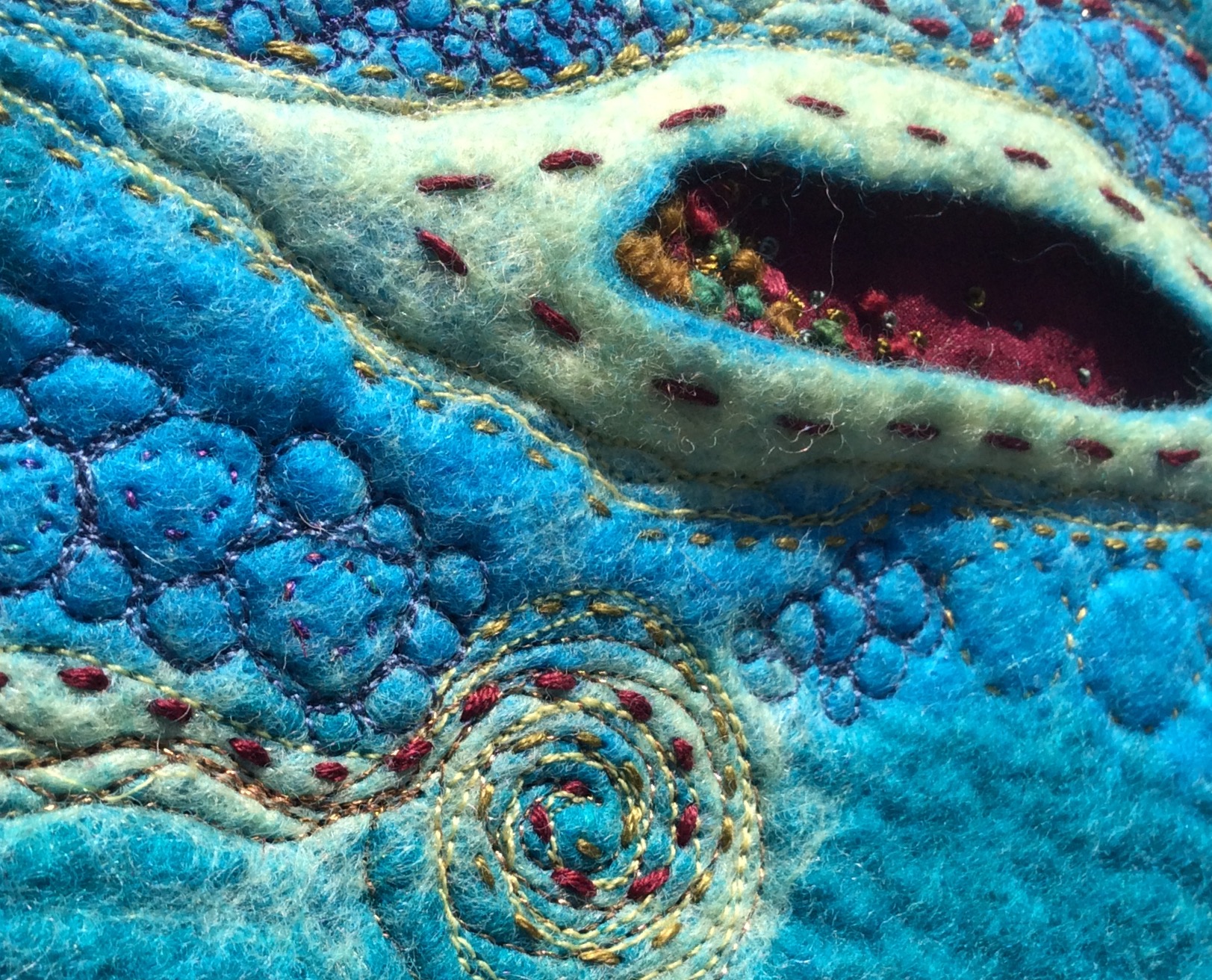
This was the first one I did, a flat wall hanging with machine and hand embroidered surface design.  The craters are filled with red satin fabric and hand embroidered knots.

Red spot resist piece

image

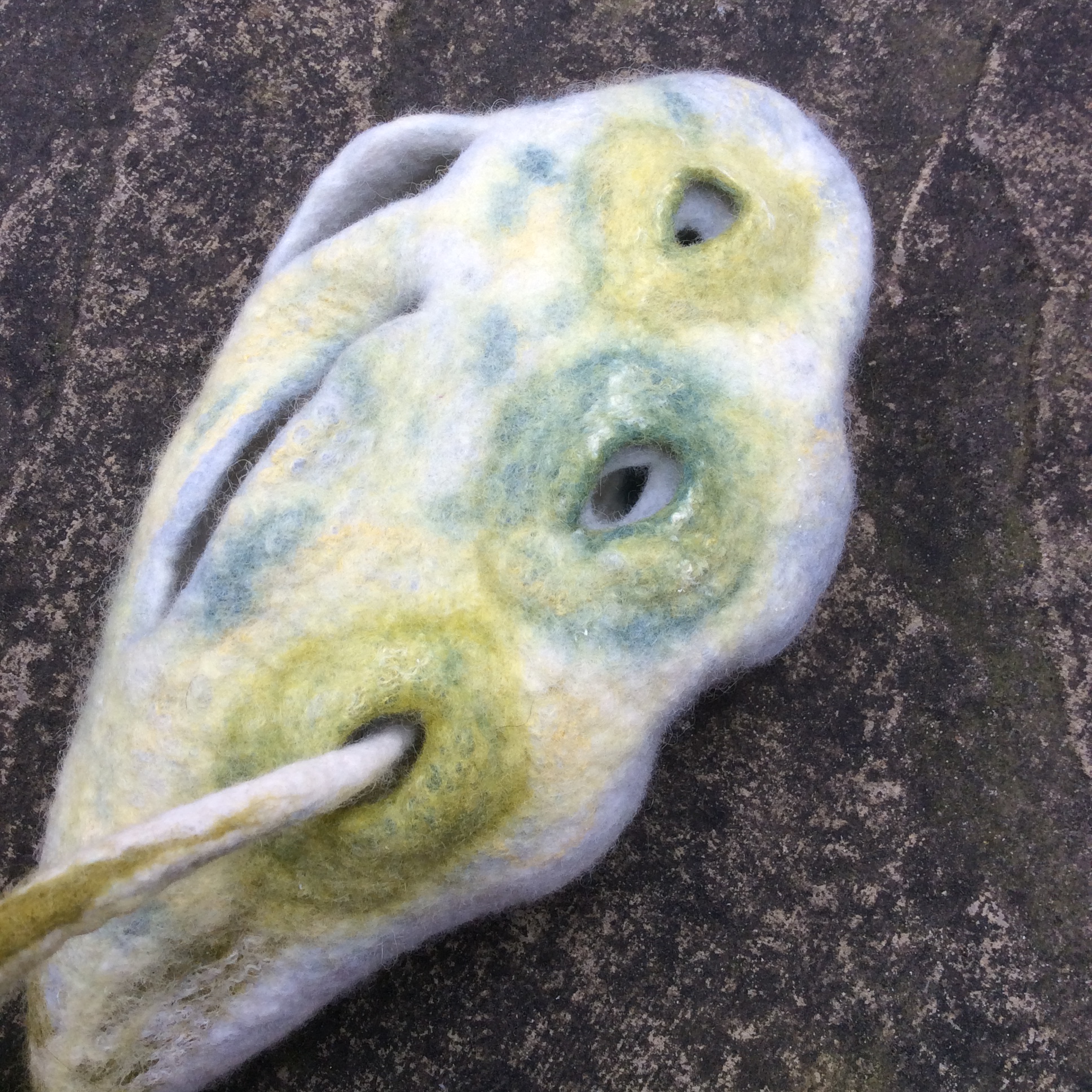
The second piece is a pod, very similar to the one I made with Jenny Pepper at the advanced pod workshop up in Hutton Buscle.

image

image

I am on a mission now to try to create an octopus using the book resist technique……….

Morsbags update…..

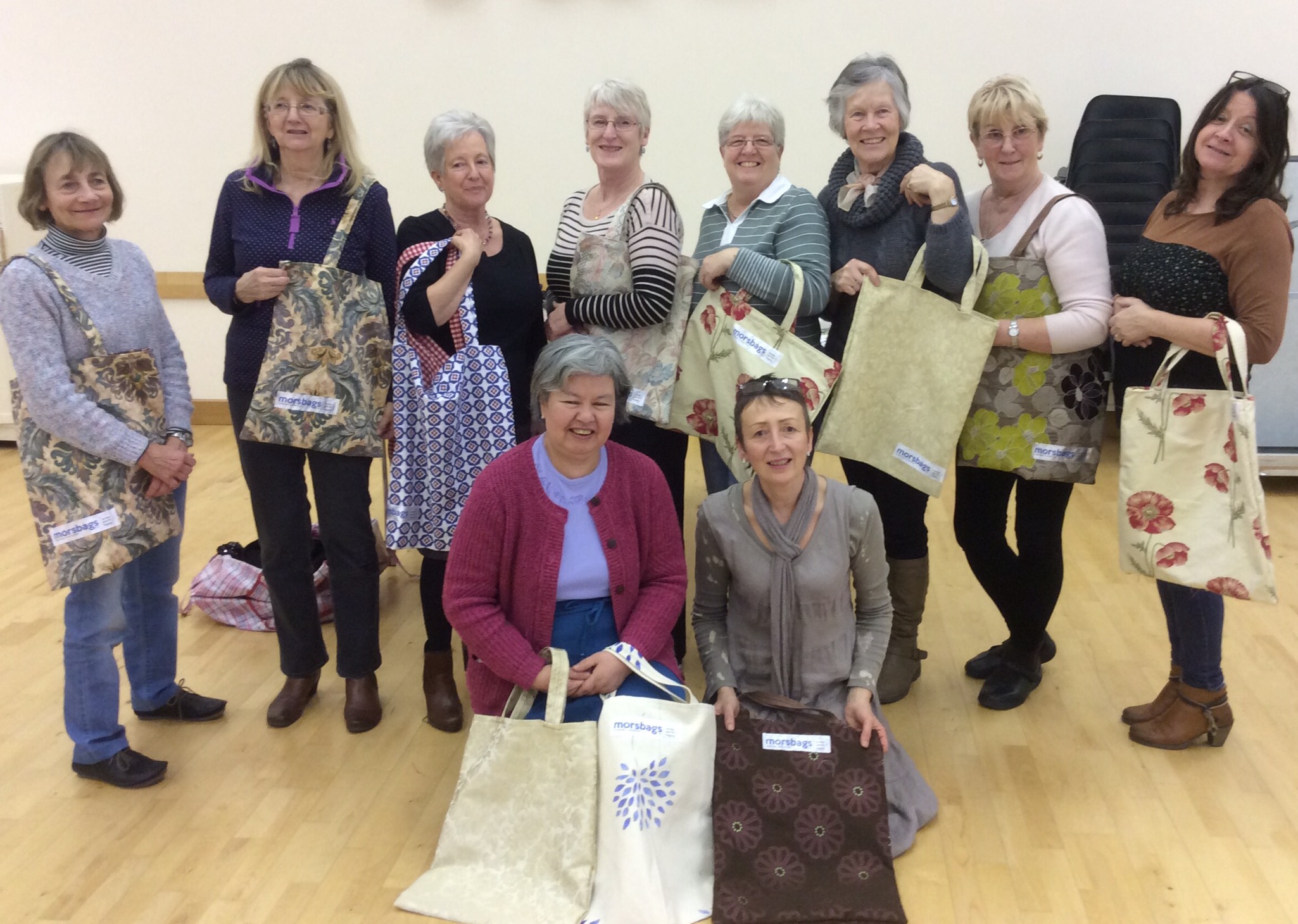
I mentioned the other week that Lincsinstitches has registered with the Morsbags website to make recycled fabric shopping bags.  Our local Age UK charity shop kindly donated a huge stack of fabric for us to use and Molly and I took this along to the February meeting at Sitting Ducks in Branston Booths.  Several of the ladies joined in making bags while others chose to take fabric home and will be handing their bags in at the March meeting.  So far we have 18 bags made and lots of fabric left over to make more.  If anyone is interested in ditching the plastic carrier bag and making their own Morsbag the labels and a very simple pattern are available on their website at www.morsbags.com


Wet Felting and Textural – The Fate of Constance

Wet felting and textural

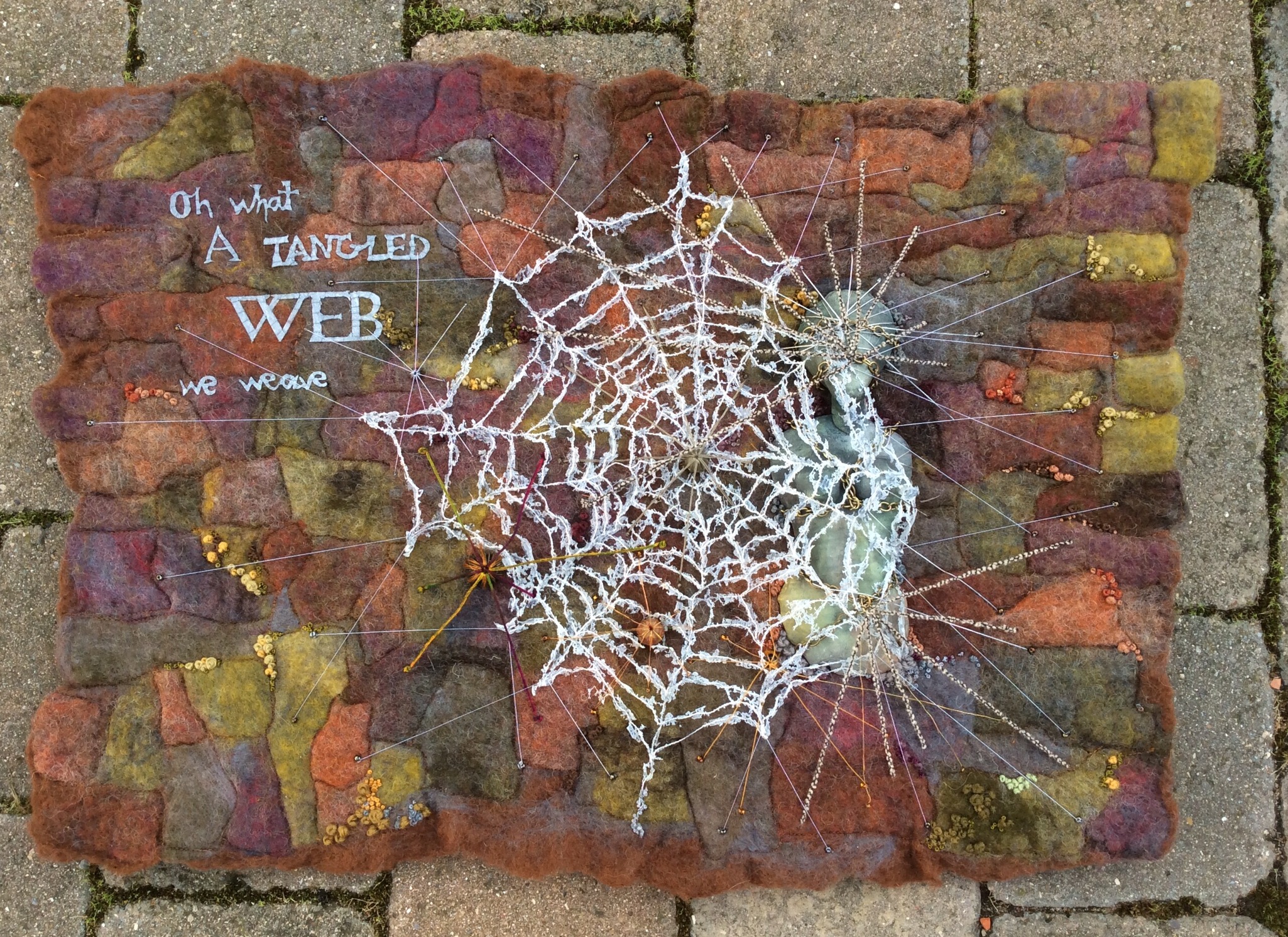
Our latest challenge at the Cranwell contemporary textile group has been to produce a piece of work based on a poem.  We could use any poem, any style and any techniques, but the finished piece had to be 20″ x 15″, quilted, and it had to include lettering in some form or other.

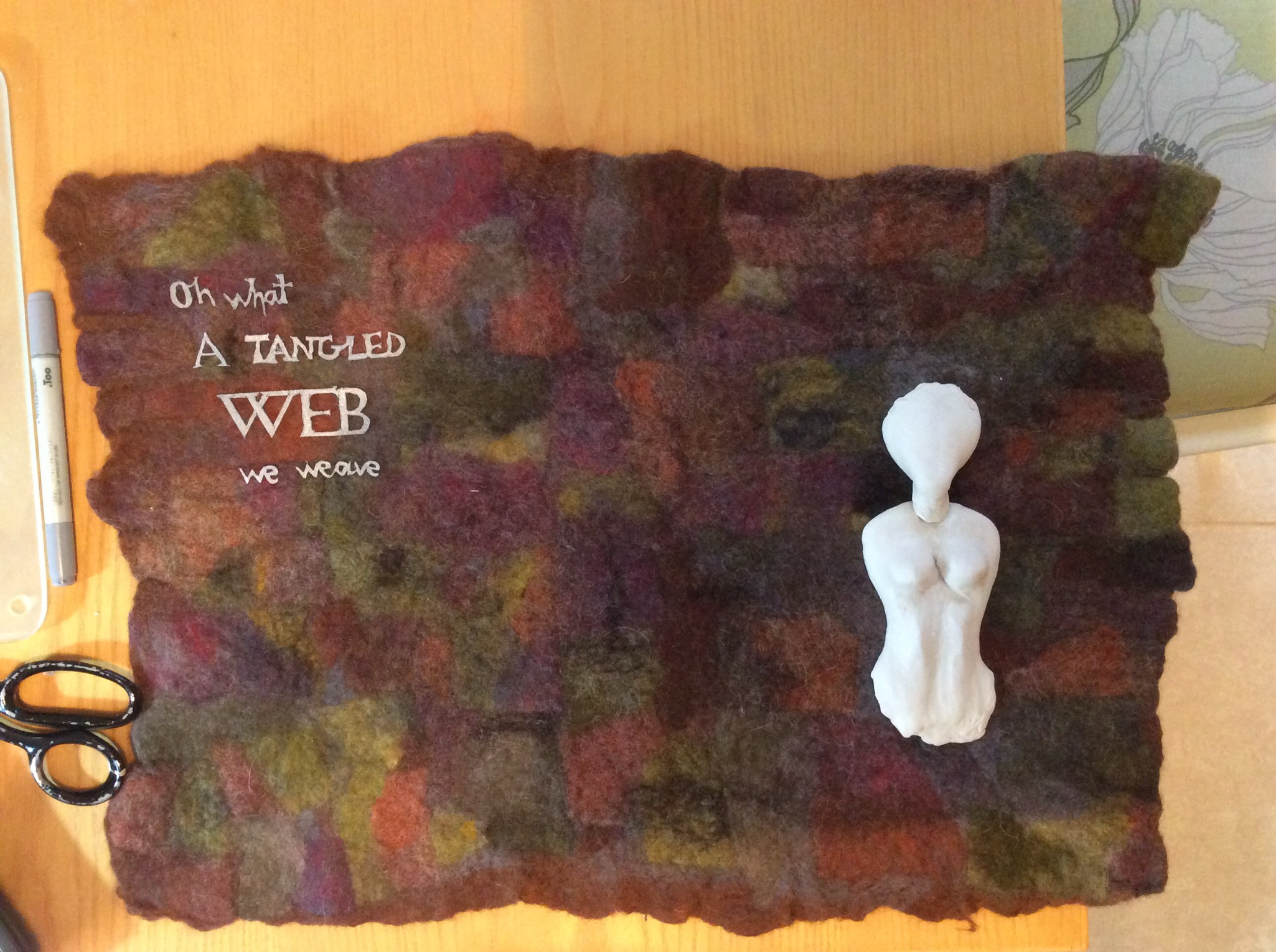
With such a “loose” brief the first thing I decided on was that, whatever poem I chose, I would use wet felting and my finished piece would be very textural. I sat down with my sketch book and thought through some of the odd lines I knew from well known poems. Nothing lept out to inspire me until the words “Oh what a tangled web we weave, when first we practise to deceive” came into my head. I didn’t know who the poet was or which poem it came from but a quick search on Google told me it was from an epic written in 1808 by Sir Walter Scott entitled Marmion: A Tale of Flodden Field.

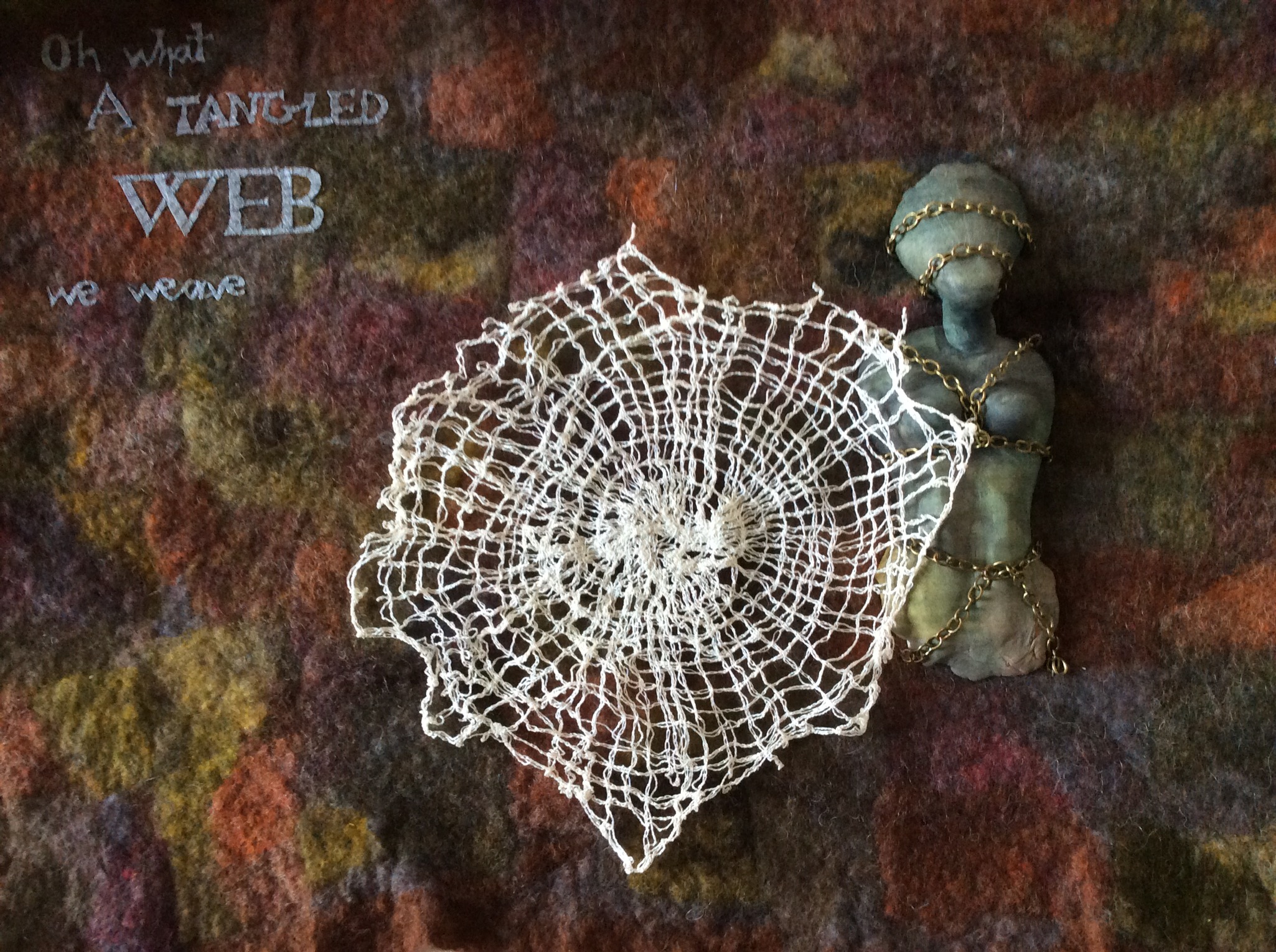
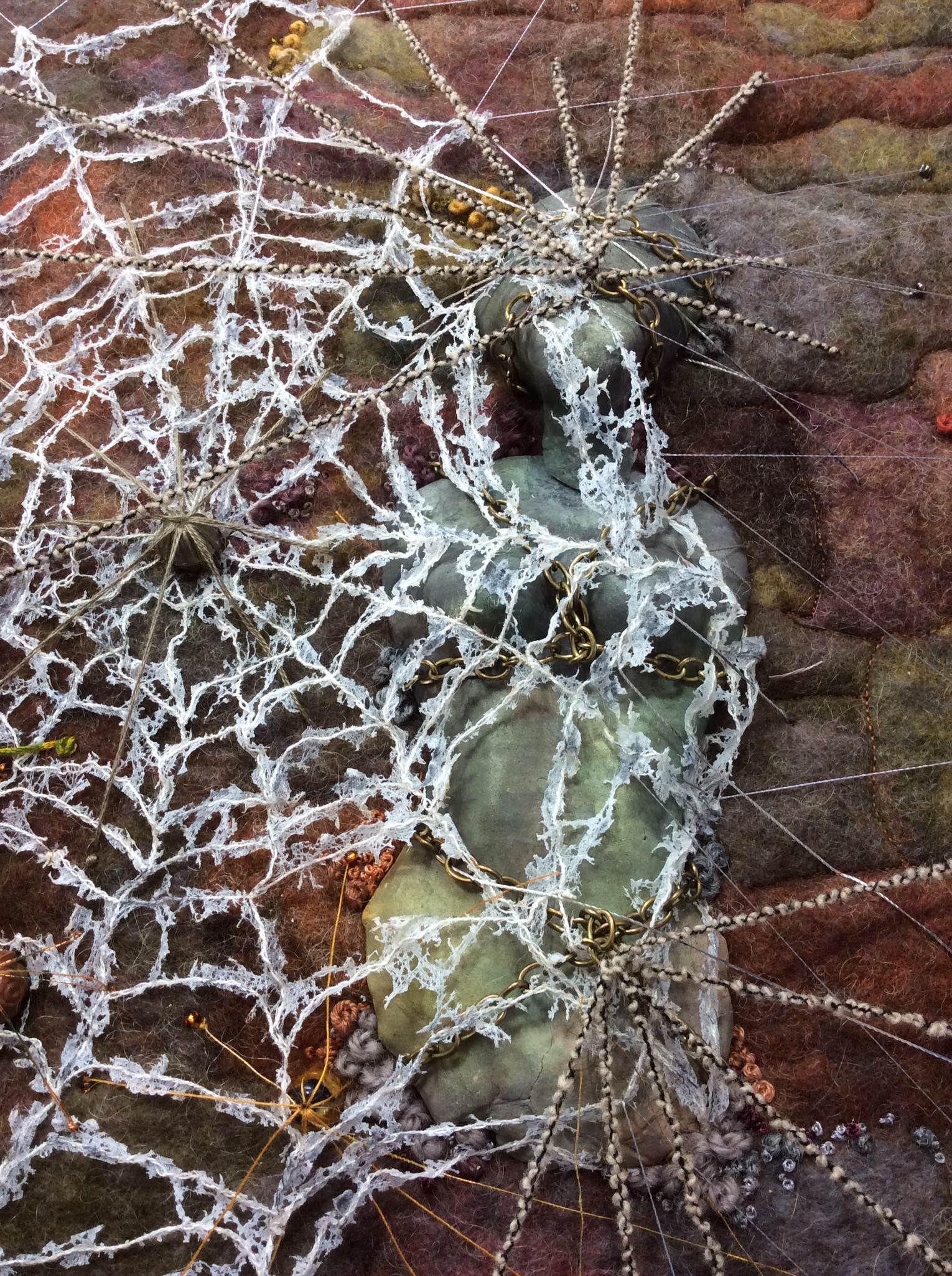
I know very little about poetry but this surely has to be one of the longest poems ever written! It took me longer to read the poem than it did to make the quilt! You can read a potted version of the plot on Wiki, but basically it’s a story in which good triumphs over evil. One of the characters is a “fallen” nun called Constance who is condemned to death for her misdeeds and walled up alive on Lindisfarne. It was the fate of Constance which inspired my design.

Using Merino wool, the background colours were laid out and wet felted to prefelt stage, then cut into smaller pieces, relaid and felted thoroughly.  This technique is one I particularly like and the one I used in memories of a Greek holiday.
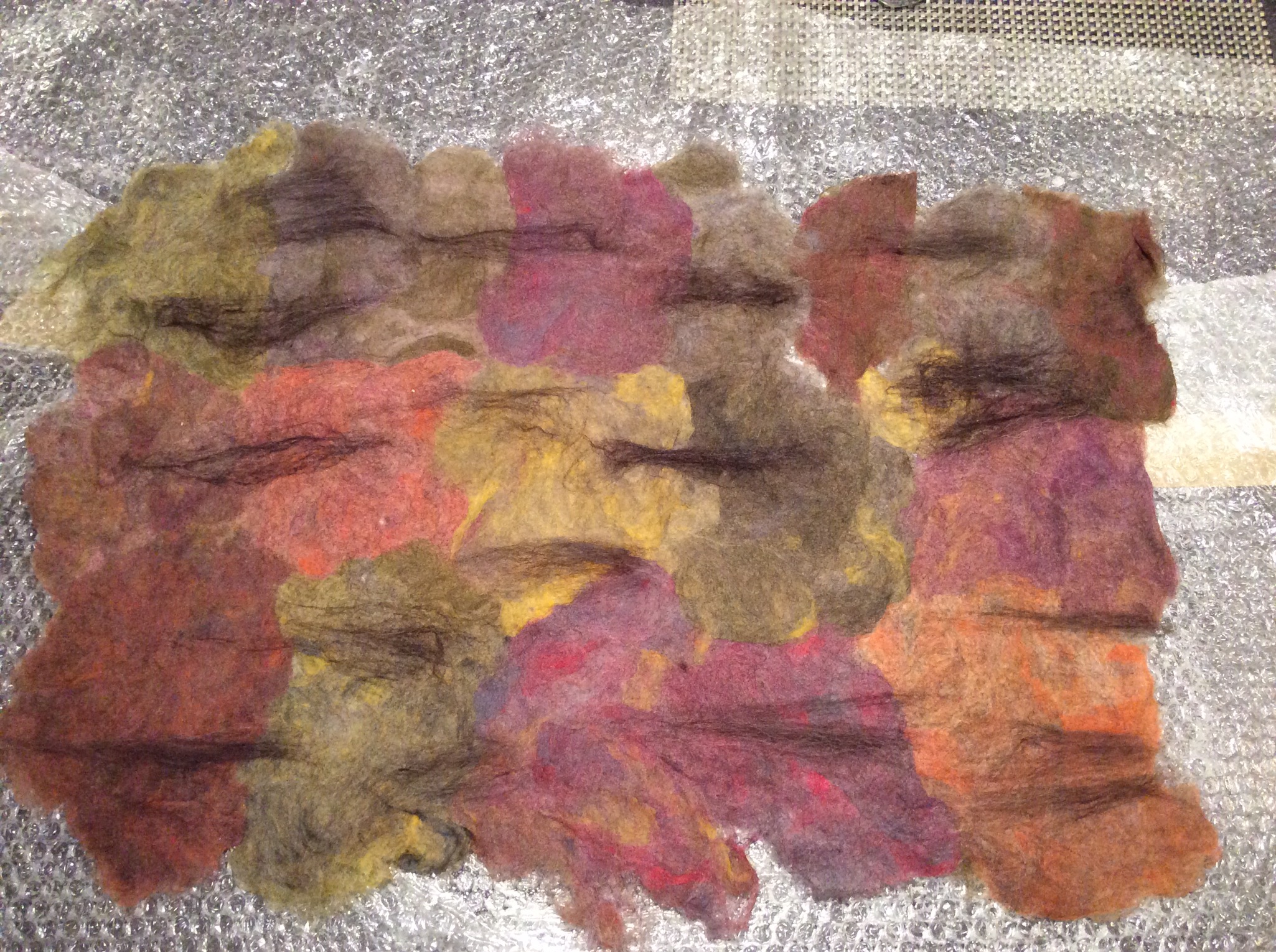
Carded Merino is wet felted for the background.

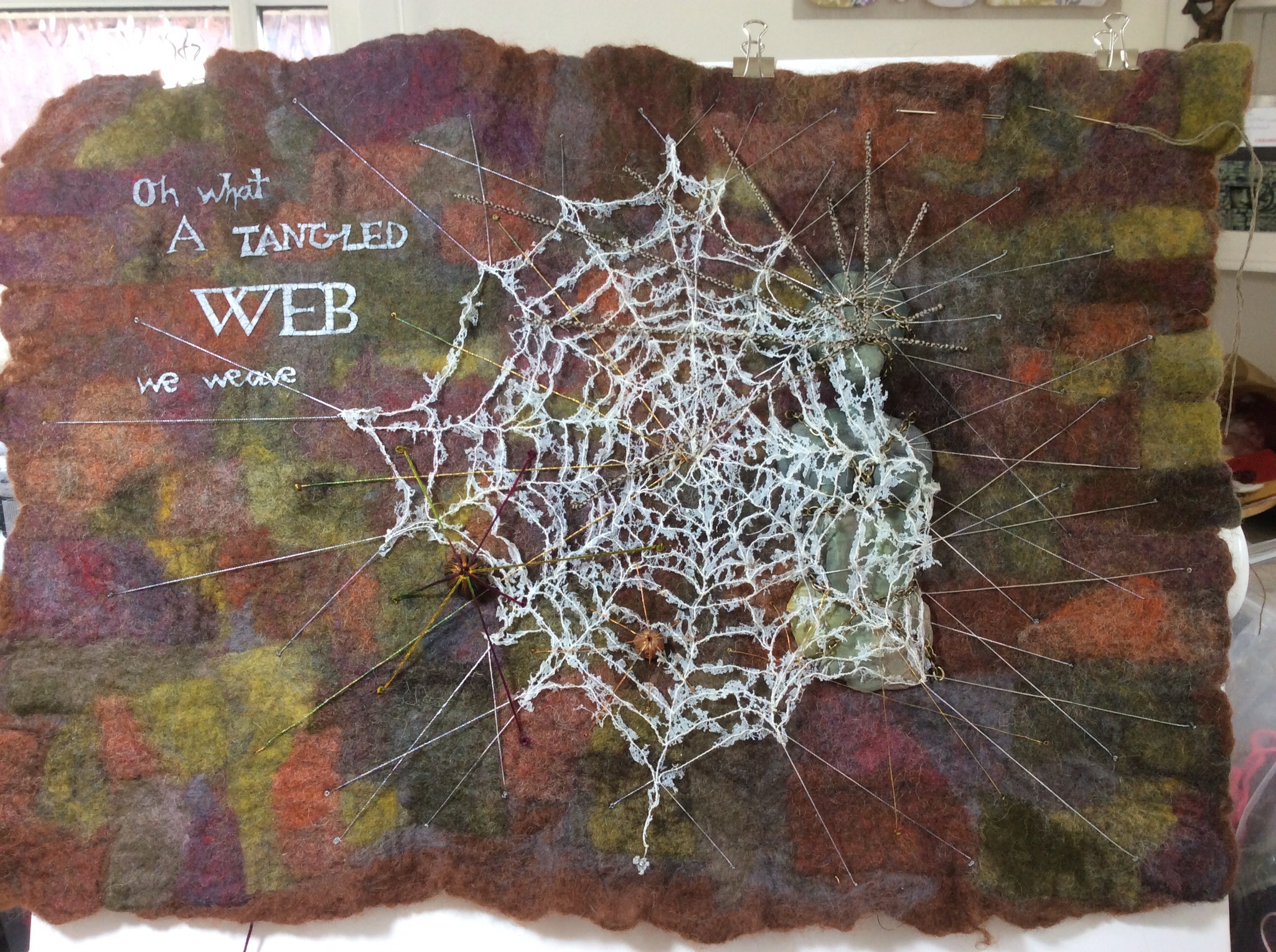
Constance’s head and torso were made from air dry clay and later painted with Inktense. The lettering was cut from Lutradur using a soldering iron and coloured with a permanent marker pen.  The first attempt at making a web was done with free machine embroidery on a soluable fabric and resulted in something that looked more like a fishermans net!   The second attempt was more successful using free machine stitching on Lutradur and burning it away with my heat gun. 
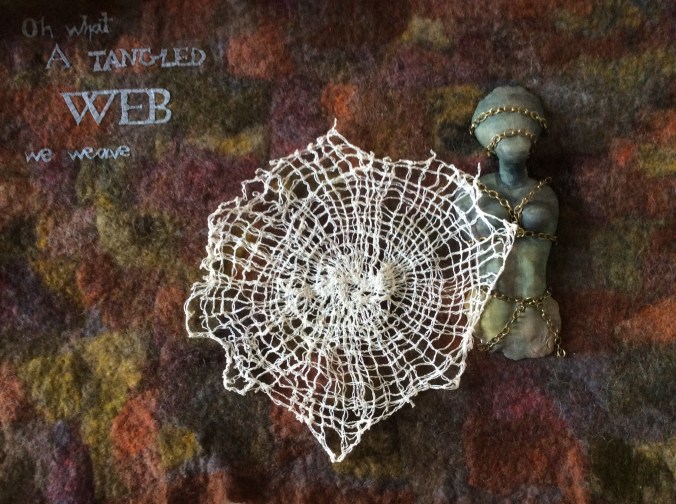
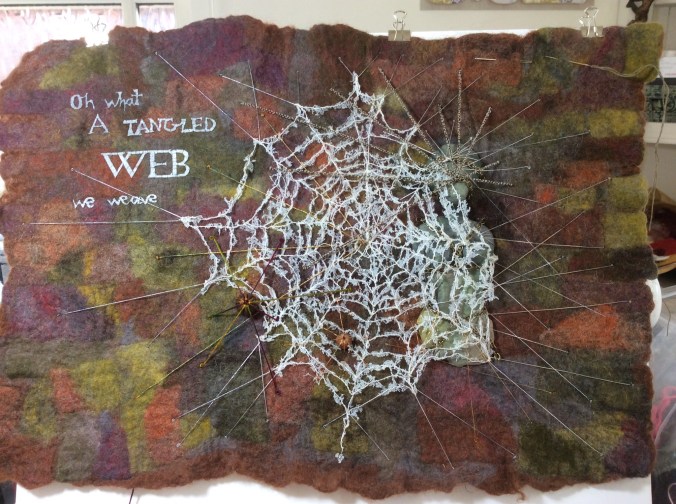
The finished quilt

The background has been free machine stitched and hand embroidered with Colonial Knots.

Detail from The Fate of Constance


Bedroom makeover…..

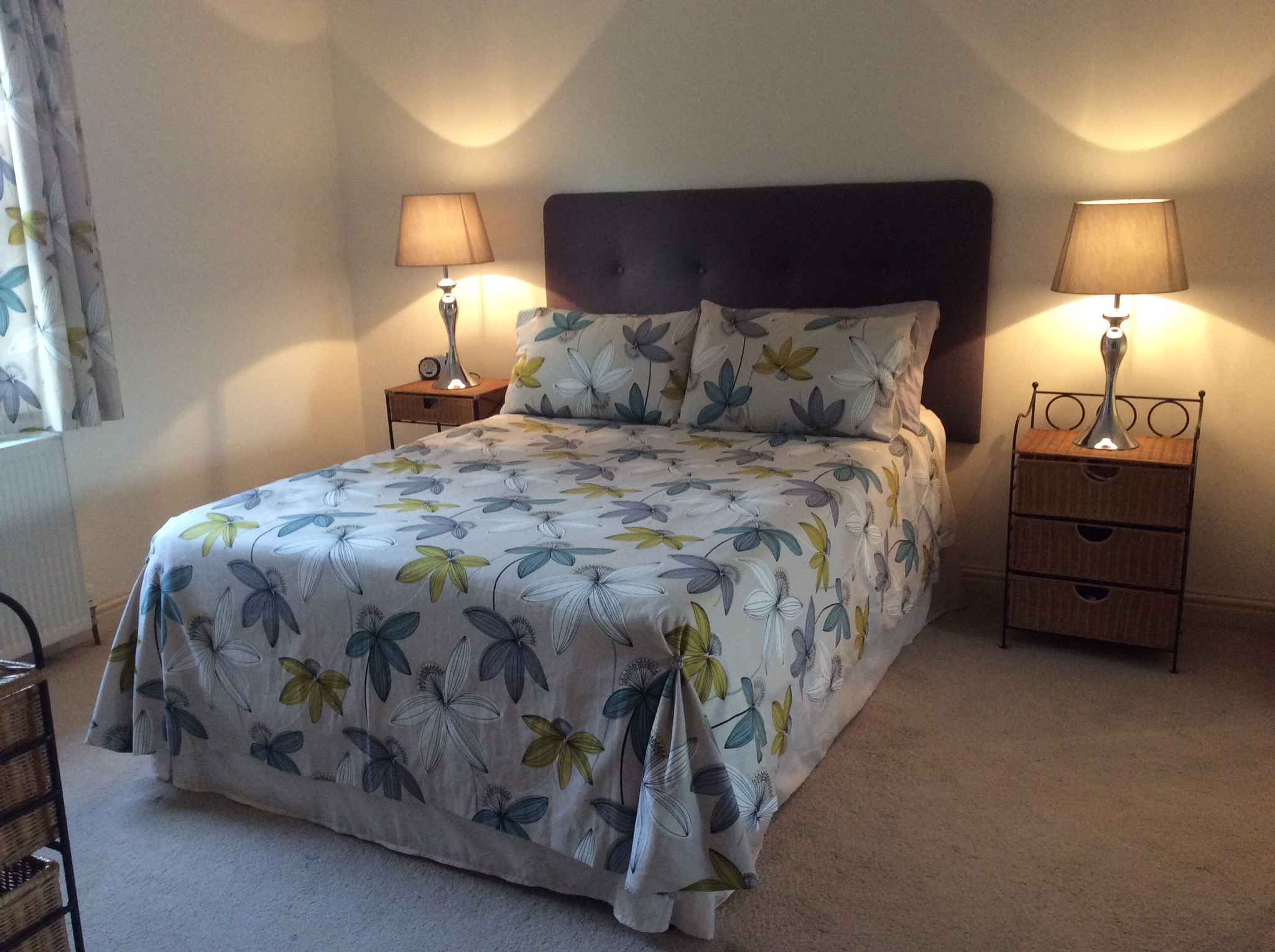
I’ve been on the lookout for months for a decent weight fabric, in a bold design, which I could use to make a bed throw with matching curtains and a headboard for our spare room.  Nothing leapt out at me so the project got put on the back burner.  Then, just before Christmas, we got a call from family in France saying they were coming over.  That was wonderful news and just the kick up the backside I needed to get the room sorted.  On my next trip to Dunelme Mill I spotted their lined Romolo ready made curtains and knew I had my fabric!  I worked out that a 90″ x 90″ pair would make a double size bedspread, pillow shams and a pair of curtains.  

I still couldn’t find the right fabric to make a headboard so ended up buying a heavy weight cream cotton with lots of texture and dyed it in the washing machine with Dylon “pewter grey”.   Mark cut the board out of 10mm wood.   I padded it with three layers of thick wadding before the grey fabric was stretched over, stapled in place and buttoned.  I’m really pleased with the result and it looks far more substantial than the headboards on sale in the shop where we bought the bed!

The next job is to rub down and paint the second hand furniture bought to replace the old cane bedside units…….maybe a job for next weekend.

Sociable guerrilla bagging…..


It is generally acknowledged that plastic bags are harmful to the environment but so many of us still rely on them when we are out shopping.  Well I’ve just discovered a fantastic initiative to flood the world with free, recycled, reusable and highly sustainable tote bags as an alternative to the plastic bag and I am definitely “in”.  To discover more about the effects of plastic bags on the environment and all about the “sociable gorilla bagging” that is  Morsbags take a look at their website a at http://www.morsbags.com

The site is packed with information on how to make your own (very quick and easy) Morsbag and encourages folk to get together and socialise while sewing.  You are asked to purchase the official Morsbag labels for any bags you make using their pattern but these are supplied at cost for only 5p per roll and 60p postage in the UK so it’s a no brainer!   There are “pods” of Morsbaggers all over the world from the UK to the US, from Canada to Chili and by the end of this evening there will be one in Horncastle!

My finished Summer Garden…..


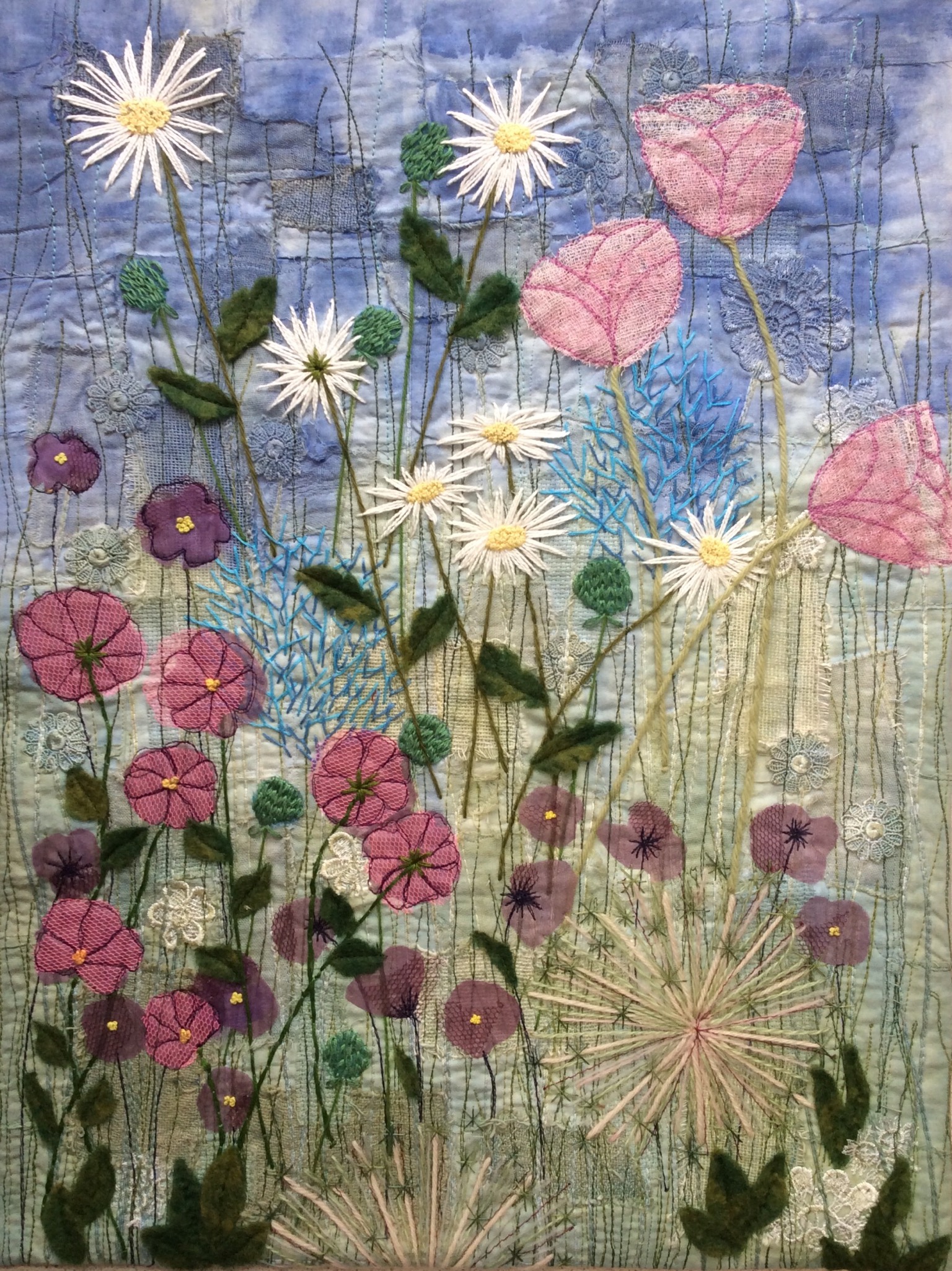
This is my finished “Summer Garden” piece which, you can see here, was started back in September.   The challenge was to create a 20″ x 15″ quilt using pieces of fabric no larger than 3″ in any direction.  To be true to the challenge I made a background consisting of forty eight small squares machined together and layered this with small scraps of fabric and stitch as demonstrated in the Wendy Dolan book Layer, Paint and Stitch.

Playing Catch-up…..

Once again I am back to playing catch up with projects and posts.  I’ve been feeling pretty down and lethargic over recent months, for reasons I won’t go into on here, but the year is fast coming to a close and it’s time to give myself a good shake up and get back to normal.

So the first project to feature is one I did as a result of being invited down to London to stay with my niece and her husband at the end of November.  They have recently moved house and I got a request to make a pair of Roman blinds for their new study…….what better excuse could there be for a week in London? Sophie chose a lightweight dress fabric for the blinds, which give me a little concern as I wasn’t sure how well they would hang.  It wasn’t the easiest fabric to work with but once they had been lined I needn’t have worried as they turned out fine and thankfully they are both delighted with them.

Roman blinds

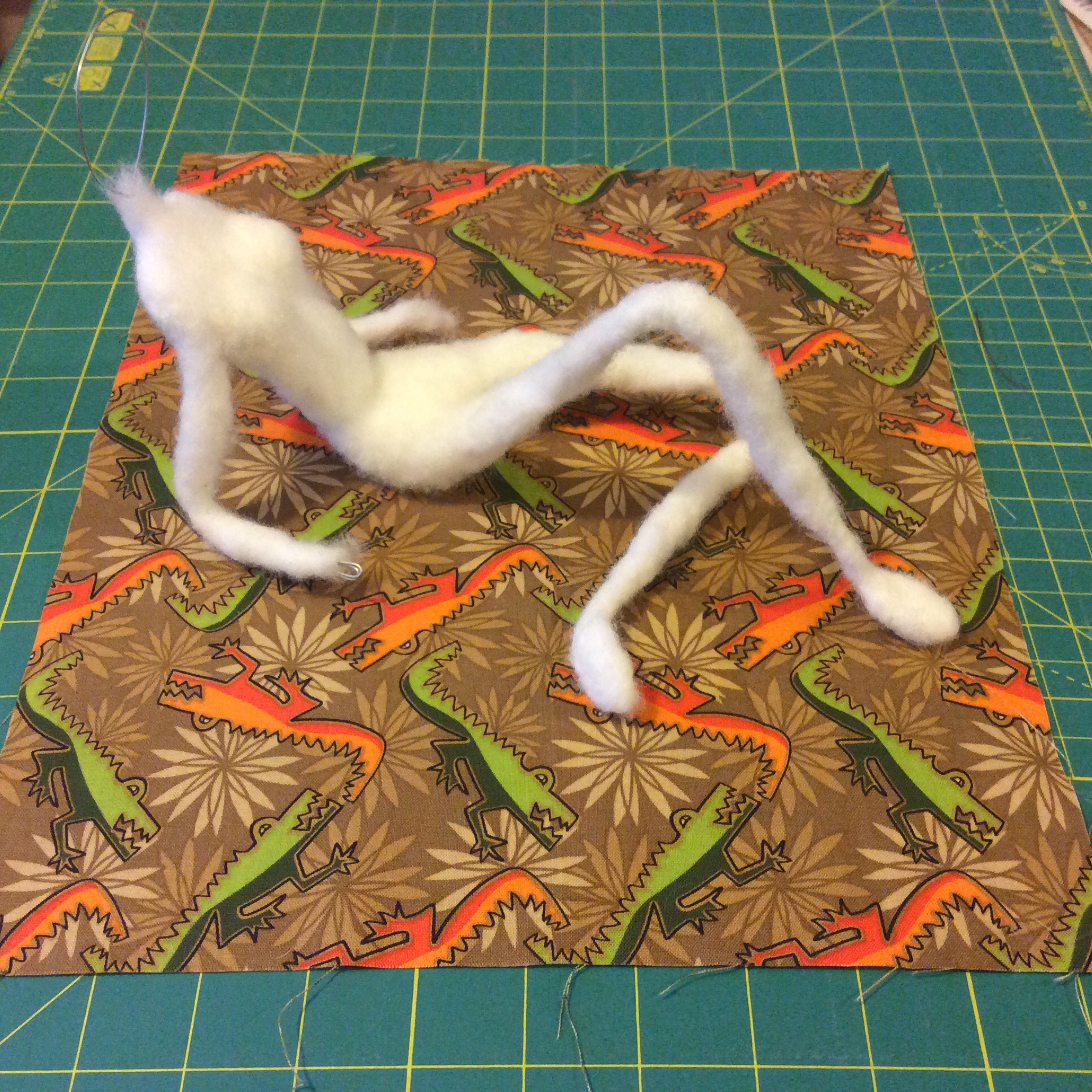
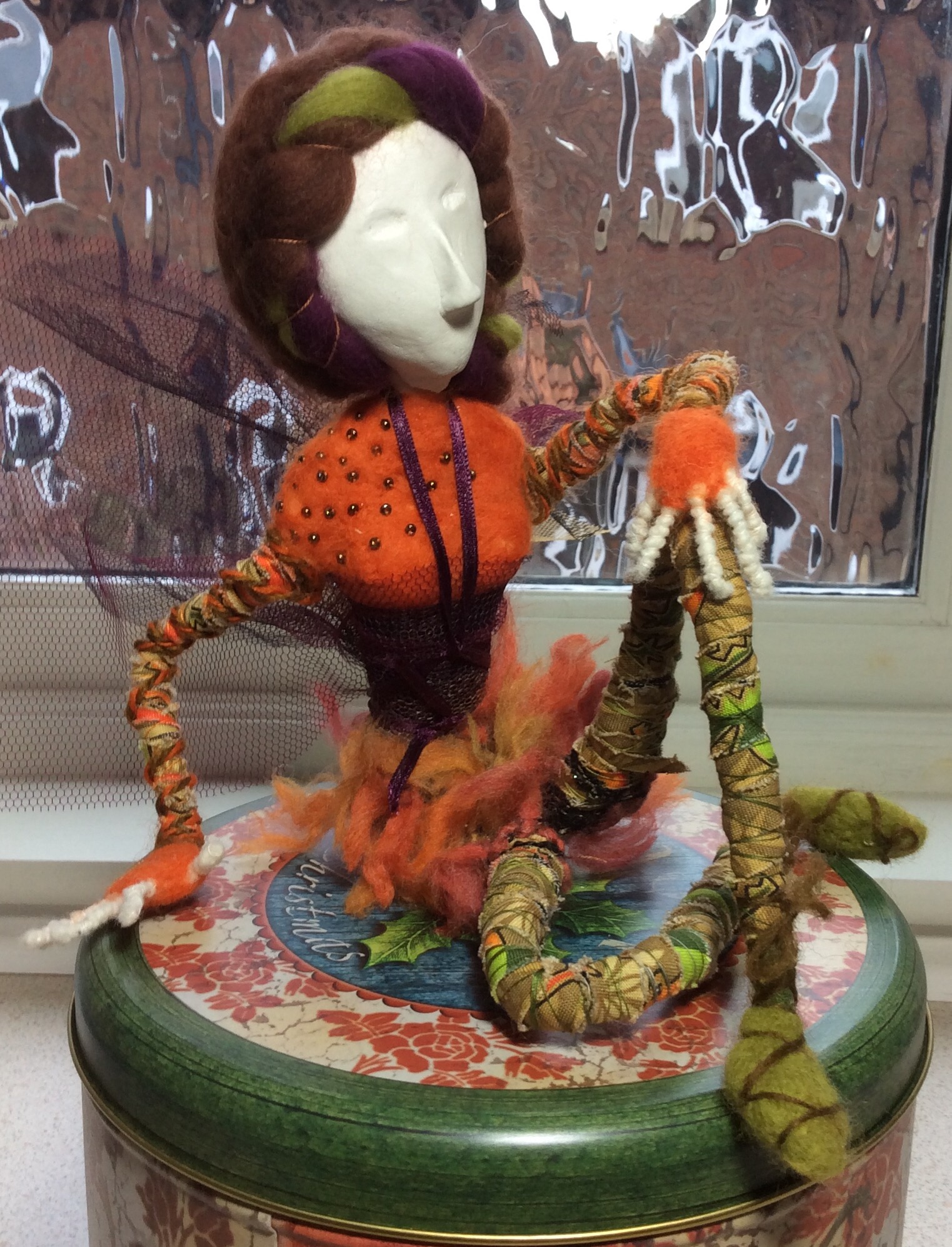
The second project was this years “ugly” fabric challenge with Sitting Ducks.  Each year, just before Christmas, one of our members supplies us all with an A4 size piece of fabric (which we probably would never have chosen to use ourselves) and we have to make something with it.  After a couple of weeks of wondering what to do with my green and orange crocodiles, and knowing that I wanted to completely disguise the pattern, I finally hit on an idea and Griselda was born.  She stands 17″ tall, has a wire frame with a needle felted body and fabric wrapped legs & arms.  I added three colours of netting as “wings” to make her into an Autumnal fairy.  I had intended to make her face from fabric but realised, the night before we were due to hand in our pieces, that if I was going to get her finished in time I needed a quicker solution for her face, hence the air dry clay.


Although no-one said anything out loud, once we had all placed our work on the table it dawned on me that mine was the odd one out as Sitting Ducks is actually a “quilting” group.  Hey, ho………I had fun making her anyway!