The Codification of Stitch….

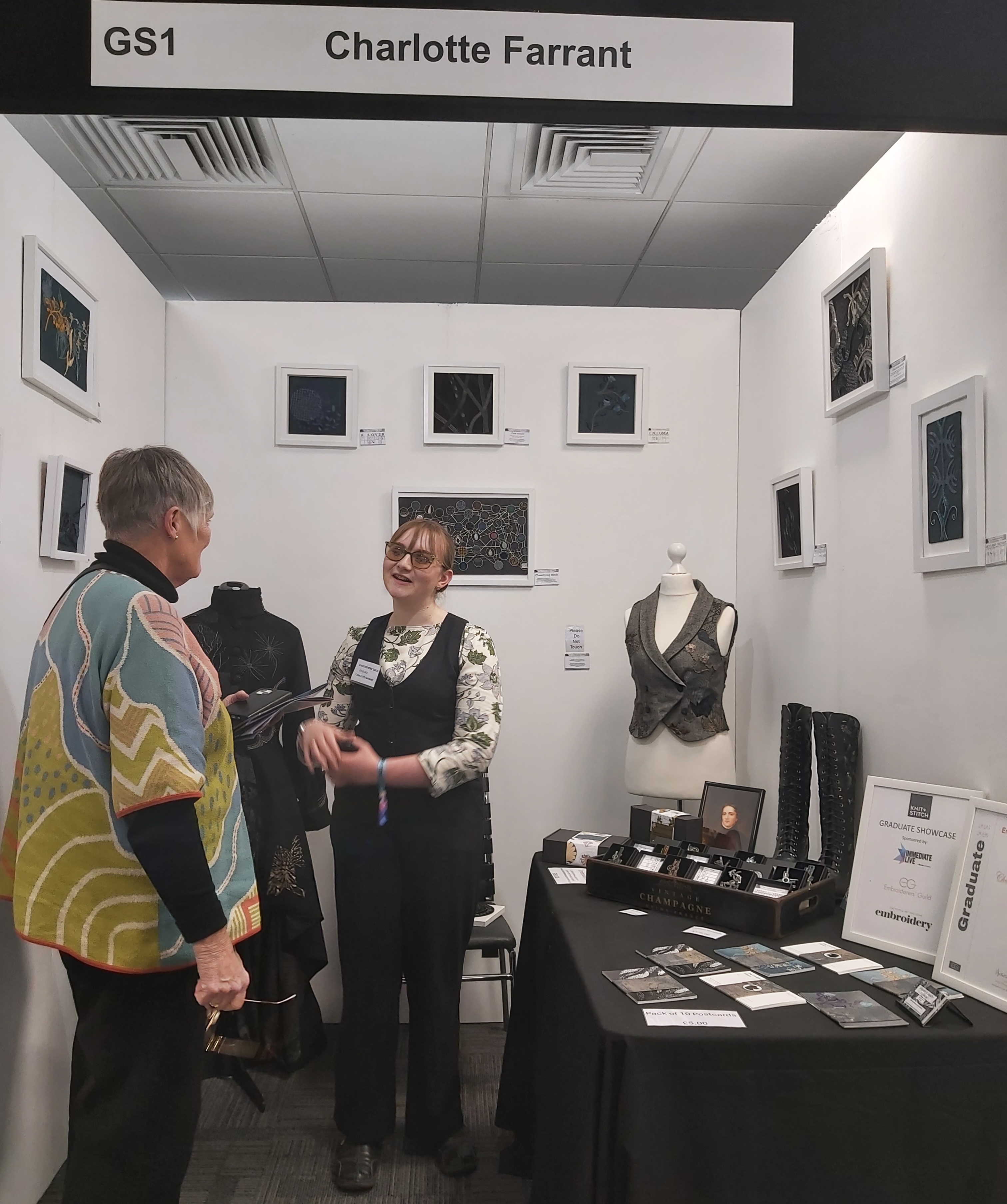
One of the UK’s major textile events, the Knitting and Stitching Show, is held annually in November in the Harrogate Convention Centre. It’s packed with “must have” products and showcases inspiring work by a wide variety of textile artists. Within the show there is a dedicated exhibition area called the Graduate Showcase which highlights outstanding textile art from recent UK BA undergraduate courses. This initiative, run in partnership with the Embroiderers’ Guild, provides a platform for emerging talent in the textile art world and it was here last November that I first saw the work of Charlotte Farrant.
Charlotte hadn’t originally planned a career in textile design, in fact growing up she had formed a fascination for mechanics and saw herself becoming a mechanical engineer. At some point Charlotte discovered she also had a love of embroidery and enrolled in the Royal School of Needlework, graduating with a first class degree. 

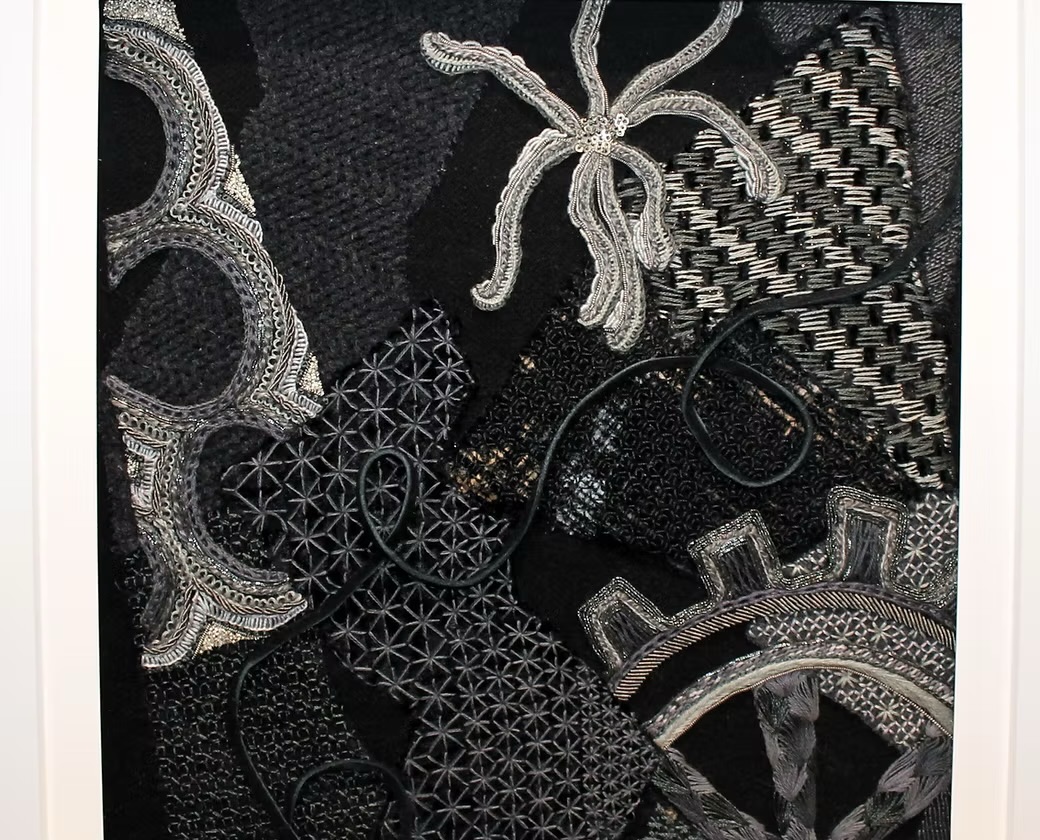
Charlottes “Codification of Stitch” is an innovative coded embroidery system developed by the textile artist herself and it is used to form hidden messages within the garments she designs, transforming textiles into wearable narratives. Specific embroidery stitches represent letters, forming hidden messages amongst the exquisite, decorative Goldwork, Blackwork, Whitework and Raised Work.
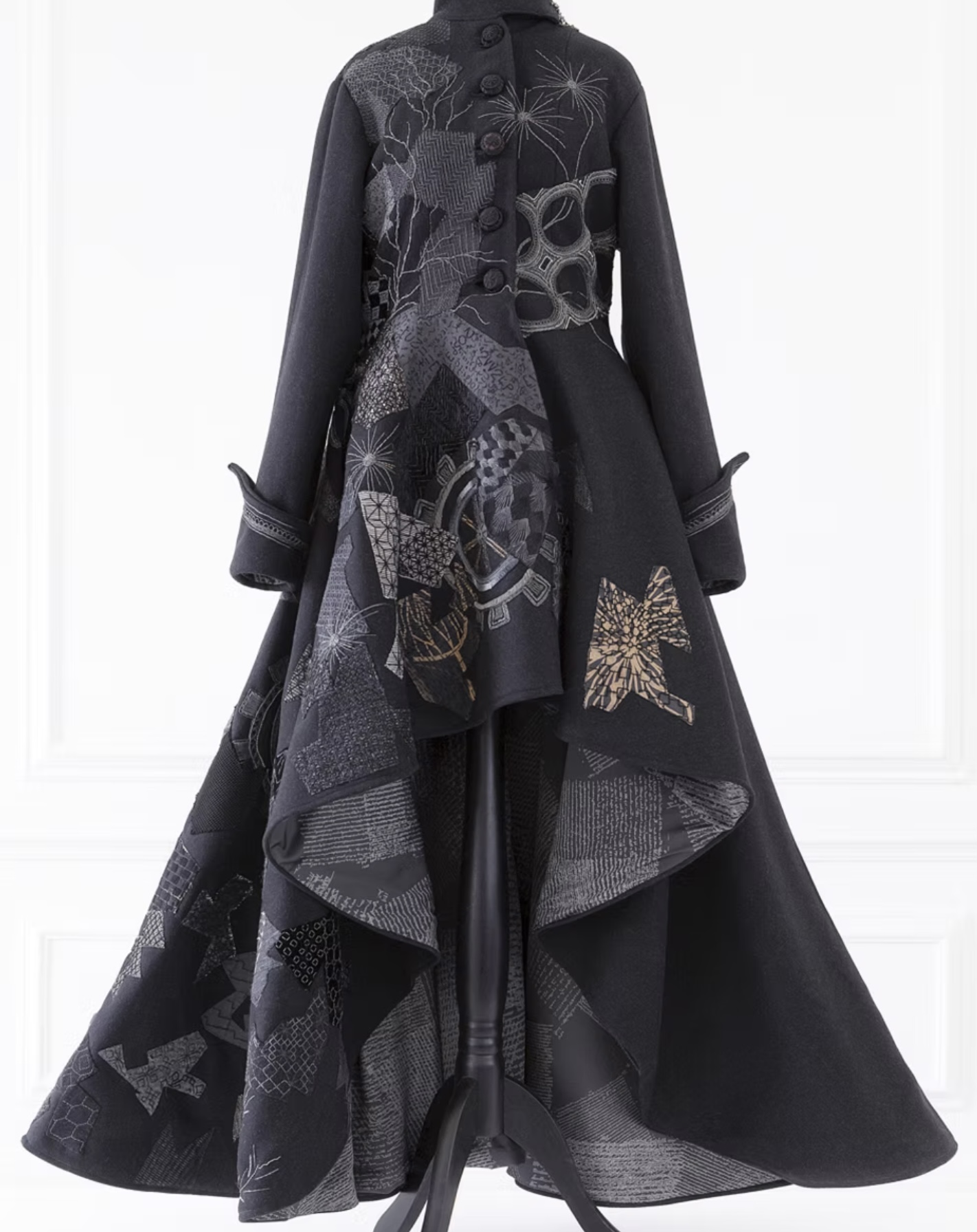
 
It was her fabulous “coded” Ann Lister black coat that first caught my attention on her stand at the show. In 2025, in collaboration with the Anne Lister project, Charlotte designed a range of costumes re-imagining the BBC cast of Gentleman Jack and bringing them in to the 21st century.
 
I hadn’t heard of Ann Lister but I’m guessing plenty of you will have, especially if you’ve seen her life story as portrayed by Suranne Jones in the BBCs series Gentleman Jack. This woman was an ardent diarist and from 1896 to 1840 she wrote a five million word diary, approximately one sixth of which was written in code. She combined the Greek alphabet, zodiac, punctuation, and mathematical symbols allowing her to document, but also conceal, the most private aspects of her life. It’s fitting that this beautiful coat should also conceal its message which is a quote from Ann in August 1823. It reads “I am not made like any other I have seen, I dare believe myself to be different from any other who exist.”

Ann Lister Coat


Sampler for coat

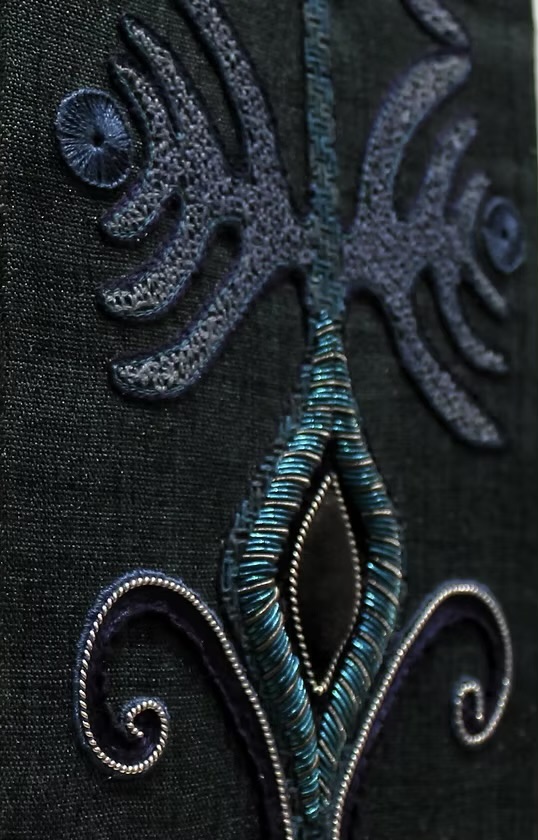
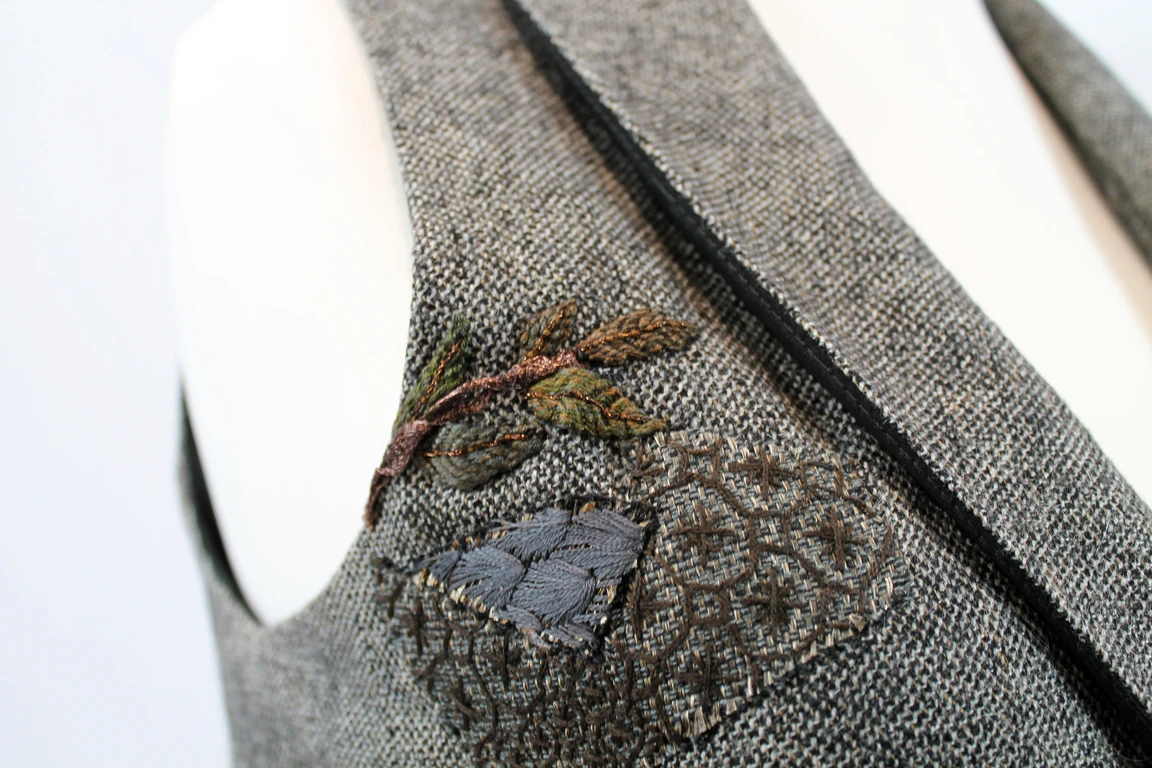
Another “Ann Lister” inspired piece on Charlottes stand was a waistcoat inspired by the diarists love of nature and the coded message on this garment reads “We are not alive if we’re not taking the odd risk now and again.” 

Ann Lister Waistcoat
Detail of waistcoat

There was also a selection of beautiful intricately stitched, coded brooches on display, each with a printed label providing its deciphered message.

Check out Charlottes website charlottefarrantembroidery.com where you can see her portfolio of designs as well as her shop selling Coded embroidery kits, brooches and many other embroidered coded art works.

Throughout history textiles have been used not only for protection and comfort but also to communicate our personal values and identity. Long before the written word came in to use Ancient civilisations would use specific colours and symbols to convey their environment, spiritual believes and culture. In this way meaning could be woven, felted or stitched into rugs, blankets, clothing, etc. delivering visual messages that could be easily read by the people around them. Examples include the felted rugs created by ancient nomadic tribes which would embody powerful symbols across different cultures signifying the wish for good health, long life, prosperity, etc.

Examples of just a few of the Symbols used in Middle Eastern rug making.

On the other hand, hidden “coded” messages in textiles have been used for a very different, but very important role in history. While imprisoned Mary Queen of Scots embedded complex and personal symbols within her embroideries to express her frustrations, assert her claim to the English throne, and comment on her unjust captivity. This panel depicts a grapevine and a hand holding a pruning knife. It references Mary’s claim to the throne, suggesting the need to cut away the fruitless branch of the Tudor tree represented by the childless and ‘illegitimate’ Elizabeth. The point is driven home by the Latin motto ‘Virescit Vulnere Virtus’ (virtue flourishes by wounding). (source:vam.ac.uk)
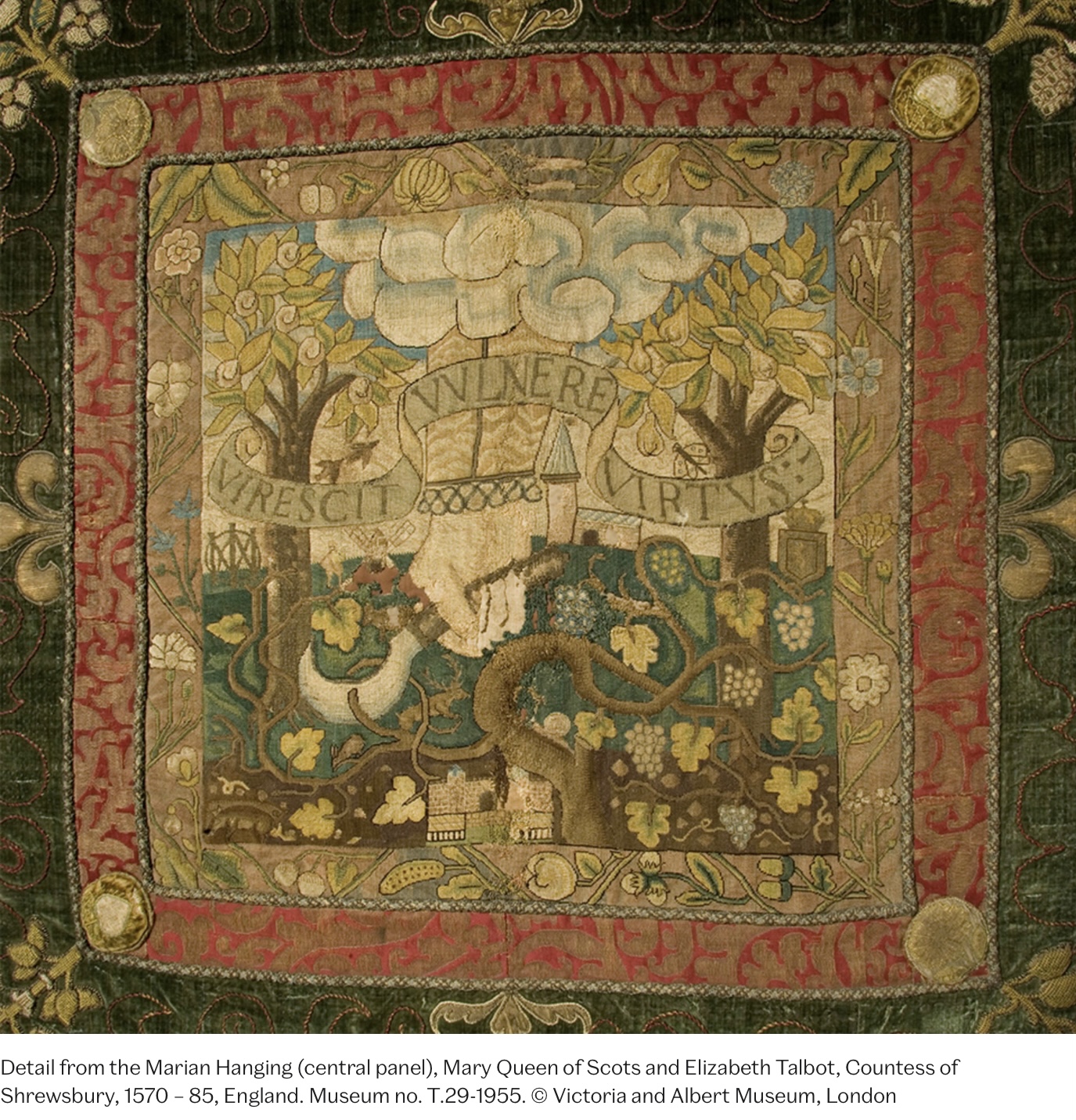
Embroidery also enabled Mary to communicate with her supporters by sending coded messages hidden in her needlework. 

In the realm of espionage, traditional handicraft skills were to take on an even more covert dimension during the World Wars when prisoners, spies and resistance members used embroidery to pass on information under the noses of their enemies. After all, who would suspect that something as innocent as an embroidery or tapestry could offer any threat from the enemy? Morse code and binary code were easily represented using a combination of long and short stitches, or French knots and seed stitches, and these would go undetected when hidden amongst other decorative stitches. Other methods required the person receiving the work to “undo” the embroidery as messages were hidden in the padding of trapunto or concealed beneath a second layer of embroidery. 

Knitting was another innocent looking but very useful craft when it came to espionage. Morse Code knitters employed single purl stitches for dots and sequences of three purl stitches for dashes. Their sequences translated into short and long coded signals. Some knitters used knots to conceal Morse code by tying specific configurations to represent dots and dashes, or varying the distances between their knots. These encoded messages could then be discreetly passed across enemy lines or integrated into knitted items such as hats and scarves to be decoded by the recipient. Written messages were also known to have been passed on, hidden in balls of wool!
This practise wasn’t exclusive to the allies. Using a system similar to Morse, German agents based in the UK also passed encoded messages using knotted yarn which was then knitted in to garments. 

Although an extremely dangerous occupation it’s said that the practise of covert knitting became so prevalent during WWII, some countries actually banned the posting of knitting patterns aboard, fearing they may carry coded information to the enemy. 
During times of war, a knitter was often more than just a creator of warm garments; they were also keen observers and messengers, their needles clicking away as they kept watch. (Source: Timoneillstudios.com)

Image Source: ww2wrecks.com

I will leave you with an embroidery created by one Major Alexis Casdagli. Alexis was captured and spent four years in a German POW camp where he passed the time in the innocent pursuit of cross stitch. He also set up a stitch school, teaching other POWs to embroider. Of the many embroideries he made this piece was so admired by his captors that they proudly hung it in the castle where he was being held and subsequently had it displayed in three other camps.

The prisoners must have found it very amusing that the guards had no idea of the defiant message hiding in the Morse dots and dashes stitched around the borders which read “God Save The King” and “Fxxx Hitler”. Fortunately it was never deciphered during those four years and so the embroidery, and the Major survived the war. He told his son on his return that the Red Cross saved his life but embroidery saved his sanity! 


Art of the Now…..

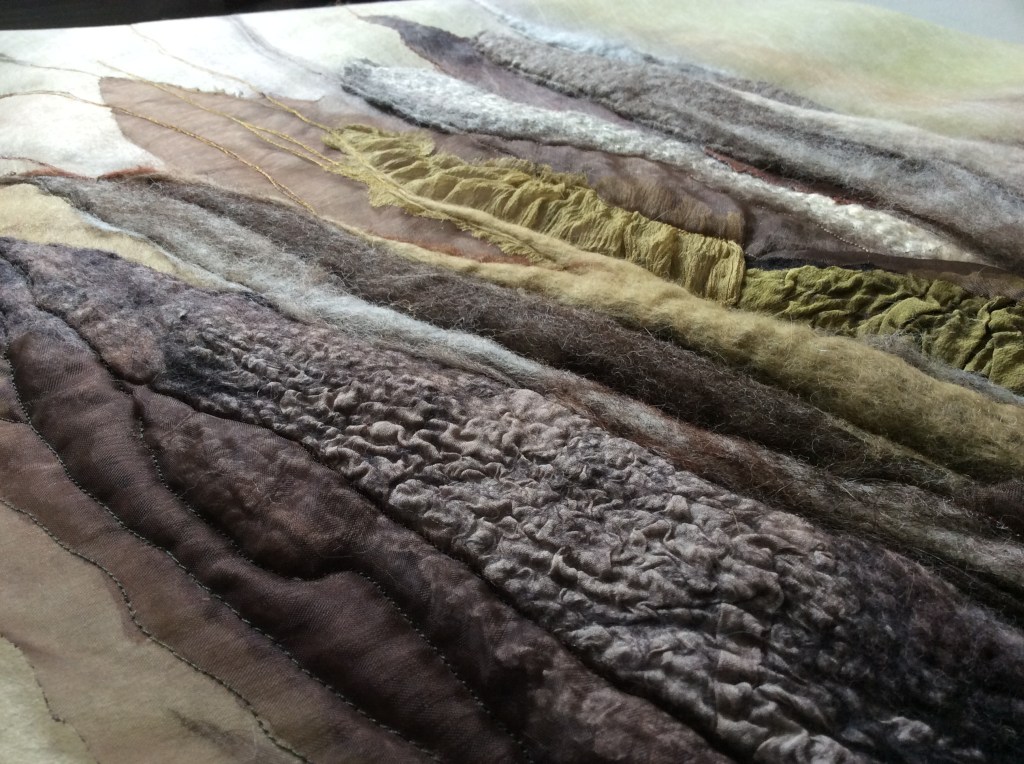
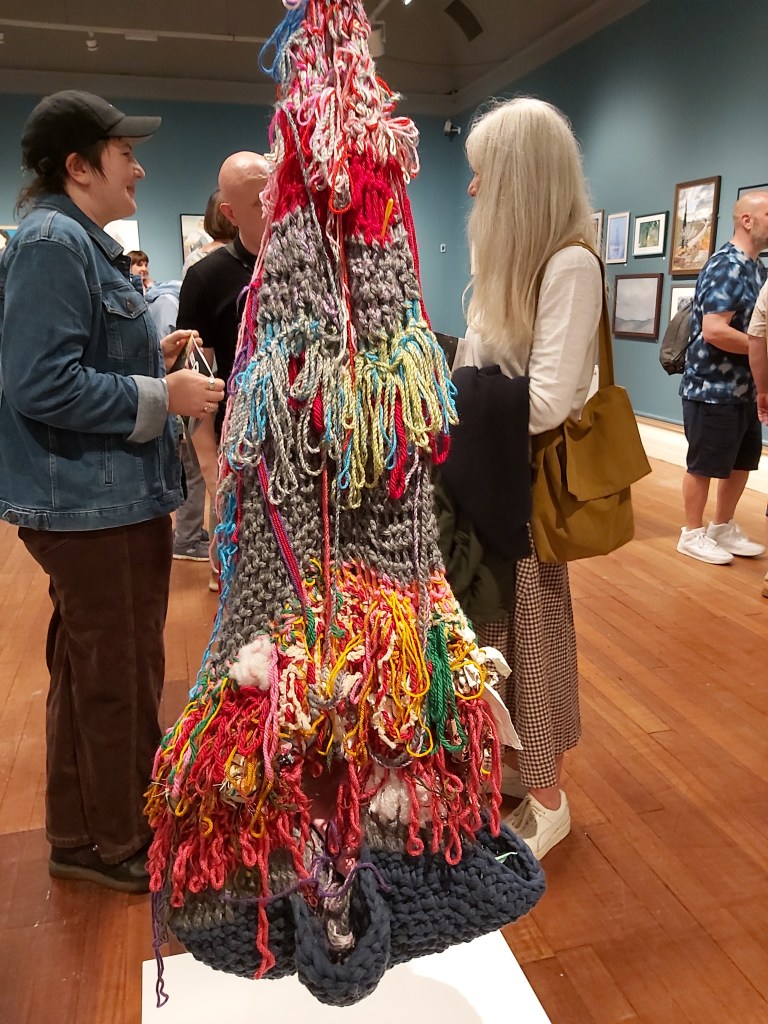
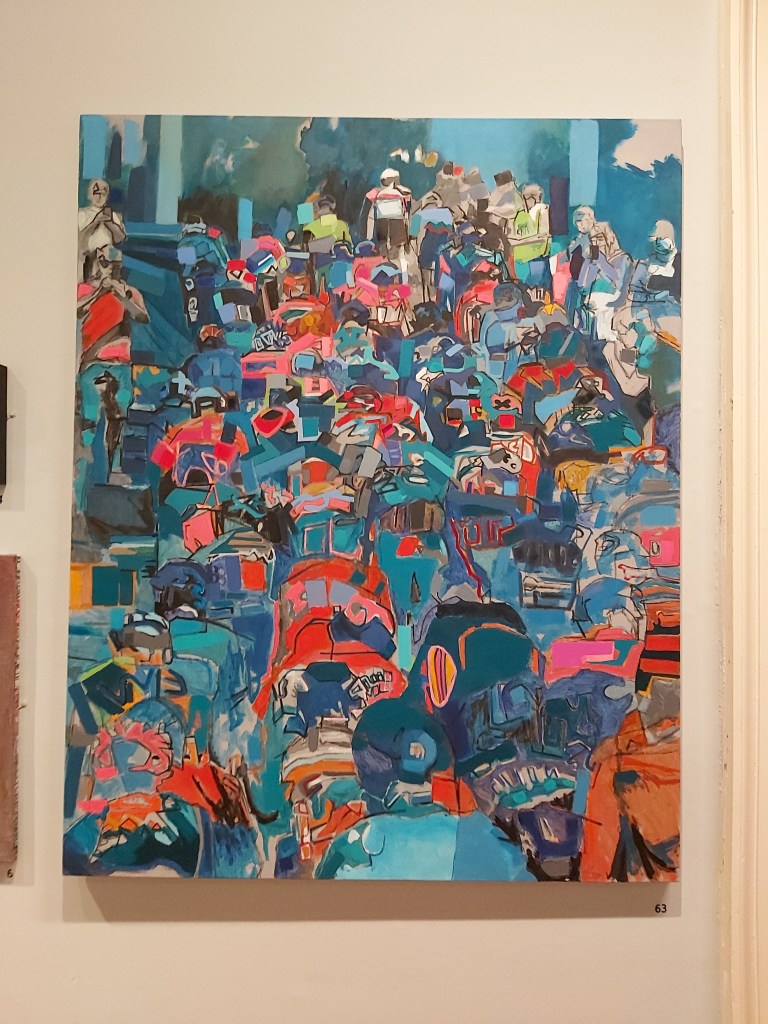
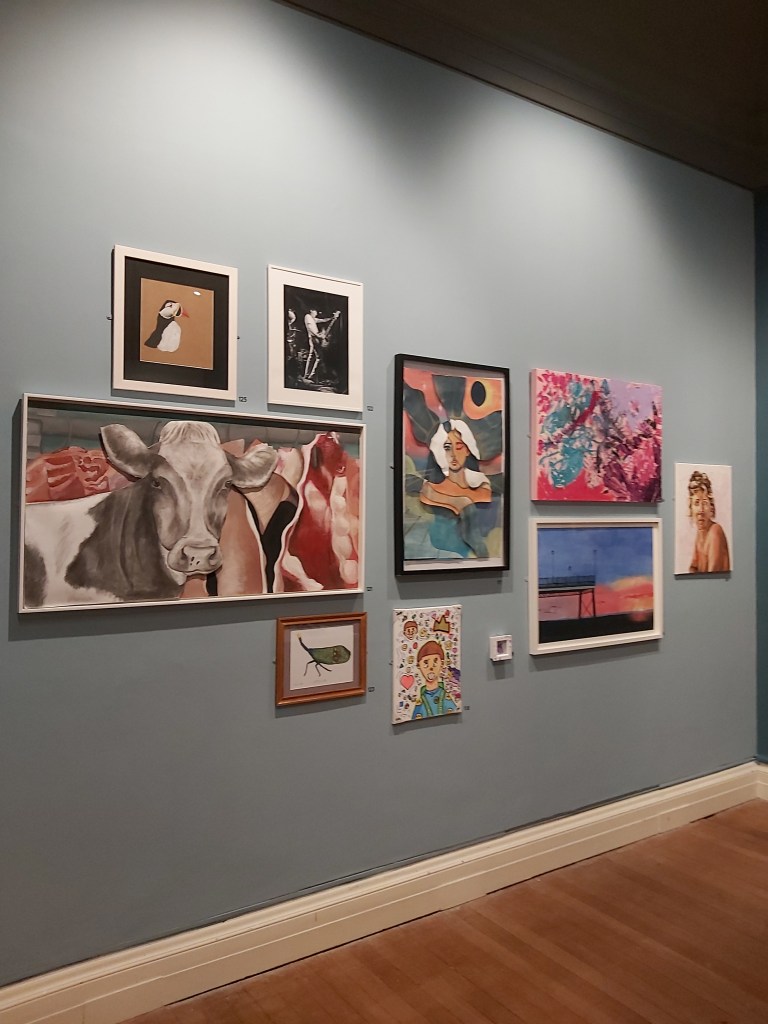
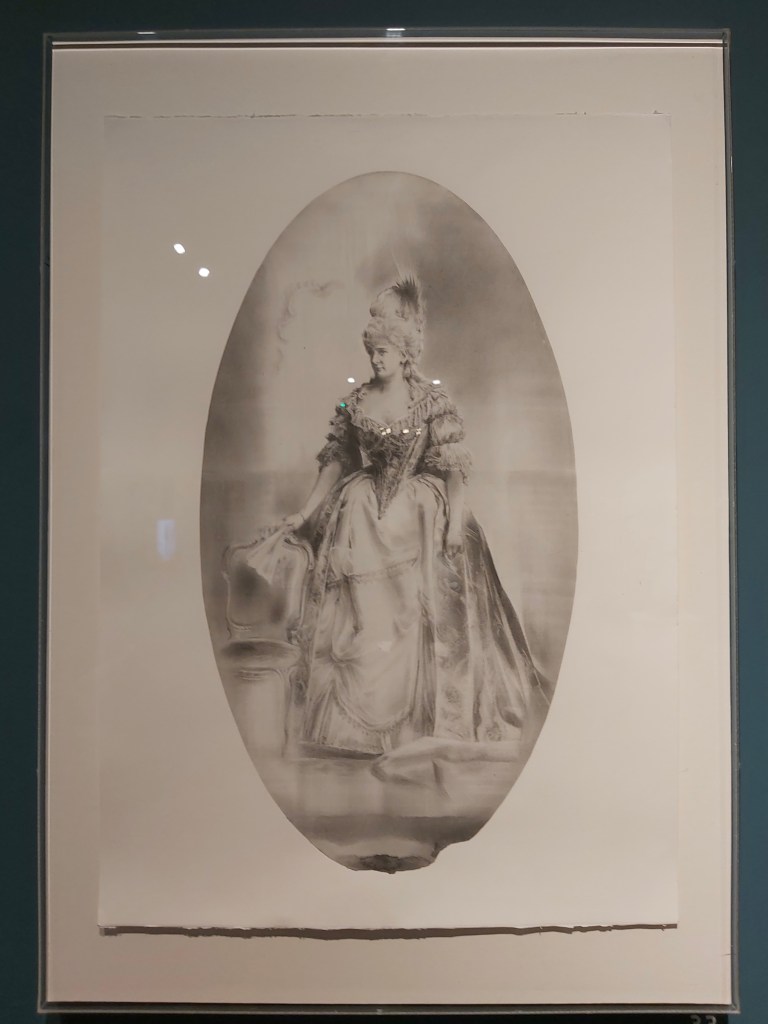
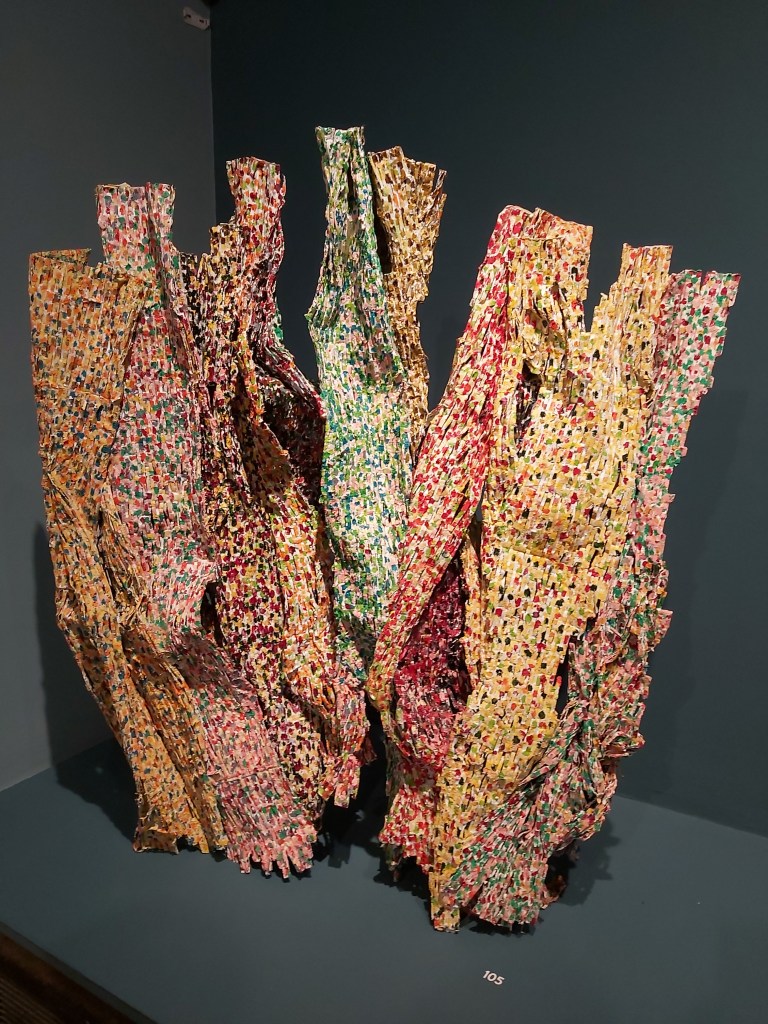
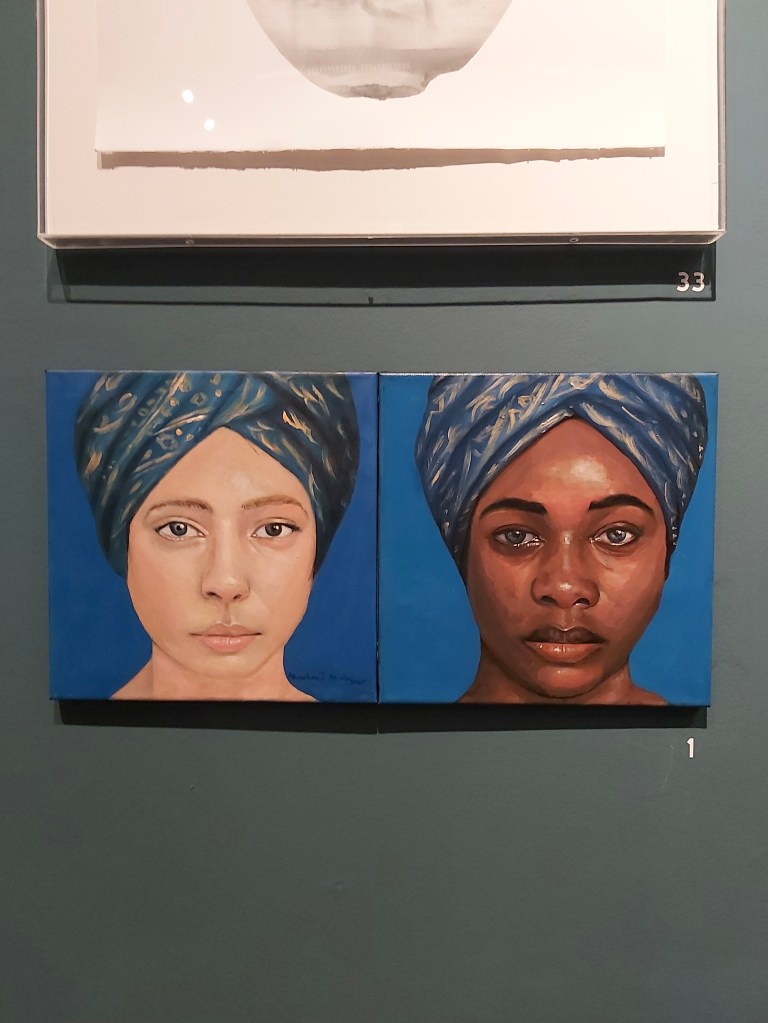
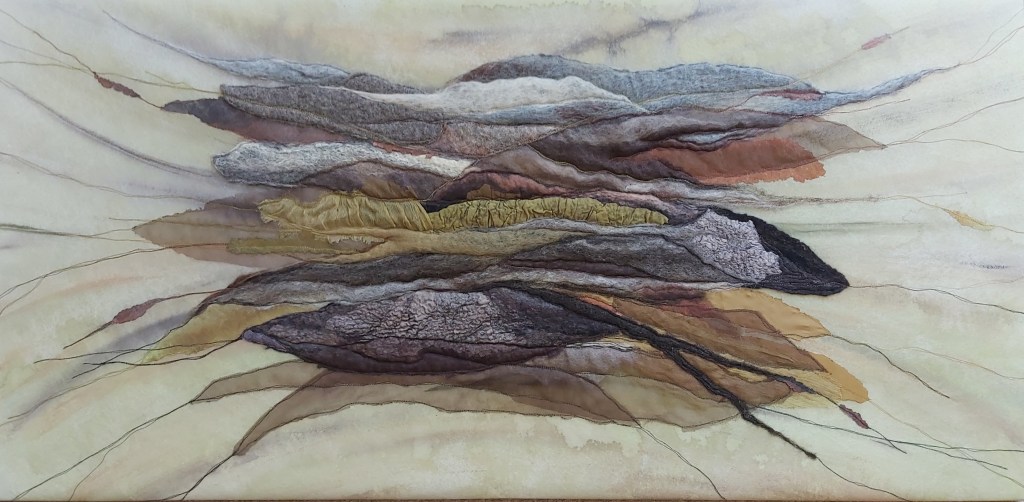
A few months ago I responded to an ad for local artists to apply for the chance to exhibit their art in an Open Call exhibition being held at the Usher Art Gallery in Lincoln. We could submit up to three pieces in any medium. There were around 900 works submitted in total which were then whittled down to just over 100. I was thrilled when I found out that my Nuno felted/mixed media abstract landscape “Northern Soul” had been successful!

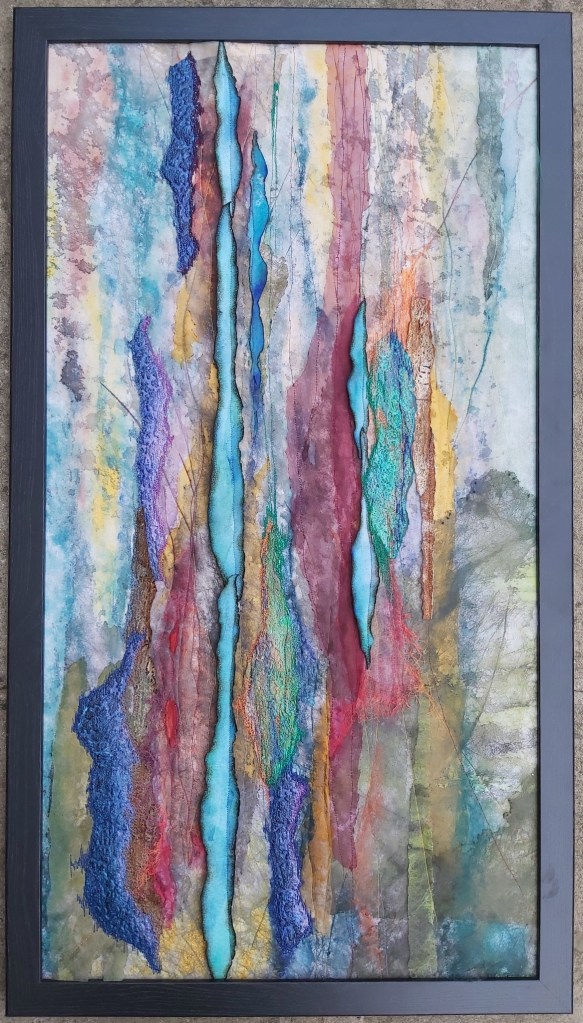
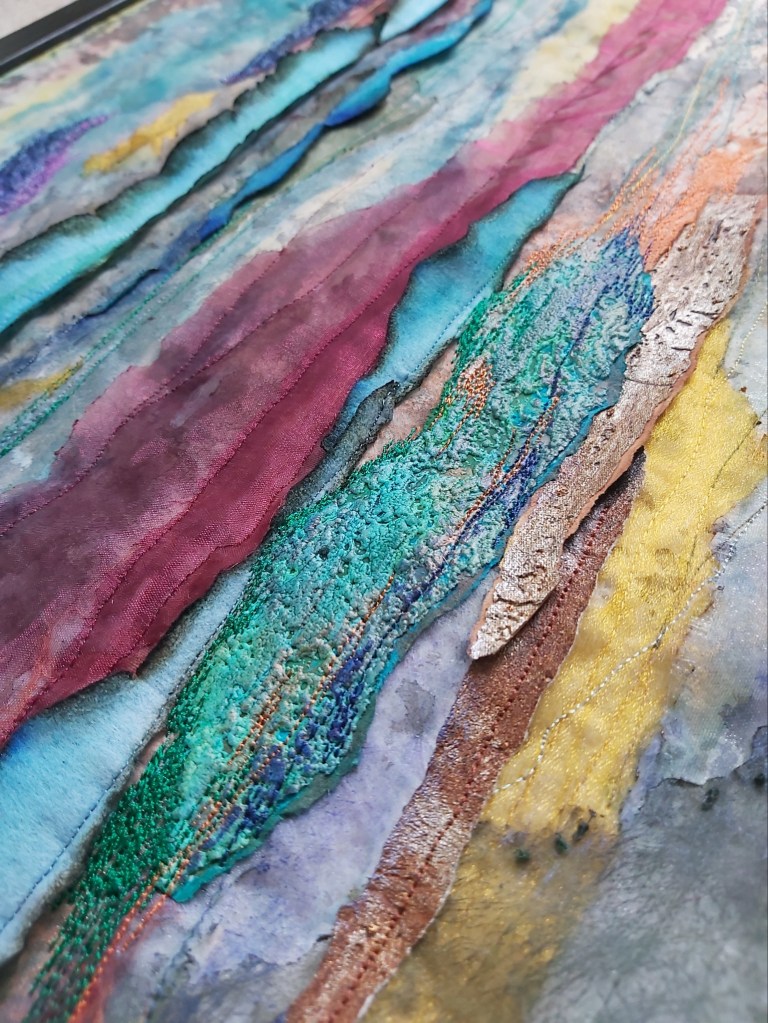
Time spent walking in the beautiful Northumberland landscape, particularly around the Coquet Valley and Simonside Hills, provided the inspiration for Northern Soul. It was created using a variety of fibres and fabrics, wet felted and free motion stitched on to a painted background of Lutradur fabric.

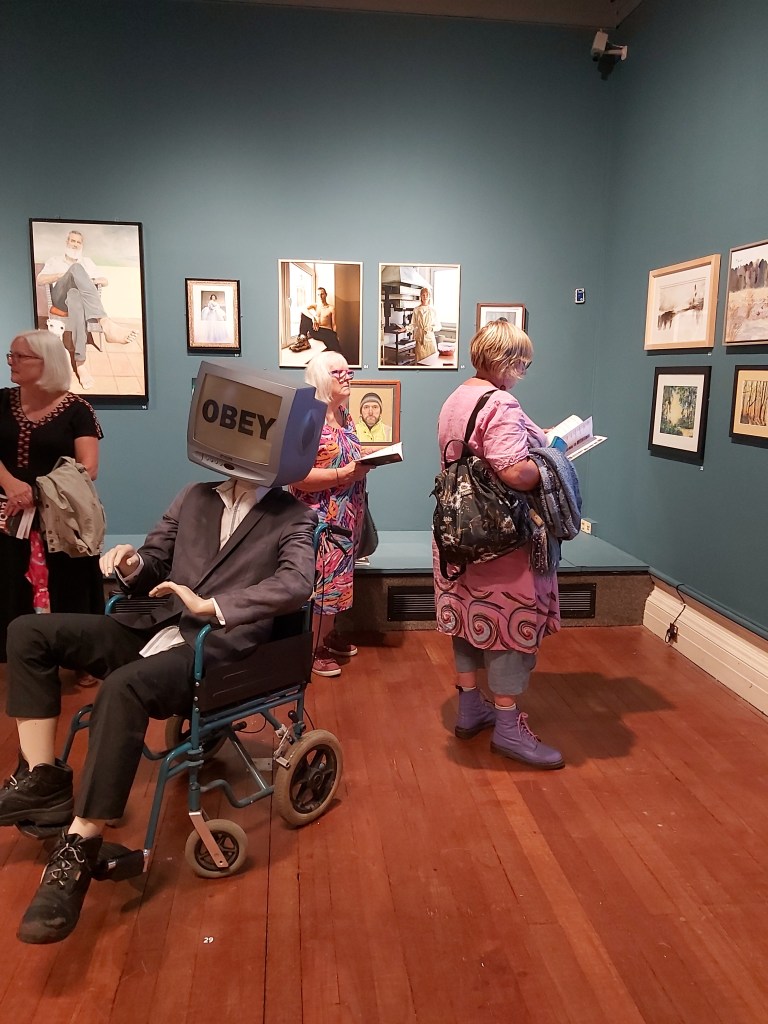
The Art of the Now exhibition runs from now until October 19th, it’s open from Thursday through to Monday from 10am – 4pm. It’s free entry and there is a wide variety of techniques, mediums, subject matter and styles on display, although given the rising interest in textile art it would have been nice to see the gallery representing more of this.
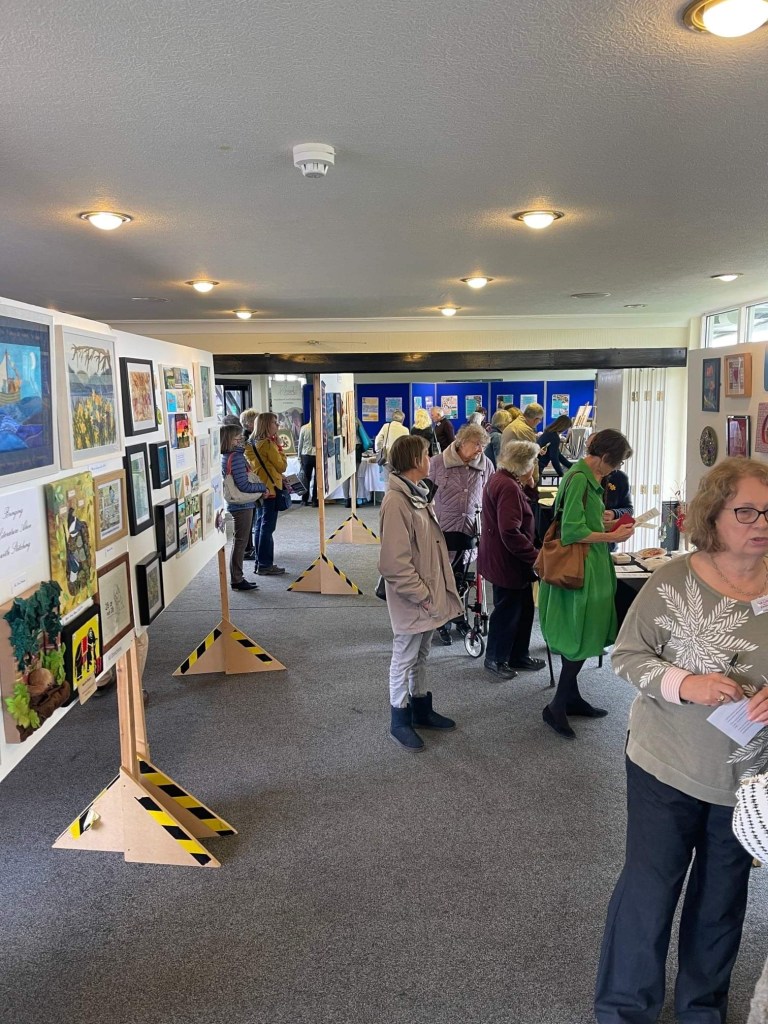
These are a view images from the opening event.

Celebrating Horncastle Artists…..

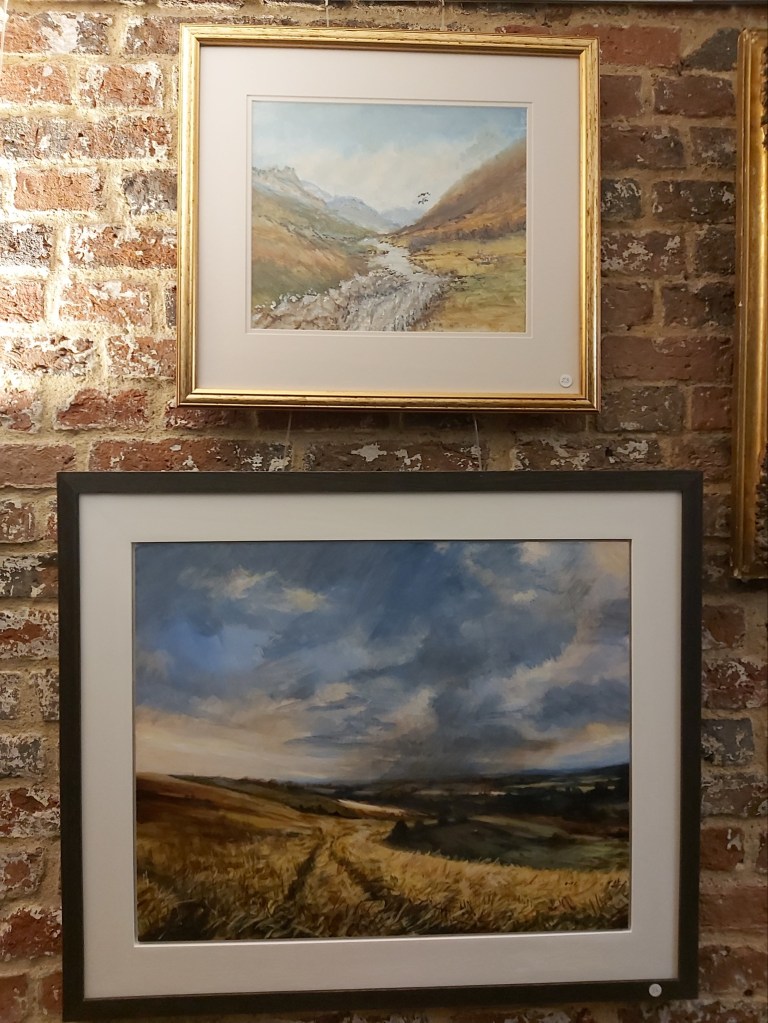
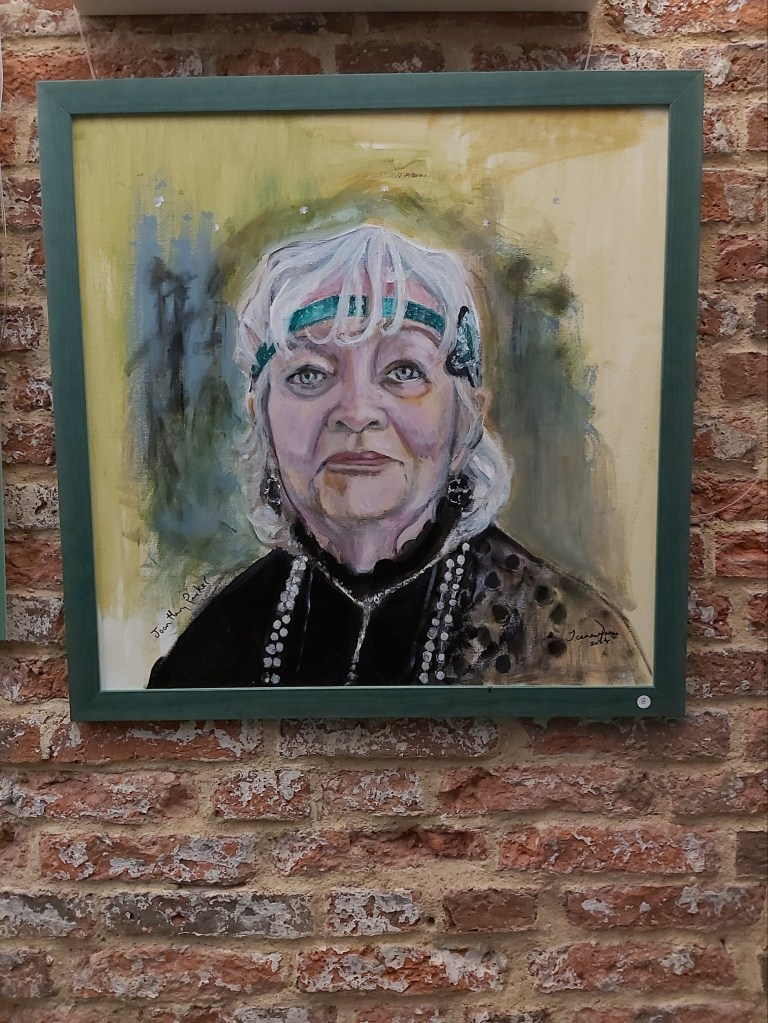
The Joseph Banks Centre on Bridge Street, Horncastle LN95HZ launched their latest exhibition this evening Celebrating Horncastle Artists 1783 – 2024. It showcases work by 29 local artists and opening times are from 10am – 4pm on the 5th, 6th, 7th, 12th, 13th & 14th December.

The event has been organised and curated by two members of the Horncastle Art Group, Susan Buckley and Penny Roberts, with the aim of giving visitors the chance to learn about the town’s artists from the past as well as to view a collection of contemporary work by local artists of the present day. I was delighted to be one the artists invited to take part!

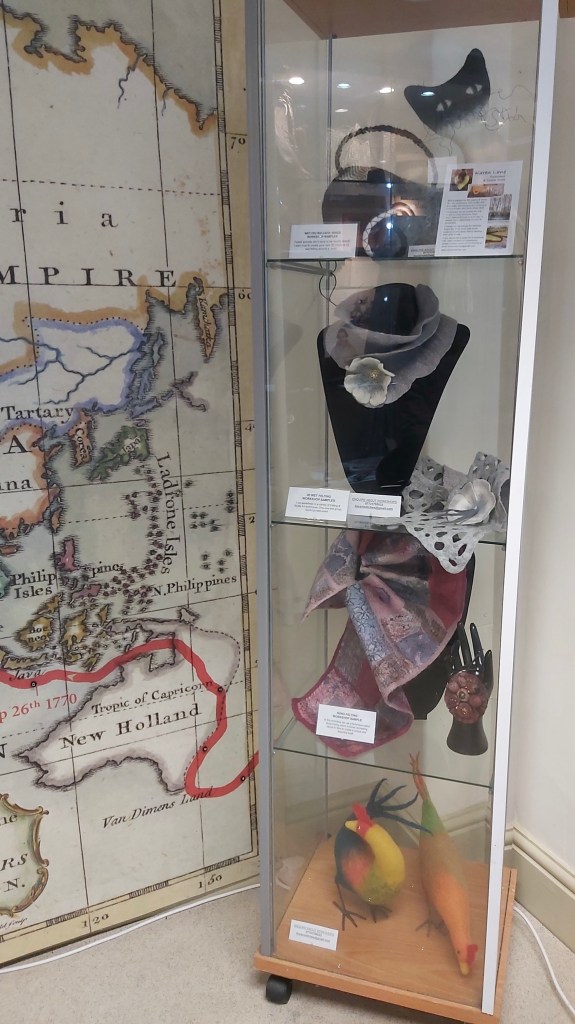
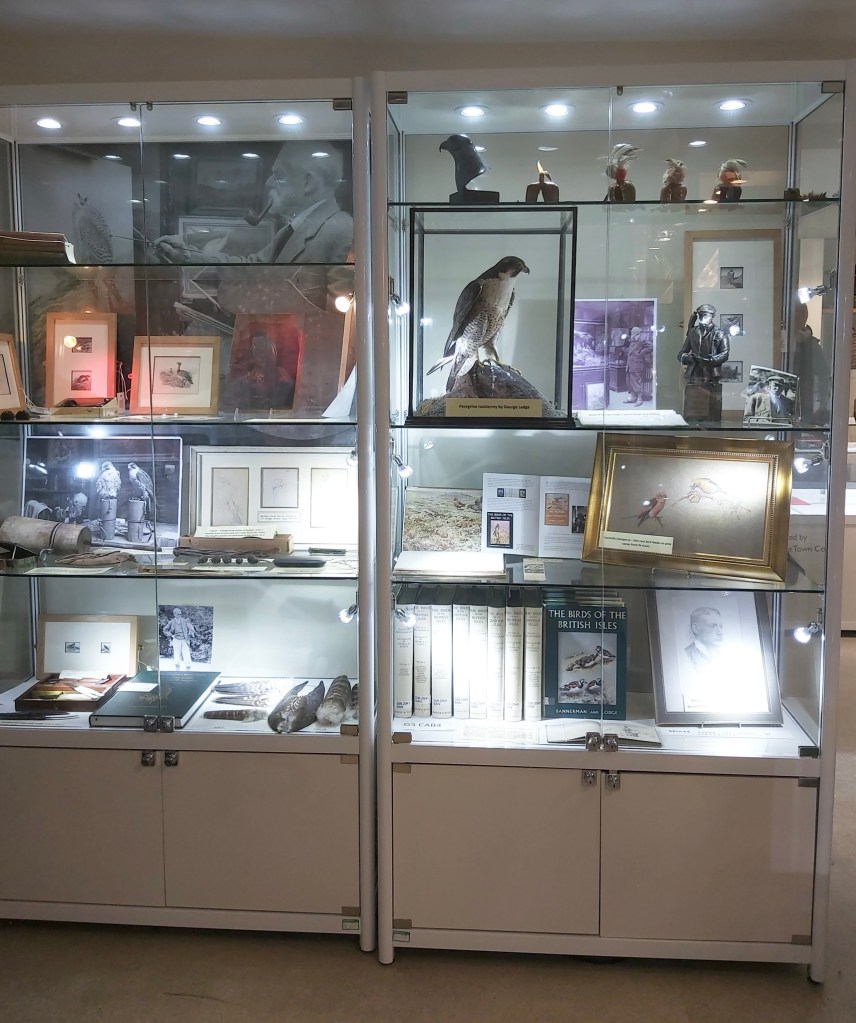
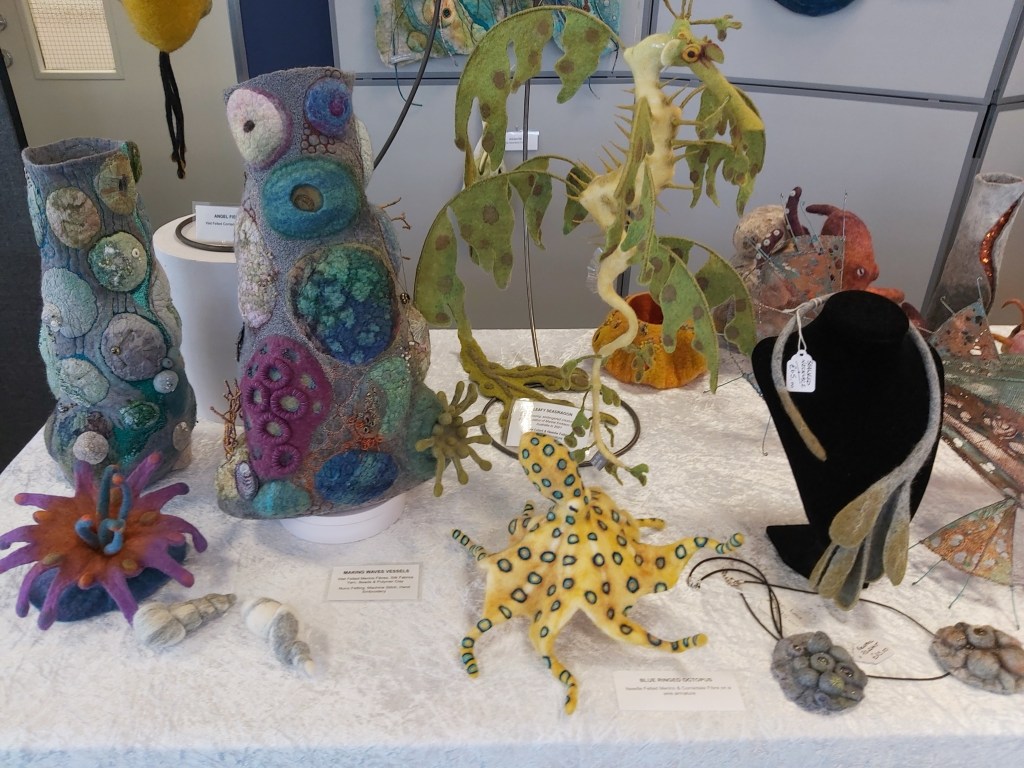
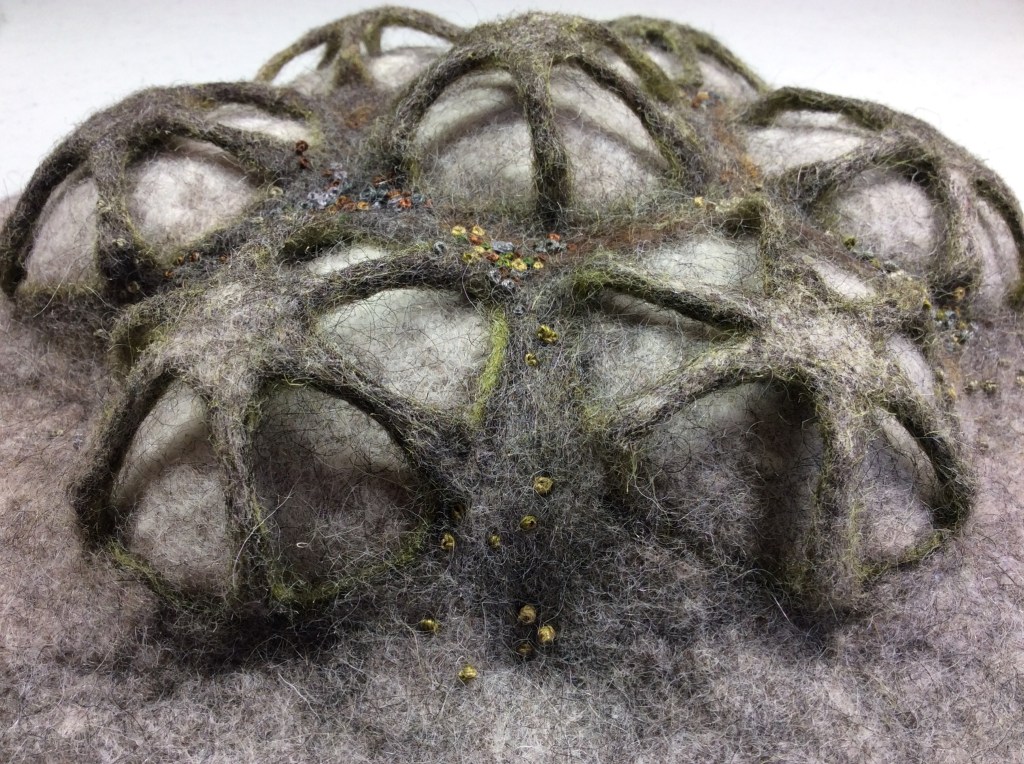
I have several of my 3D felt pieces in two of the glass cabinets, one contains a selection of my Making Waves work and is at the end of the gallery opposite Lynn Bakers beautiful blown glass. The other cabinet displays a few of the projects that I offer as workshops.

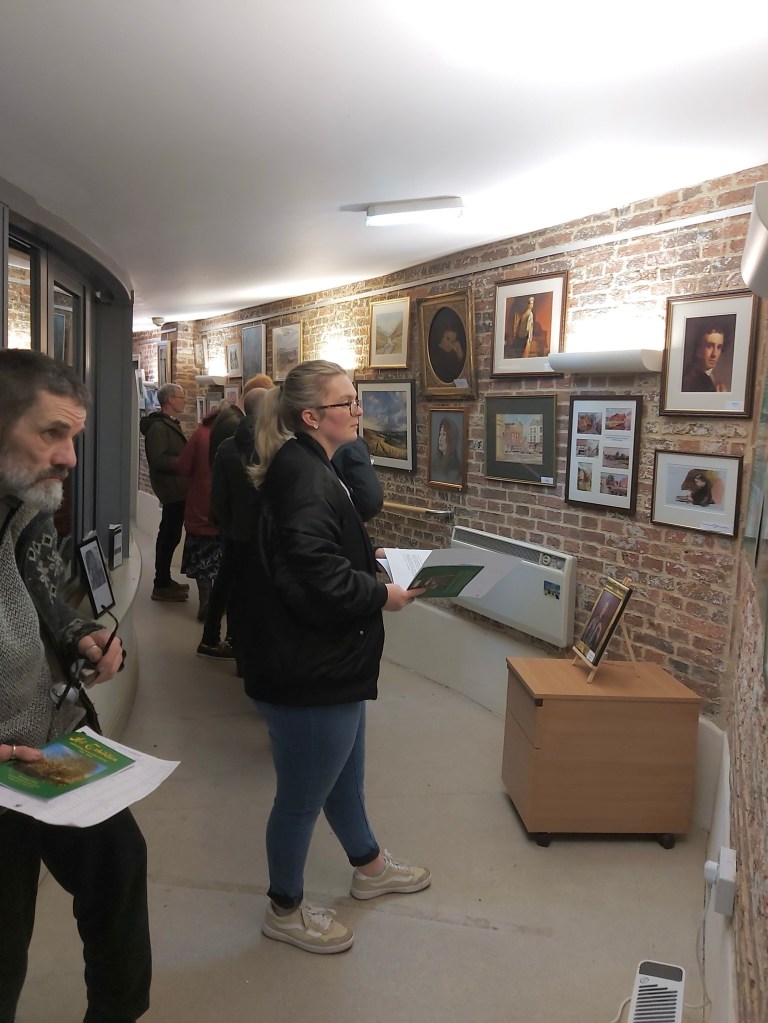
More images from this evenings launch…..

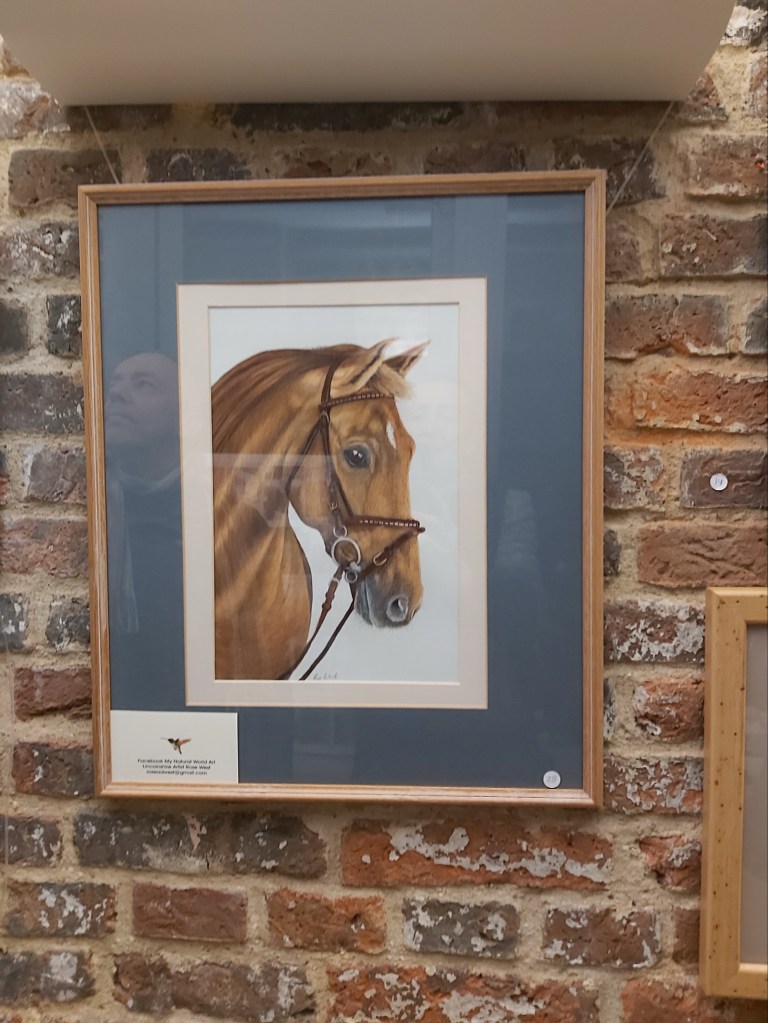
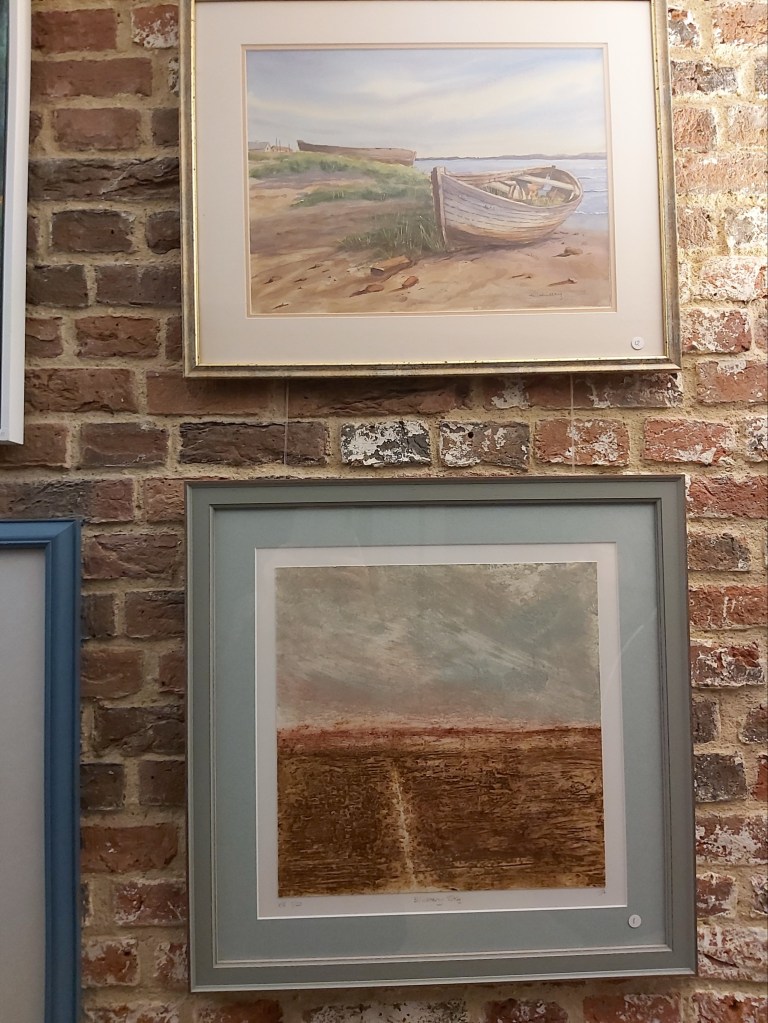
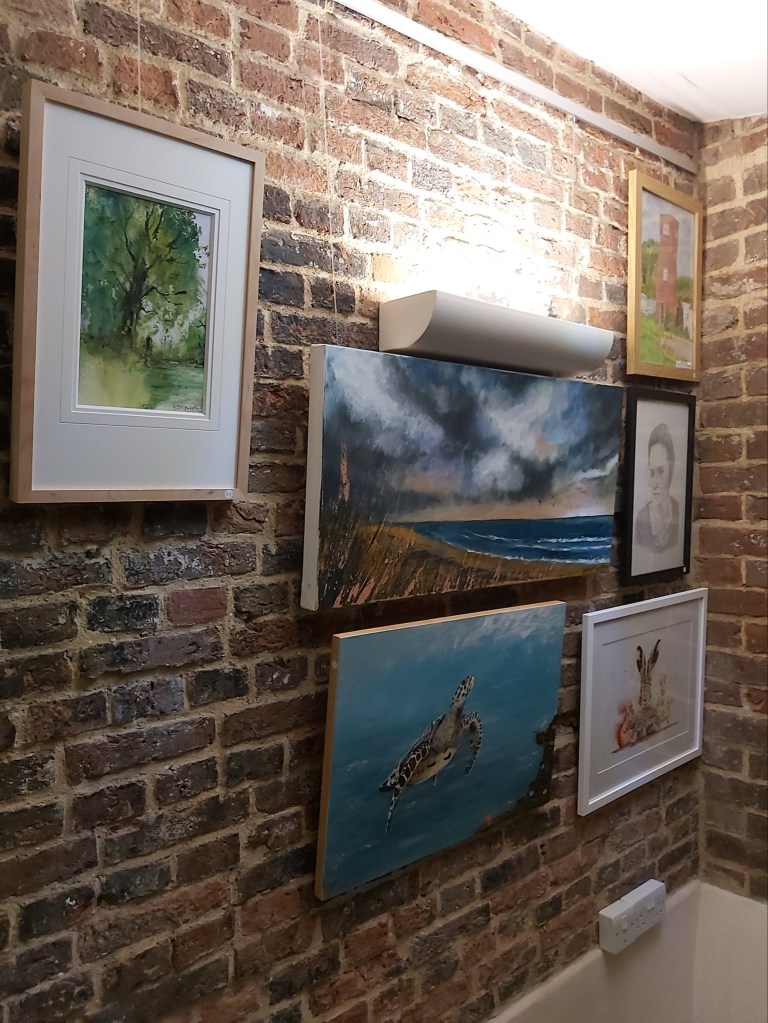
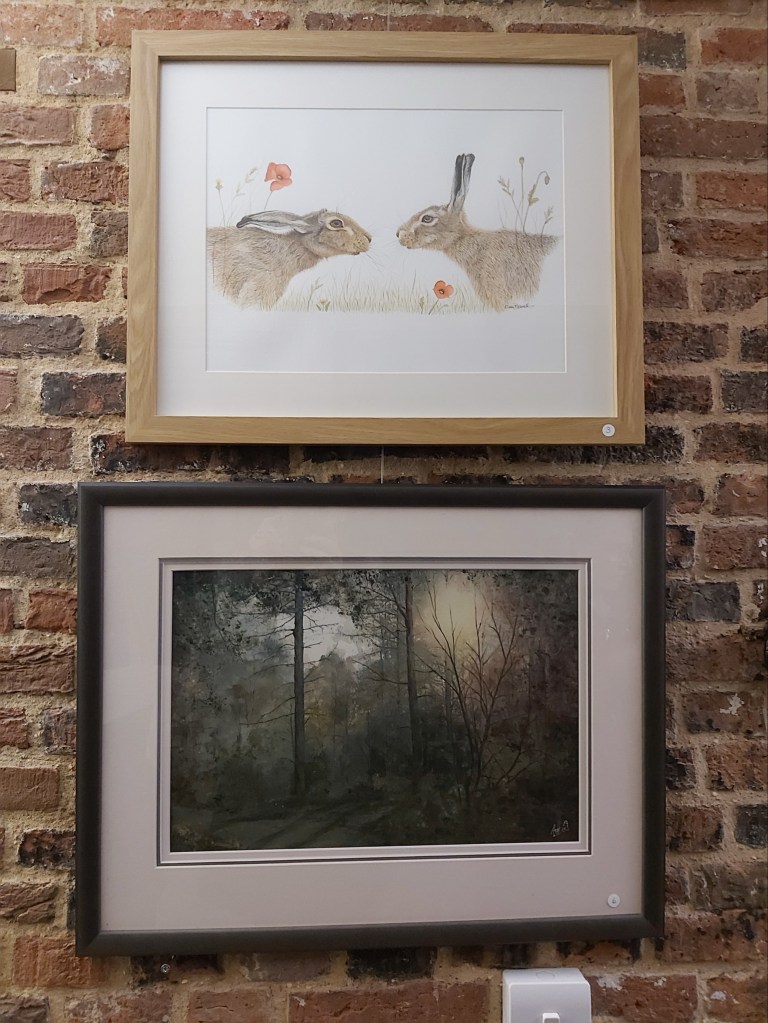
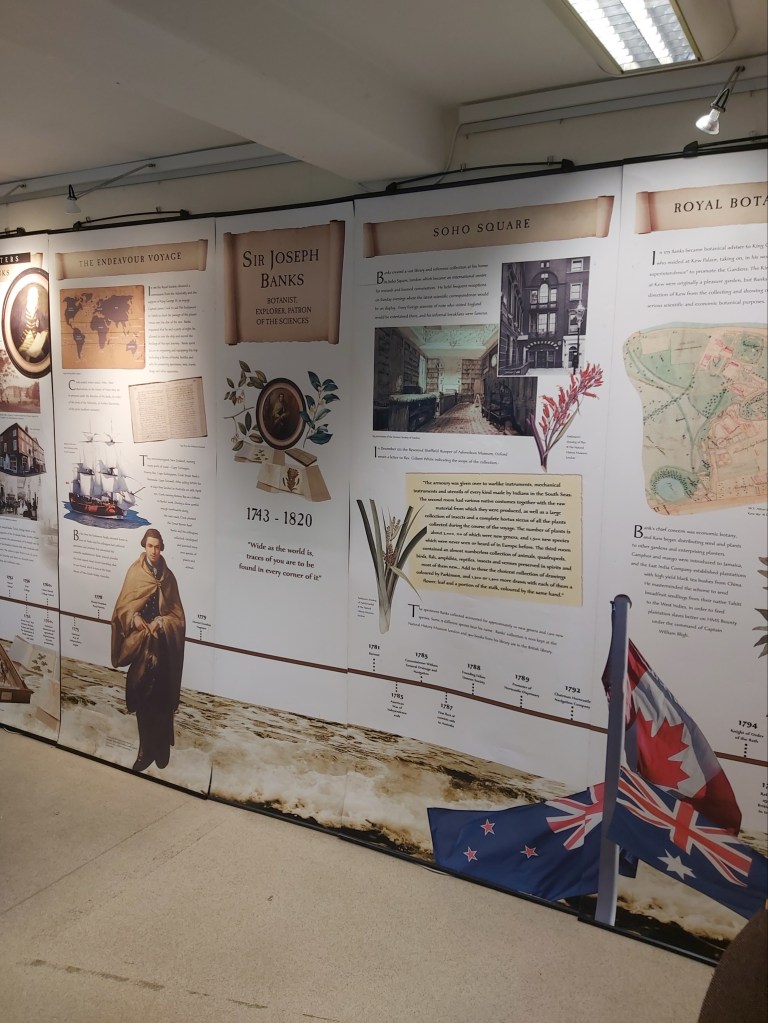
There’s a good mix of work on display from amateur artists as well as professionals and an interesting and varied range of mediums, styles and subject matter. A few of my personal favourites were those by Martin Moyers, Rose West, Fraser Scarfe and Noel Lambley. The Joseph Banks Centre is a lovely venue for this exhibition with the added bonus that you get to see the exhibits and information boards telling the fascinating story of Sir Joseph Banks, botanist, explorer and patron of the sciences 1743 – 1820.

For more information on the Horncastle Art Group contact horncastleartgroup@gmail.com

Autumn School & the BTS…..

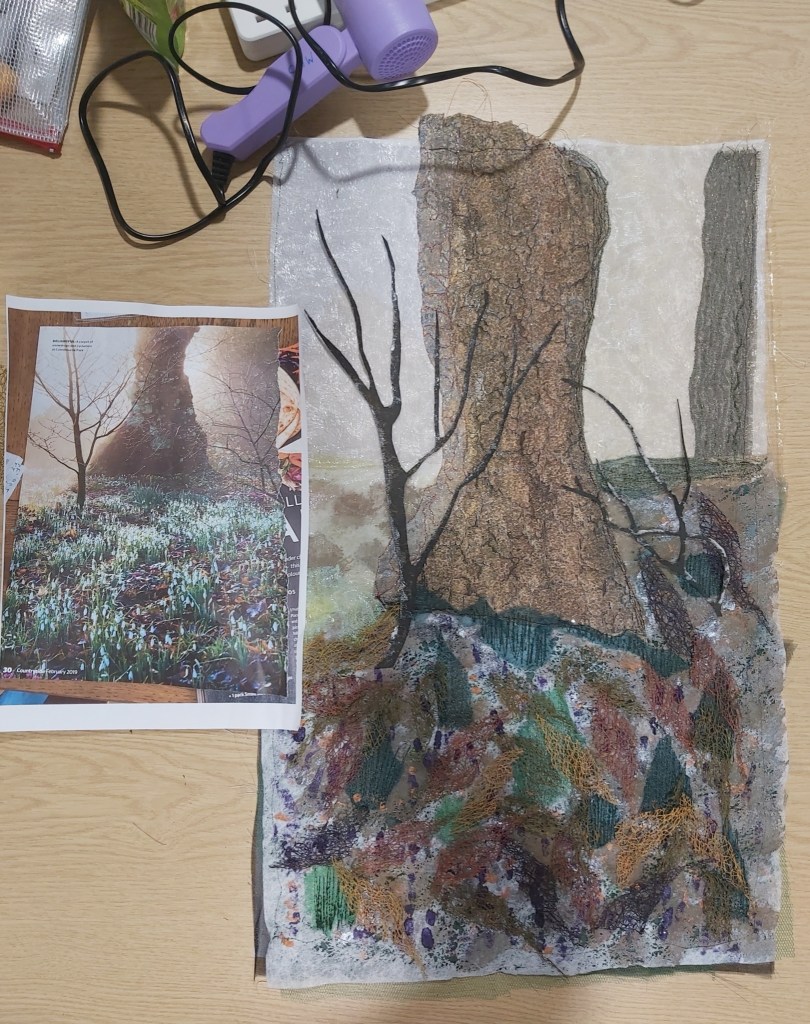
Two weeks ago I was at the Old Barn Hotel, Grantham as guest tutor for the Lincolnshire Textiles Autumn School. The group had invited me to teach my Tall Trees mixed media workshop for fifteen students.

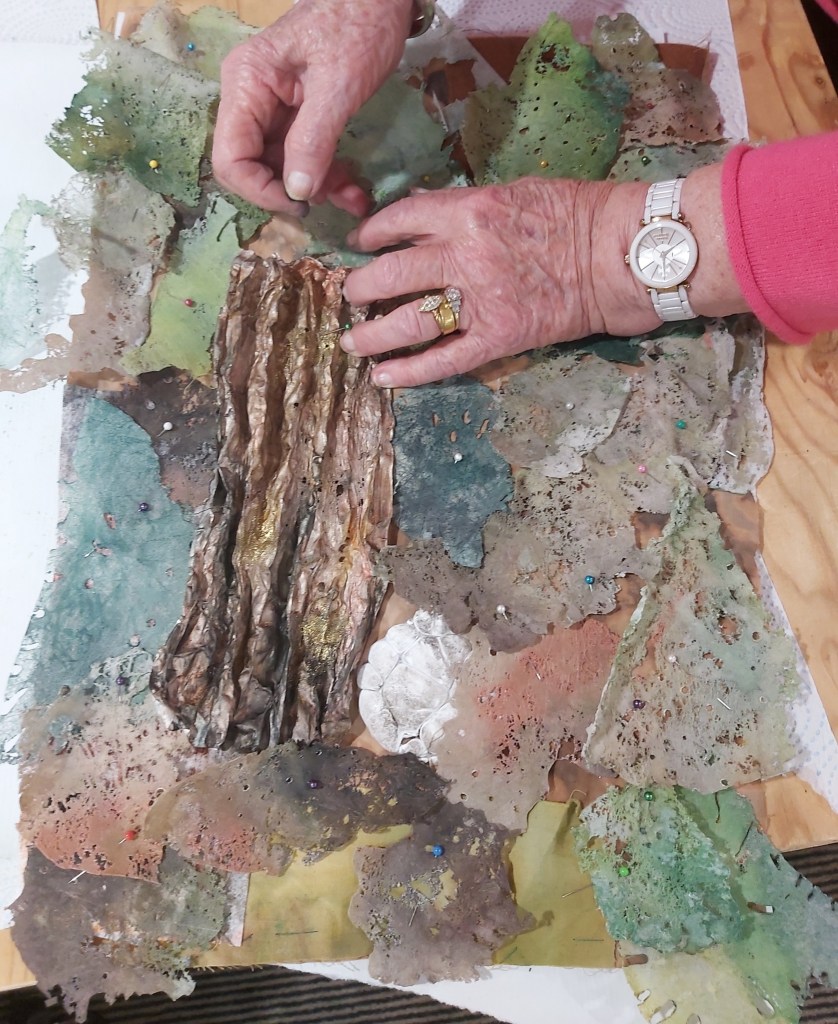
Our class began on the Friday evening after checking in and enjoying a delicious three course meal. The ladies had been asked to bring a photo, sketch or idea for the piece of work they would be making based on a tree/forest theme. I talked through the various materials I like to work with including Lutradur, Tyvek, wallpaper, organza and interfacing. The group were shown examples of how I’ve used these materials in my work and also how previous students have interpreted this workshop.

During the course of the evening ideas were explored, designs drawn up and our base fabrics painted.

The next morning, as soon as breakfast was over, the group were back to work— painting, auditioning different fabrics and papers, machine and hand stitching and burning. I had a terrific group of highly motivated ladies to work with and it was wonderful how they embraced using materials and methods they wouldn’t normally have used. Some of the more traditional members of the group admitted to feeling a little out of their comfort zone at the start but a bit of gentle coaxing and encouragement “to play” seemed to do the job and very soon all appeared to be having fun!

The group coordinator, Janet Taylor, did a great job of organising the weekend and was very kind when she said “Karen did a wonderful job of motivating everyone and worked hard all weekend. We learned so much, and the group was supportive and helpful throughout. It was such a treat to focus entirely on stitching and creativity, without the usual distractions. The weekend was intense but immensely rewarding, made even better by the company of friendly, like- minded people.”

The weekend flew by and although there was still work to done when these photos were taken you can see how good the pieces are looking! The group has its next meeting on Saturday and I’m looking forward to seeing many of these finished.

Another recent event was the 2024 Big Textile Show at Leicester Racecourse last weekend. The BTS is always a great show and this year was no exception.

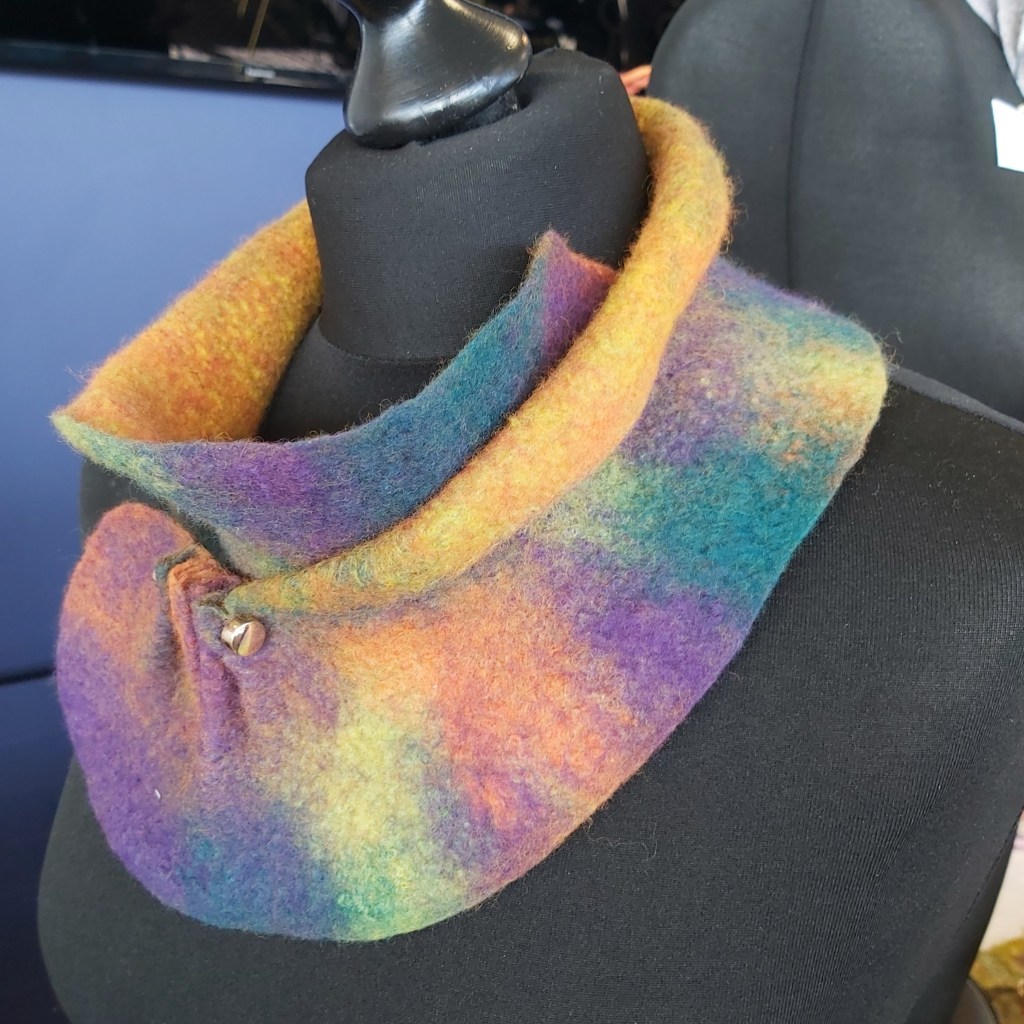
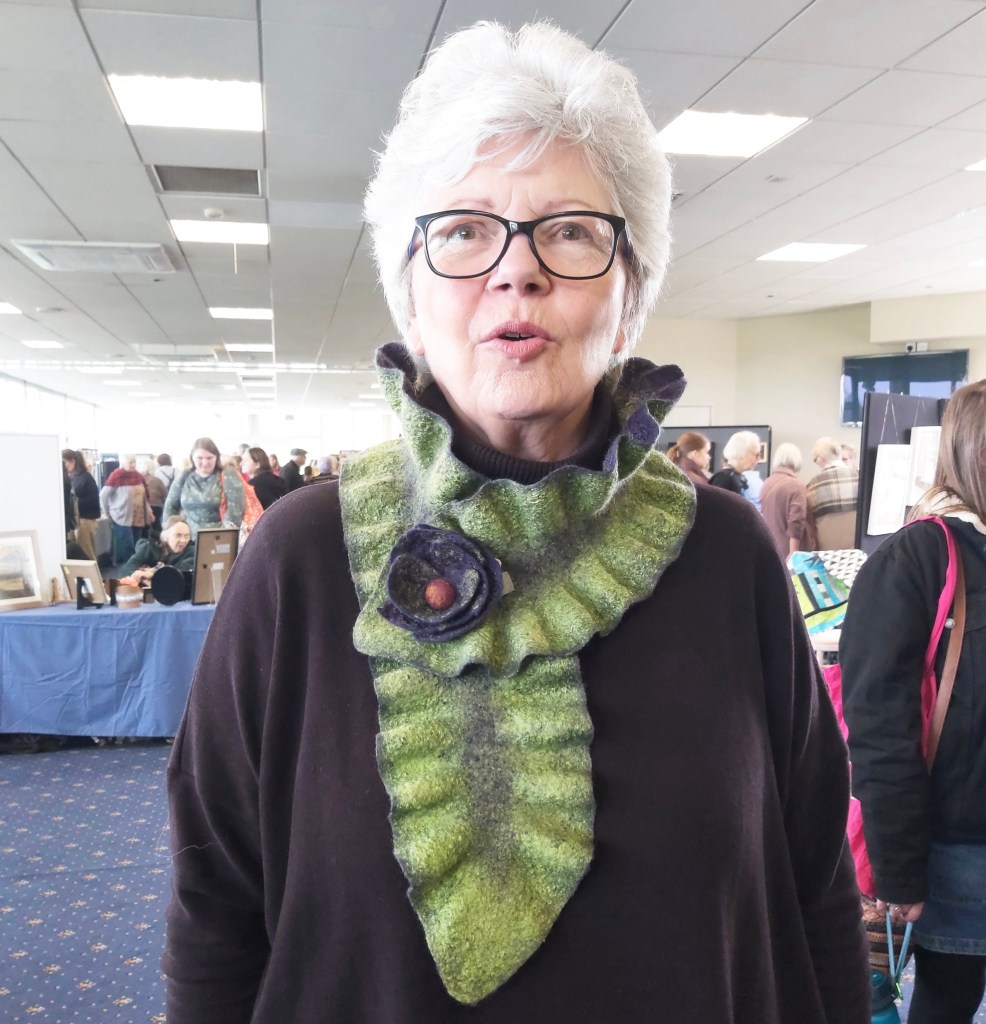
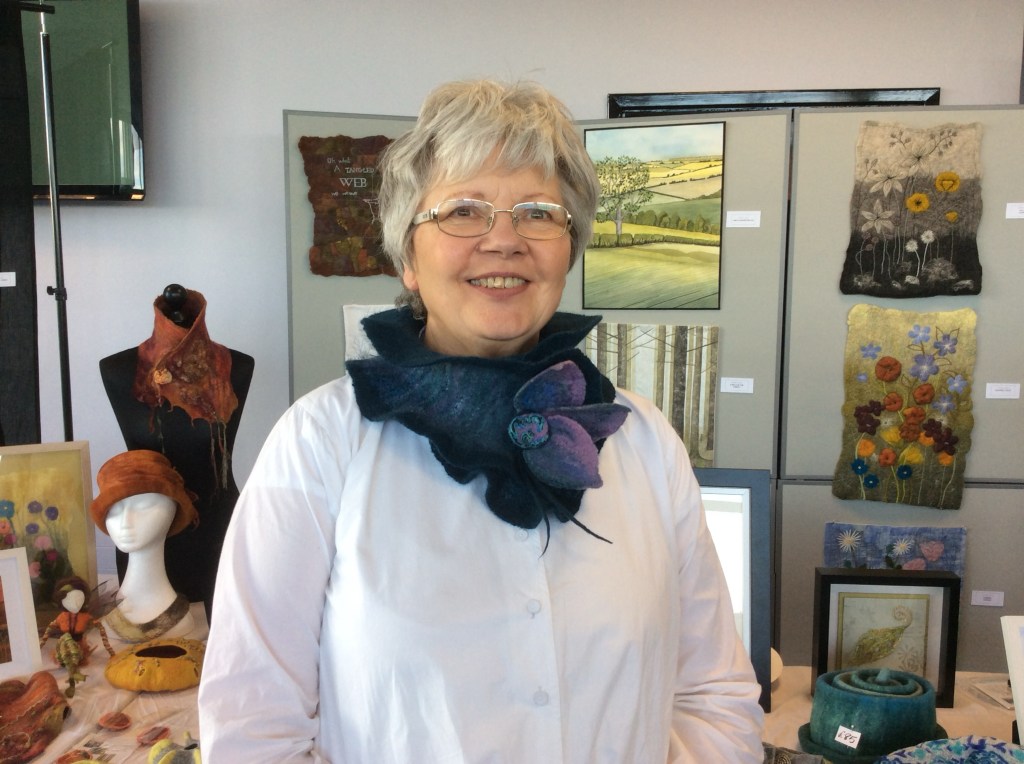
My first customer was the lovely Kate from the Lutterworth Stitchers who purchased my multicoloured Collar. Kates a regular visitor to my stall and looks terrific in whatever she chooses to wear as you can see by these images from previous years!

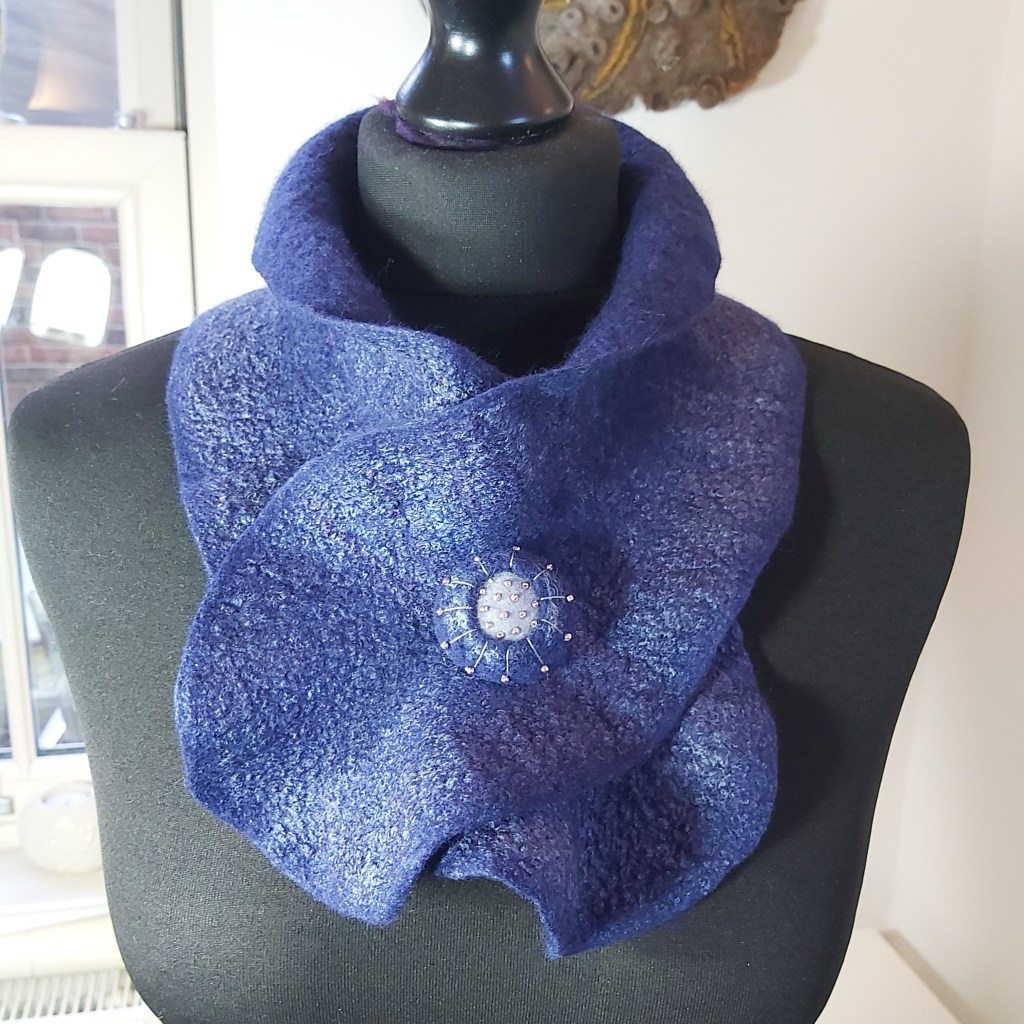
I took a few other new Collars with me including these two in blue and one in dark grey/neutral tones.

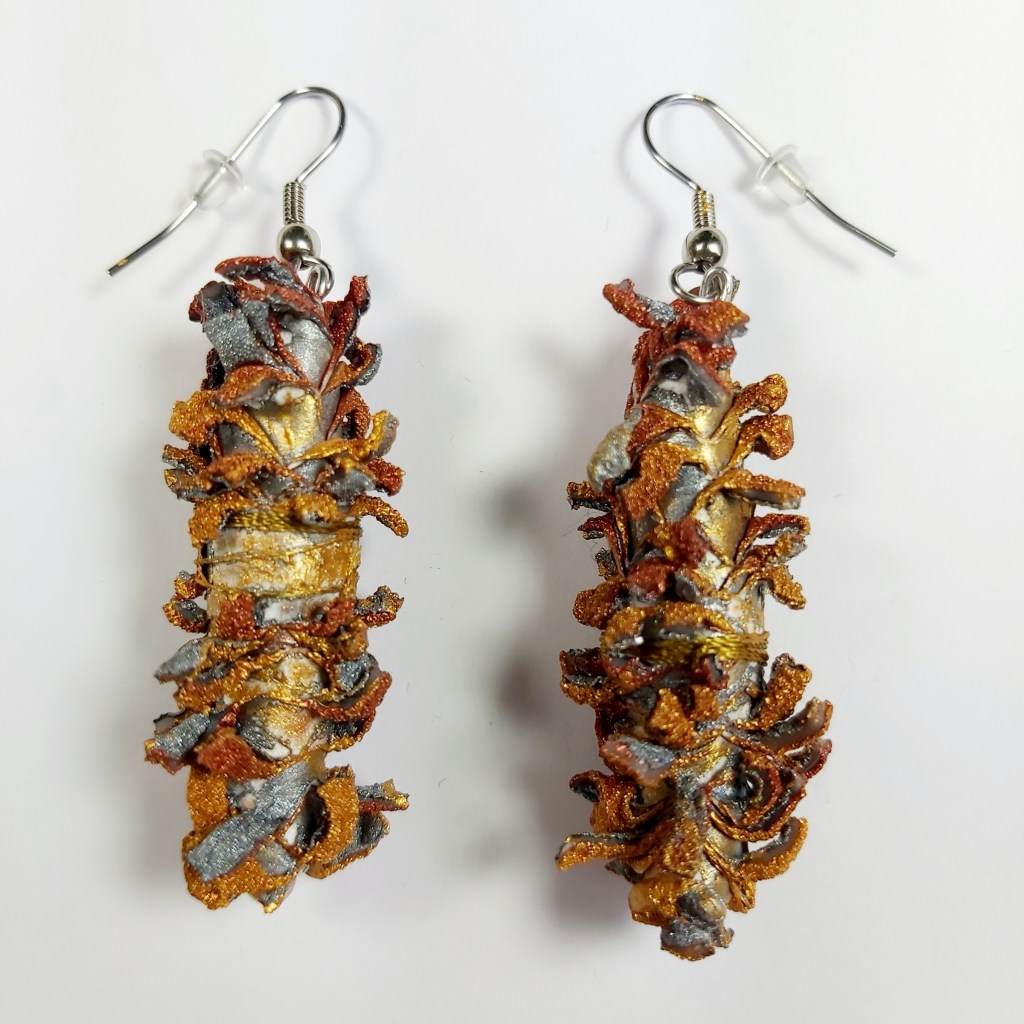
My latest distraction is Tyvek Earrings! A few weeks ago I ran a Tyvek workshop for the Louth Textile group and created a pair of earrings as one of my workshop samples. They proved popular with the group so I made several more pairs for the show. Unfortunately I forgot to photograph them all before the opening but these are what came home with me and are now in my SHOP. I’ve never been a fan of smooth Tyvek beads but I love them with the added textures. It’s quite a challenge making these and absolutely impossible to get an exact match but I quite like that as it adds to their uniqueness!

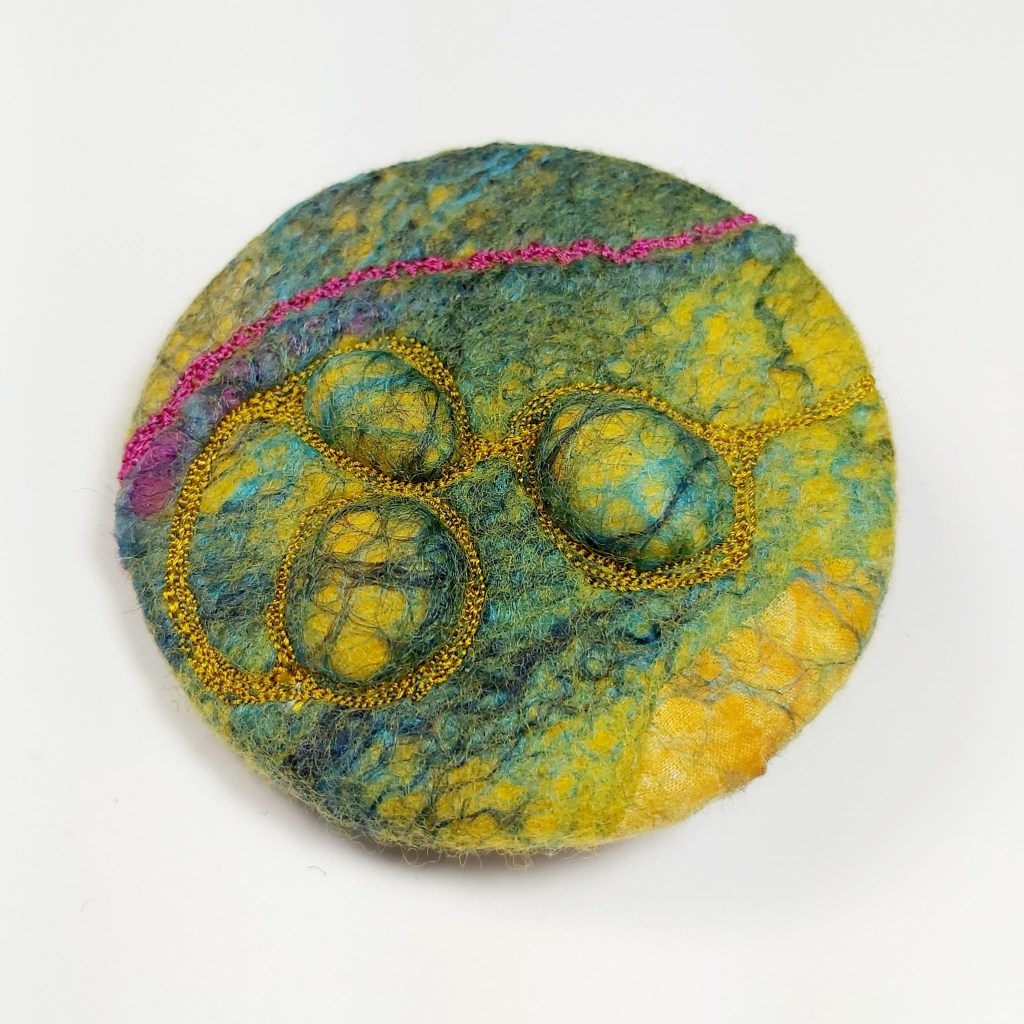
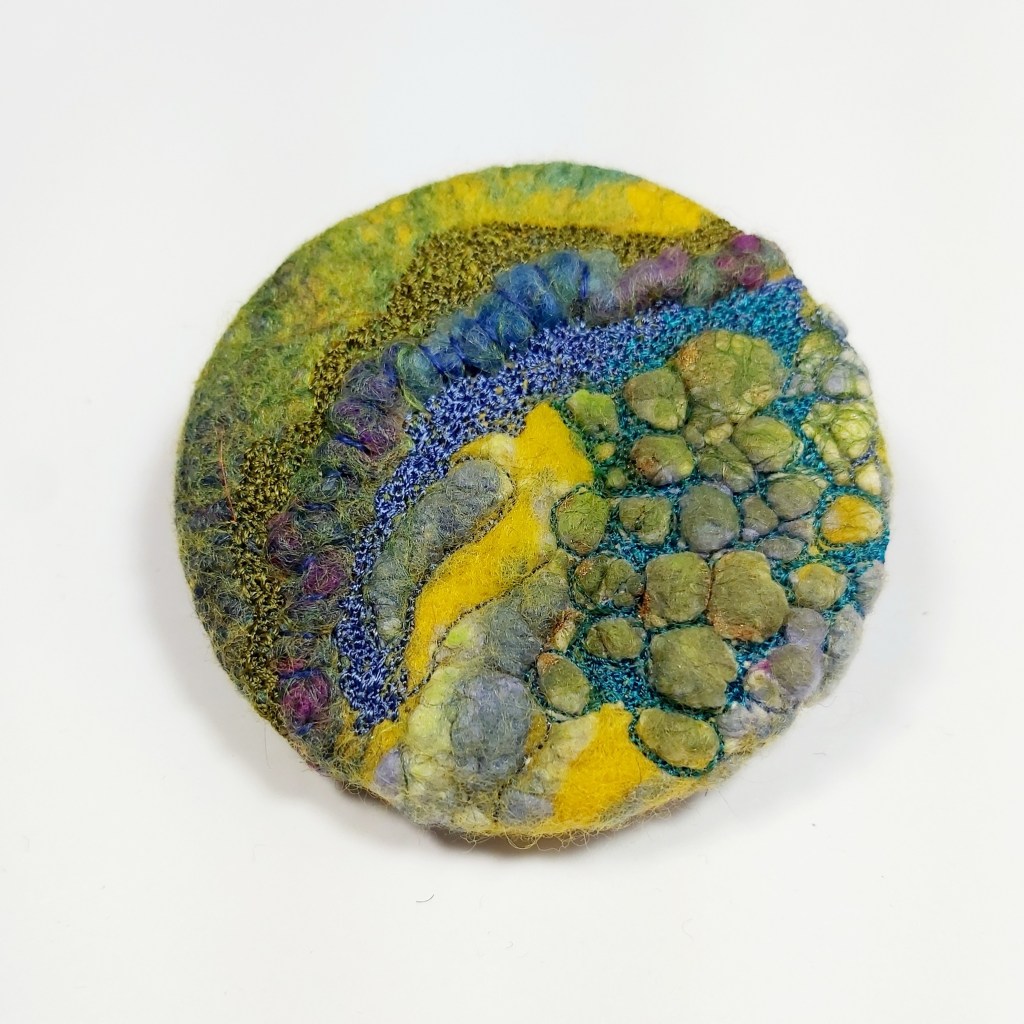
I also made a new batch of gold and silver Tyvek Brooches. I like to mix textures and so these often feature on my felted scarves and collars. These three came home with me so are also in my SHOP along with some new wet felted Brooches.

A few days before the show I started to rework a piece I’ve had hanging in my hallway for several years. It’s been hanging on display behind glass, I don’t know why I originally did that as I’ve always preferred to see textile pieces unglazed. Anyway I recently removed the glass which instantly improved the look but then decided to give it a revamp with added textures, more FM stitch and stronger colours. I’m thinking peeling paint on rusty metal and I’m liking where it’s going but it’s not finished yet so I had it displayed on my stand as “work in progress”!

I’ve detailed a few more events that have happened over the past few months over on the Felting and Fibre Studio which can be found here.

With only three more workshops before Christmas things are starting to quieten down so time to think about new projects and ideas for 2025.

The Big Textile Show…..

I’ve just started packing ahead of tomorrows drive to Leicester Racecourse for the set up of the Big Textile Show. It’s always a fabulous weekend with wonderful exhibits including textile art, beading, felting, lace making, spinning, wire work, etc, etc. For those wanting a bit of retail therapy there will be more than thirty different traders as well as a variety of workshops offering everything from learning to Crochet to Intricate Metal Weaving and everything in between. Add to all this a well stocked, reasonably priced food hall and free parking, what’s not to like!

The show opens at 9.30am on Saturday 29th & Sunday 30th Oct.

Uttoxeter Catch Up…..

I’ve done it again…..it’s over six months since my last post and I’m now sitting here wondering how it happened and whether it’s possible to “seamlessly” slip in half a dozen catch ups without it looking clunky!

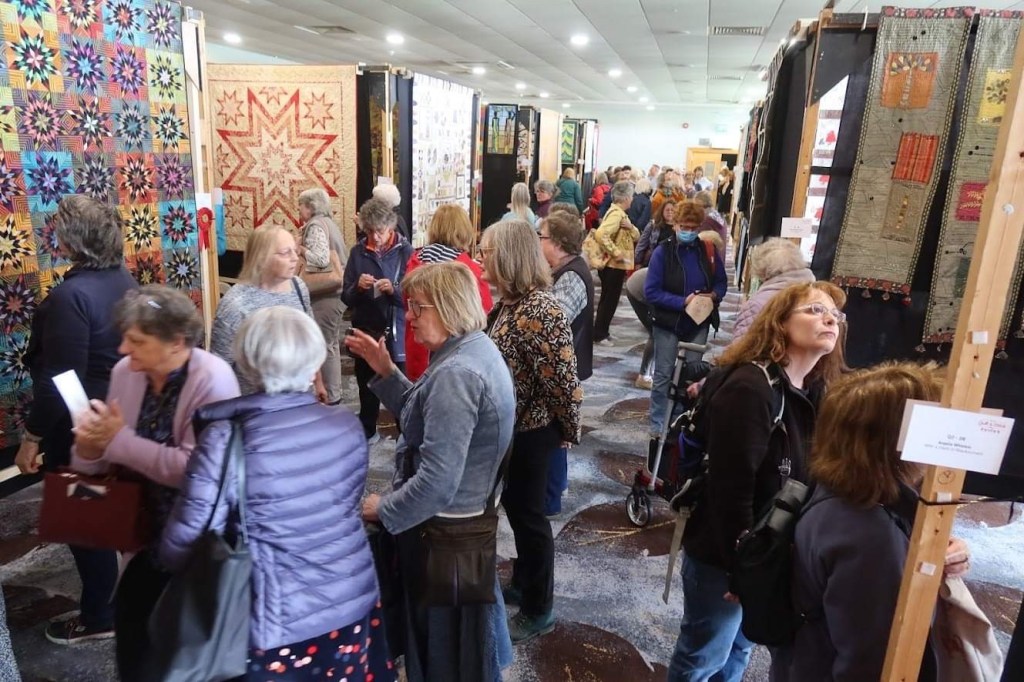
As this blog originated as an online journal to keep track of the things I’m doing, seeing and experiencing creative wise, I really do want to fill in the yawning gap that was Spring & Summer 2022 but I’d be kidding myself to think I can make it look seamless. Some of what I’m going to post has already appeared on the Felting and Fibre Studio. I would normally write it for myself first and then copy it across but, for whatever reason, it didn’t happen! Anyway, here goes with my Uttoxeter catch up which takes us back to April and the Quilt & Stitch Village, an annual 3 day textile show held at Uttoxeter Racecourse in Staffordshire.
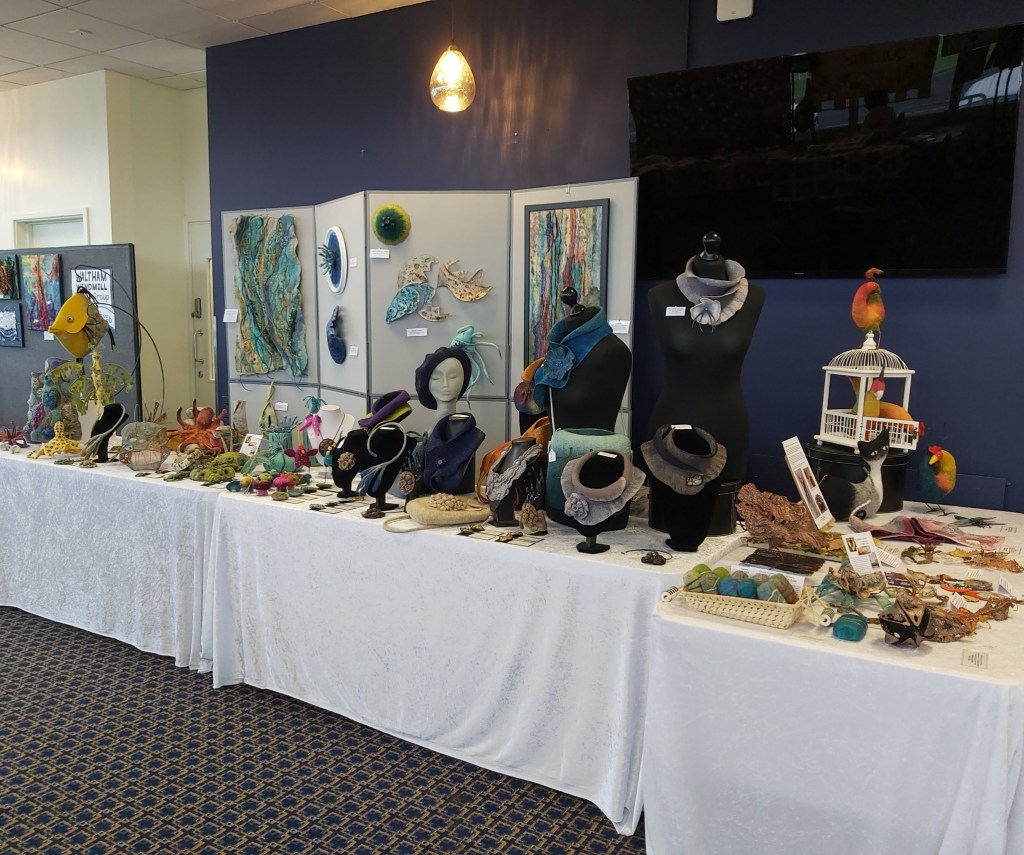
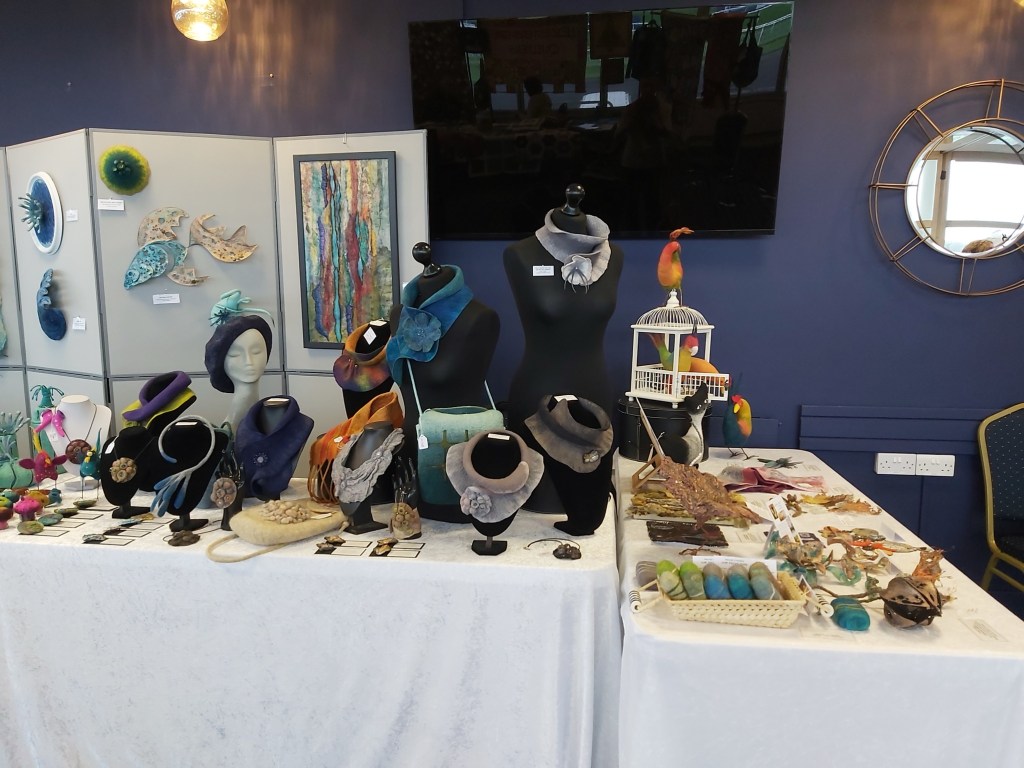
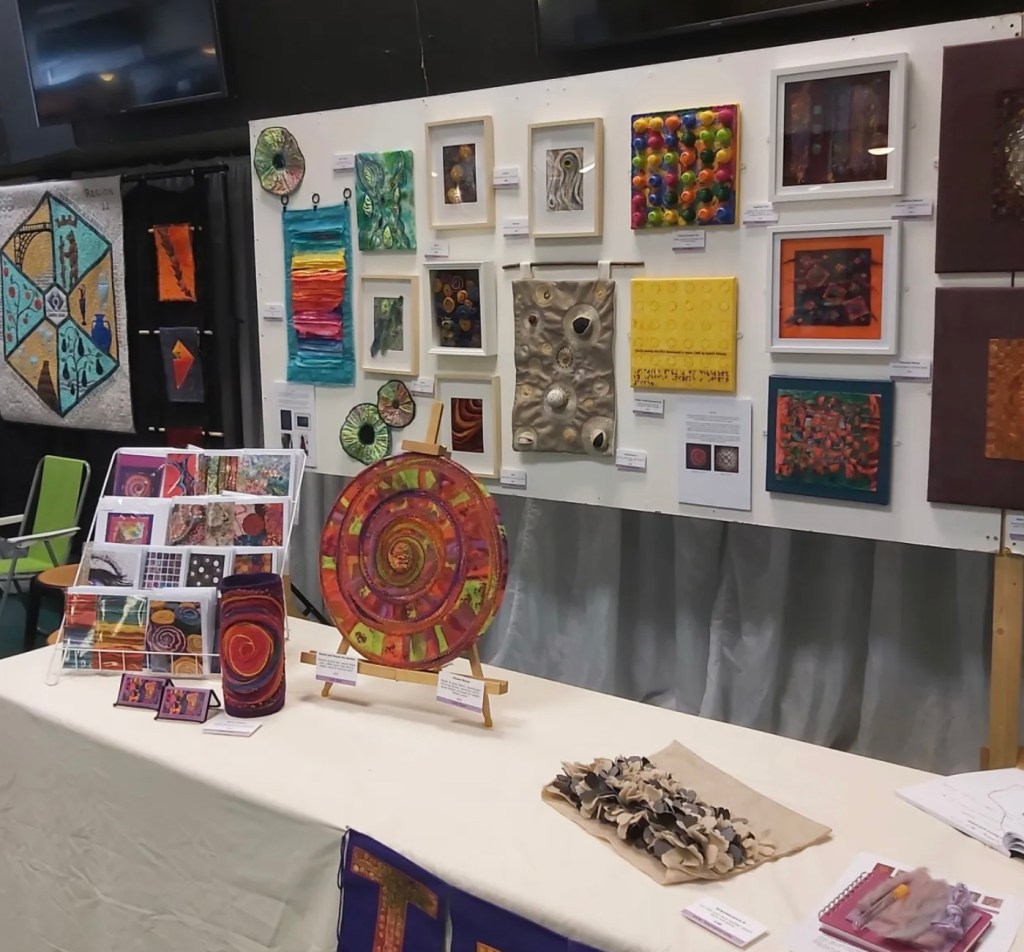
It was my first time exhibiting at Uttoxeter and I wasn’t sure what to expect. Would visitor numbers be low? Most ladies attending shows like this are of a certain age (me included!) and I know some still have concerns about mixing in large groups. This is predominantly a quilt show, would there be enough interest in feltmaking or would the majority walk straight passed? I was manning my stall alone…. would the neighbouring stall holders be too busy to relieve me when I needed a loo break? I needn’t have worried, when the doors opened at 10am the visitors flooded in and it turned out to be three very “full on” days! These are a few of the items I had on show……

Just prior to the show I’d felted myself a couple of sculptural, roll edge collars which I wore over that weekend. They attracted a lot of interest which has led to me making them as commissions as well as running one day workshops for ladies wanting to make their own.

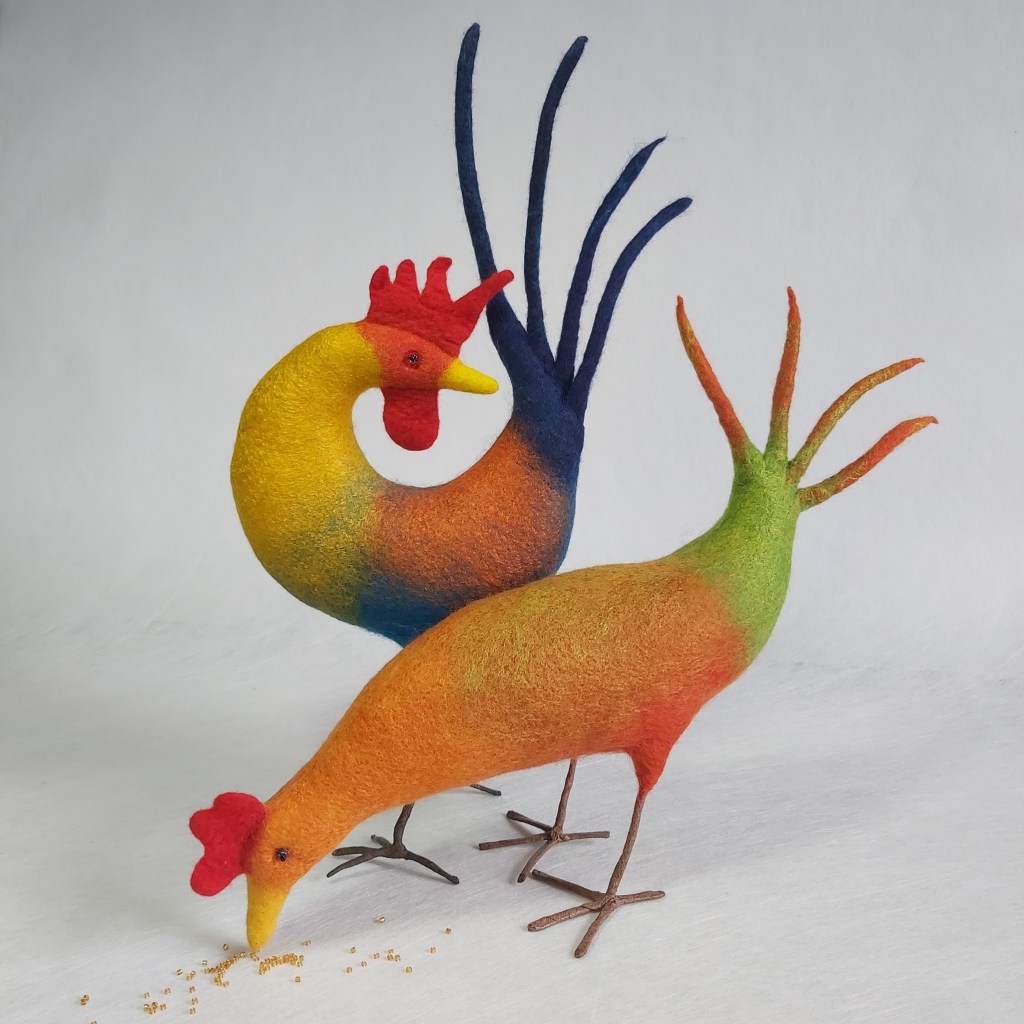
The cockerel and hen also proved popular with visitors. I had originally read a free tutorial on how to make a wet felted parrot in an issue of the Australian “Felt” magazine. It had been written by a wonderful Feltmaker called Sue Smorthwaite who creates fabulous birds native to her home in Australia. Keen to try the technique, but not wanting to use Sue’s design, I had the idea to make a pair of chickens. By making two I could kill two birds with one stone (sorry!) as I also needed to create a pair of “something” for a Noah’s Ark Project…..but that’s for another post!

My pitch was next to Project Linus, a charitable organisation that provides quilts and blankets for children in need. Their aims are to “Provide love, a sense of security, warmth and comfort to children who are seriously ill, traumatized, or otherwise in need through the gifts of new handmade blankets and afghans, lovingly created by volunteer “blanketeers.” And to “provide a rewarding and fun service opportunity for interested individuals and groups in local communities, for the benefit of children.”

Project Linus always attracts a lot of interest and the two lovely ladies on that stand were swamped with visitors for the three days! Somehow they still managed to cover for me when I needed a comfort break which was really appreciated!

I didn’t get much chance to visit other stands but when Jane (Wylde Oak Artistry) came over to say hello and told me she was working with Spun-bond fabrics I had to go see her work. I loved her masks and corsets, made on the theme of body dysmorphia, and came away feeling that there is so much more I could be doing with Lutradur!

Another stand I particularly enjoyed was “Traverse”, a group of exhibiting textile and mixed media artists. Apologies for not getting close ups of their work…….it’s worth following the link and taking a look at their website.

It was a good show, spread over three large halls as well as various other smaller buildings. Most of the photos I took were prior to opening but as you will see from the last three, we really did get visitors!

British Quilt & Stitch Village…..

Back in 2019 I signed up to take part, for the first time, in the 2020 British Quilt & Stitch Village Show which is held annually at Uttoxeter Racecourse in Staffordshire. Needless to say it got postponed due to Covid and was rescheduled for 2021. With Covid delaying it yet again it was rescheduled for 2022 and will finally be launching in three weeks time on the 22nd of April.

It’s been such a long time coming I am so excited at the thought of getting back to exhibiting again after all this time! It’s also going to be great to see the other exhibits…..online exhibitions are better than none but you can’t beat being up close and personal to really appreciate other people’s work.

The show will be on from 10am each day on the 22nd , 23rd & 24th of April with lots of fantastic exhibitors and traders eager to help us replenish our stash! There is lots of free parking and the site is wheelchair accessible. The show offers a warm, friendly atmosphere, displaying plenty of embroidery/quilt exhibits (group & competition), and work from textile artists and Feltmakers plus a variety of traders and fabulous workshops.

If you are planning to visit please stop by my stall and say hello. Unless there is a last minute shuffle you will find me in the Premier Bar, these are just a few of the pieces I will have on show.

The Art of Transformation…..

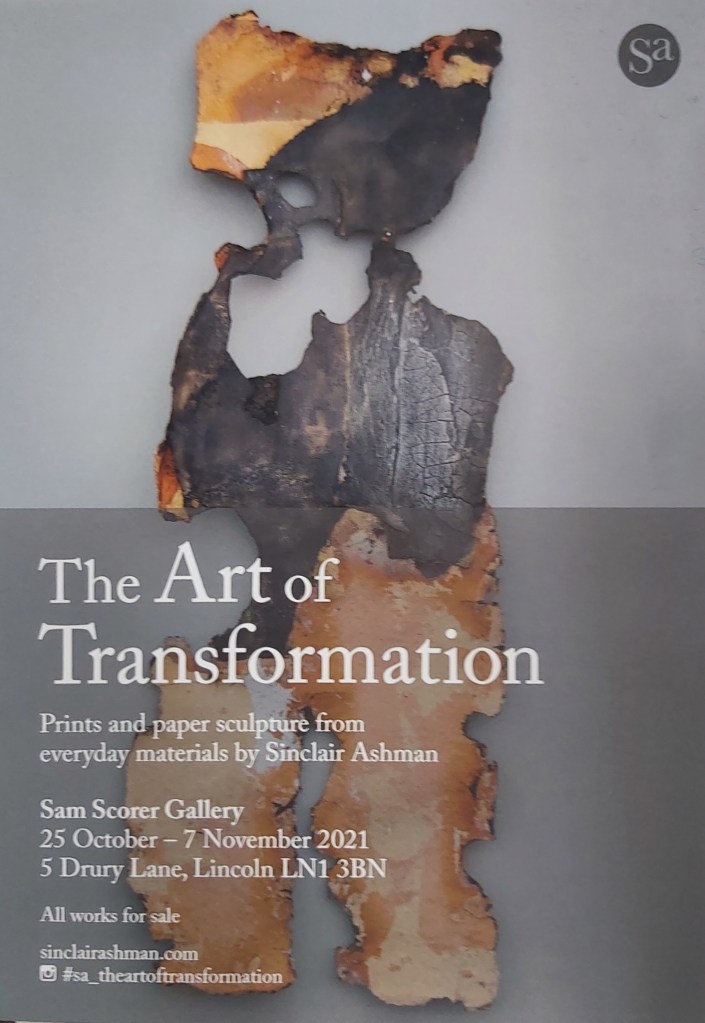
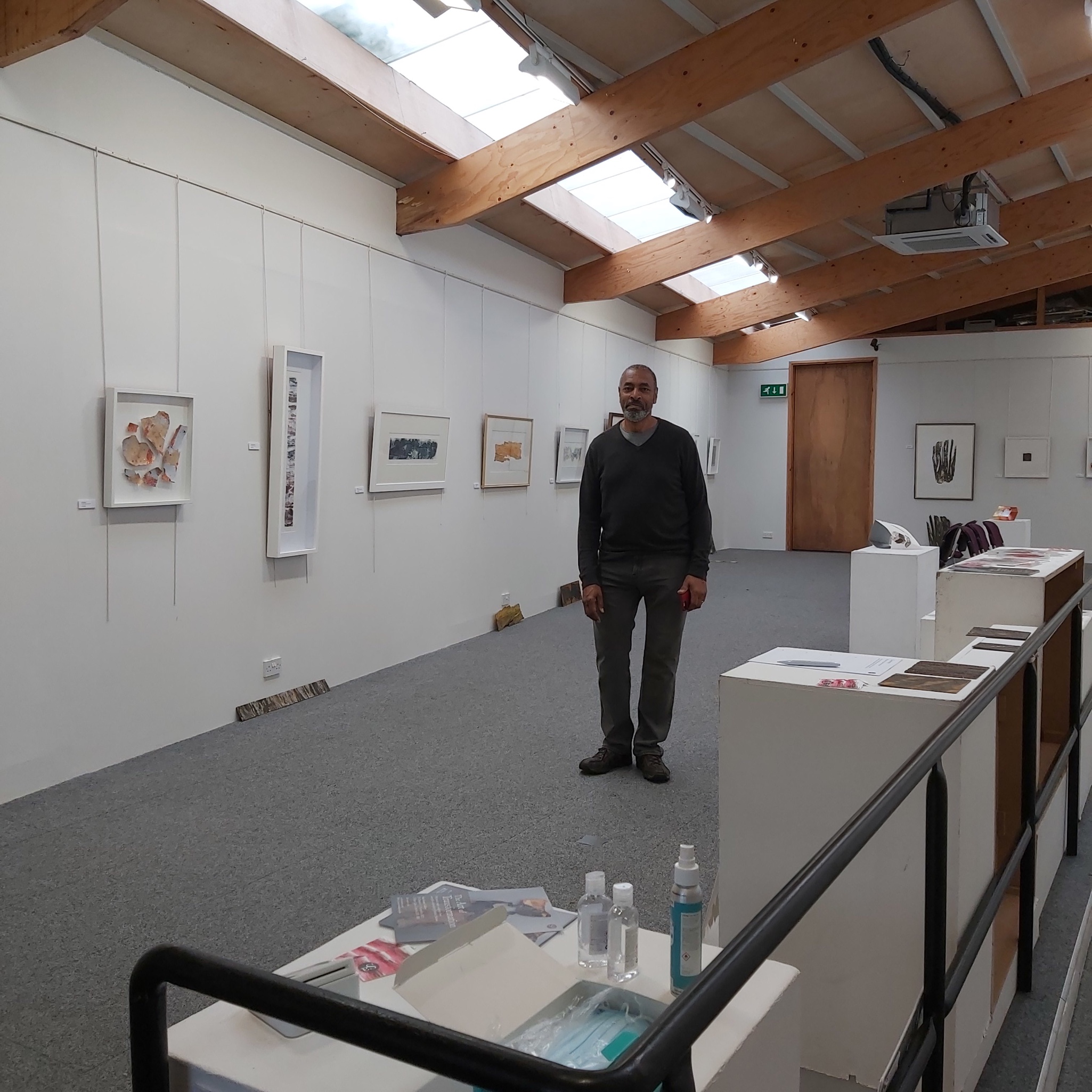
Yesterday I visited the Sam Scorer Gallery on Drury Lane in Lincoln to see their latest exhibition, The Art of Transformation, by Horncastle printmaker Sinclair Ashman.

Sinclair says “I am an experimental fine art printmaker, but prints are not the only things I make’.

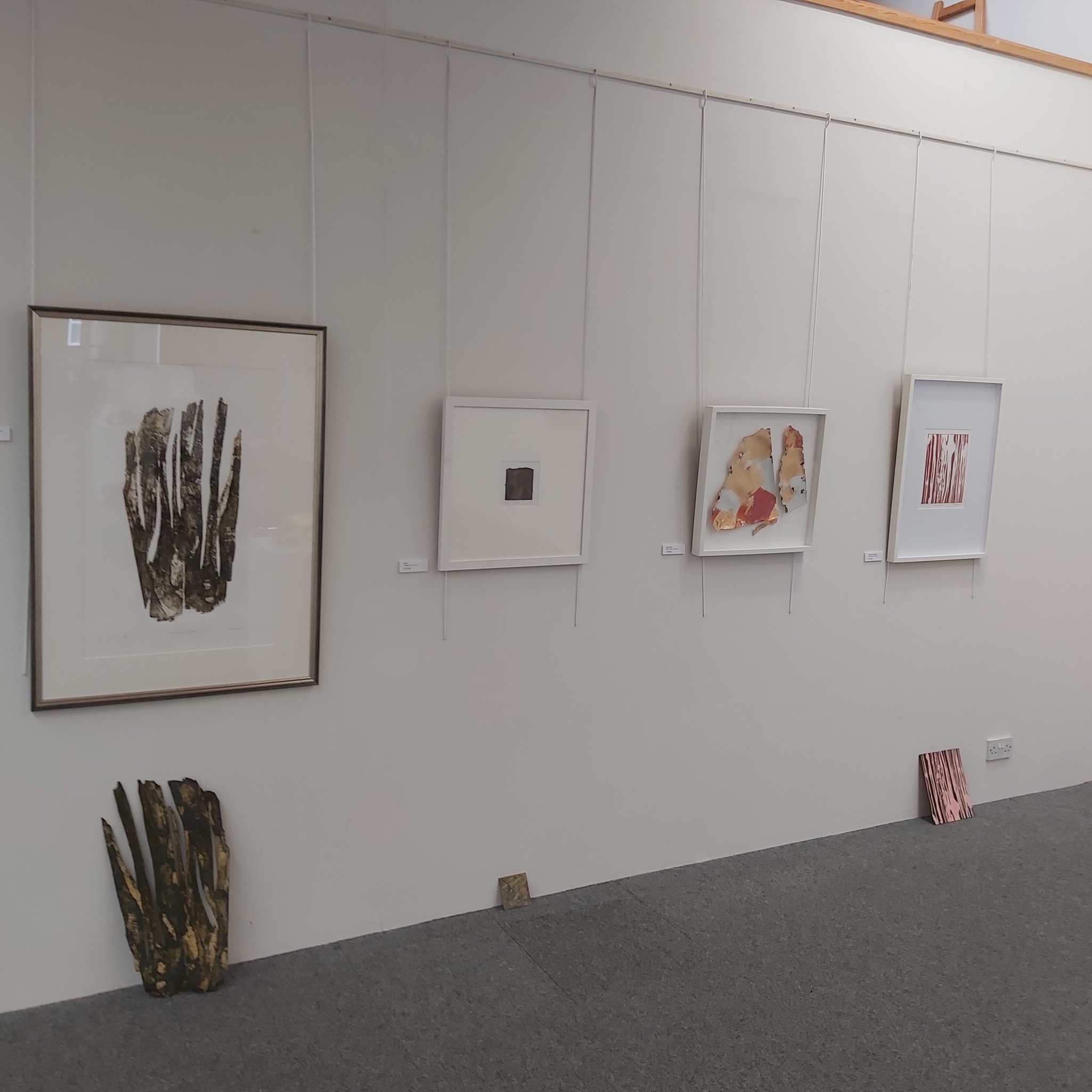
“The Art of Transformation will be a review of my latest work in burnt reliefs, metallics and traditional collograph printmaking over the last two years. It will also be an overview of selected prints from 2013 to the present. “

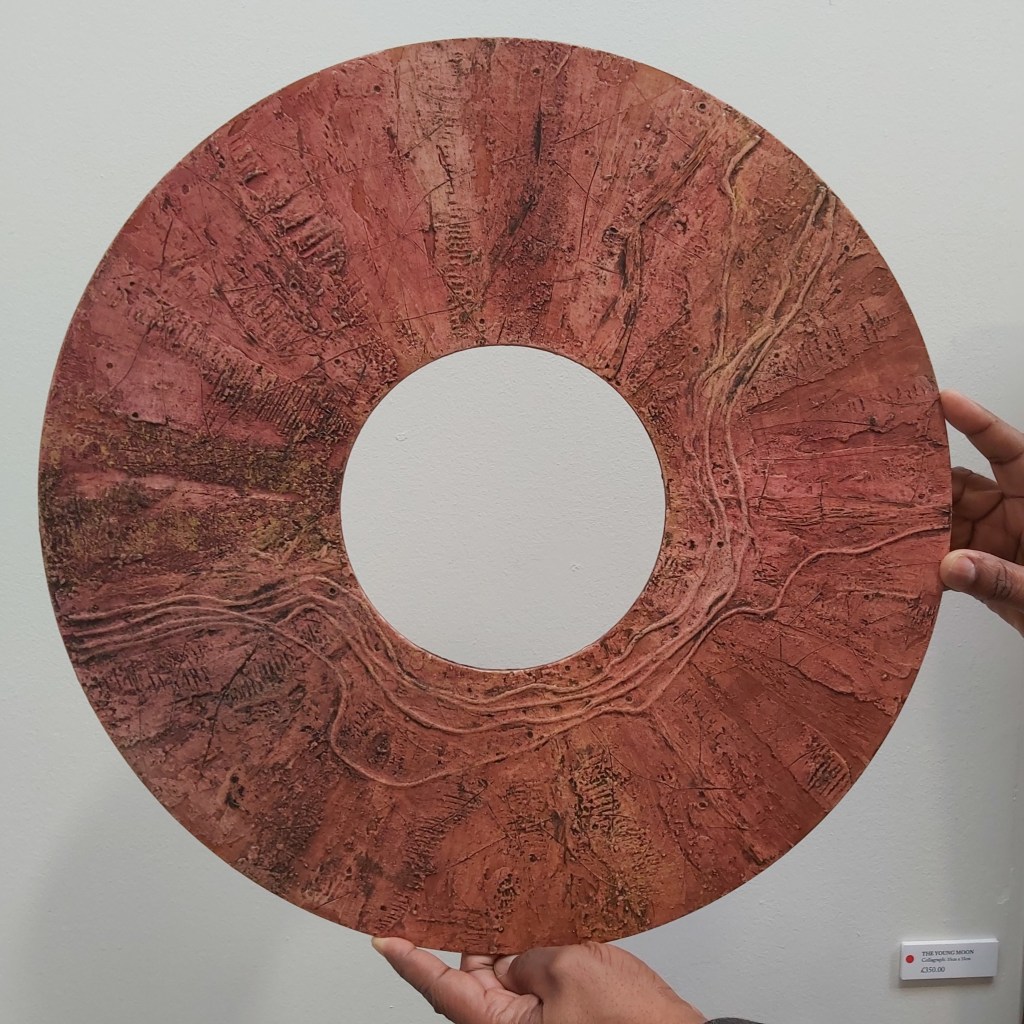
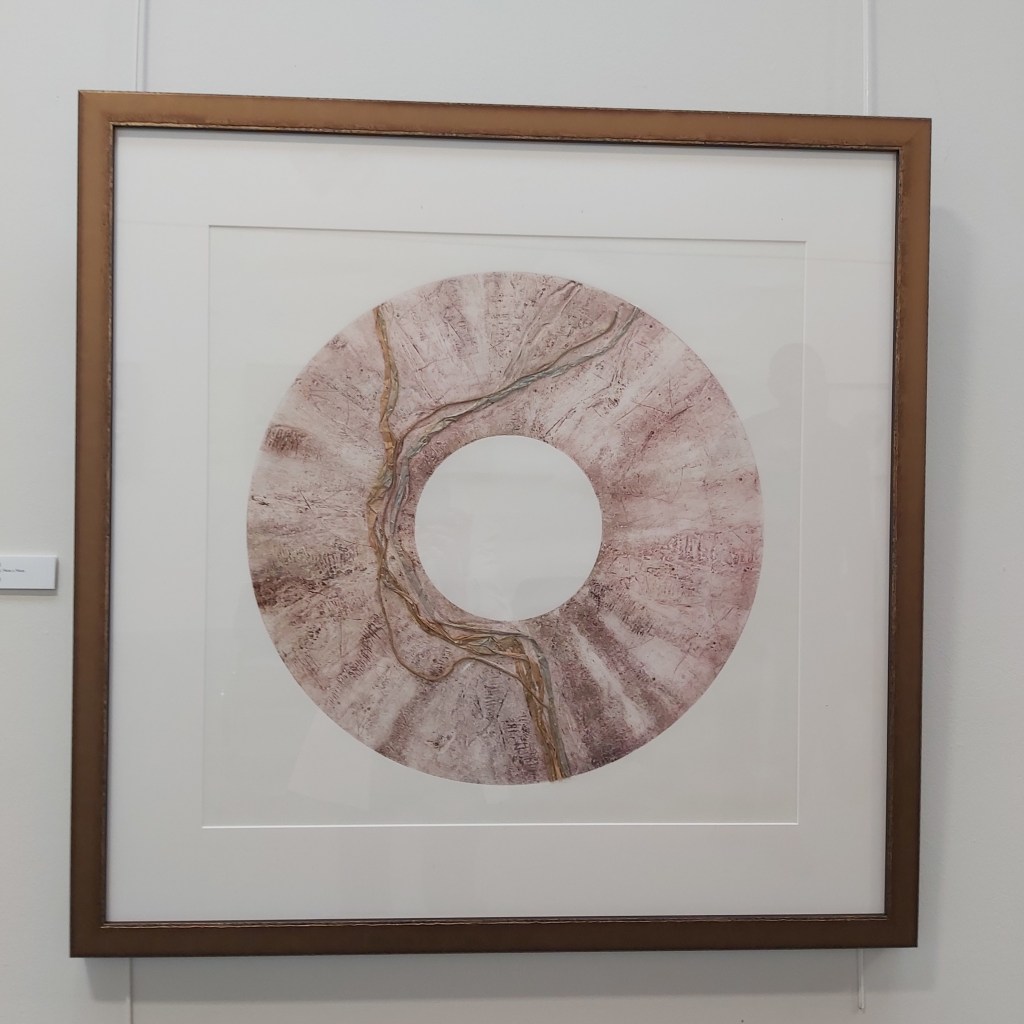
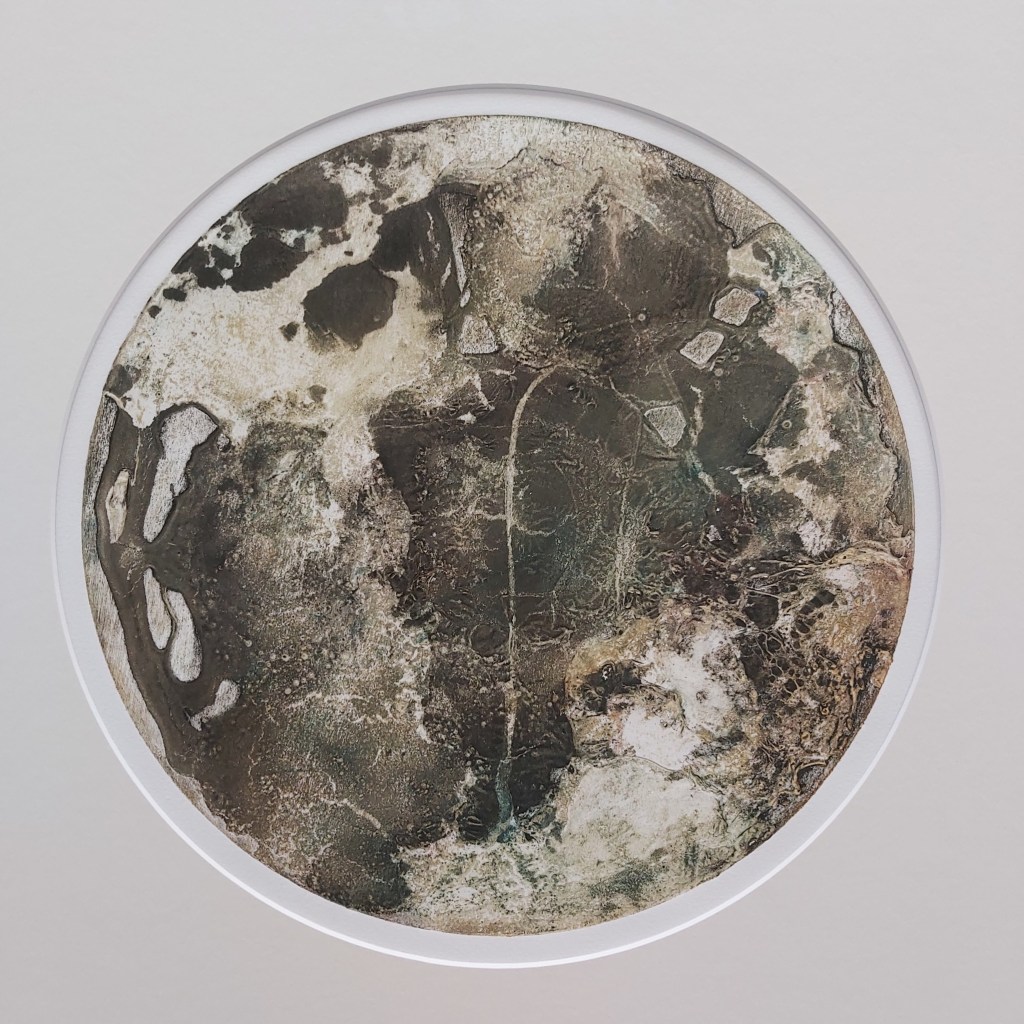
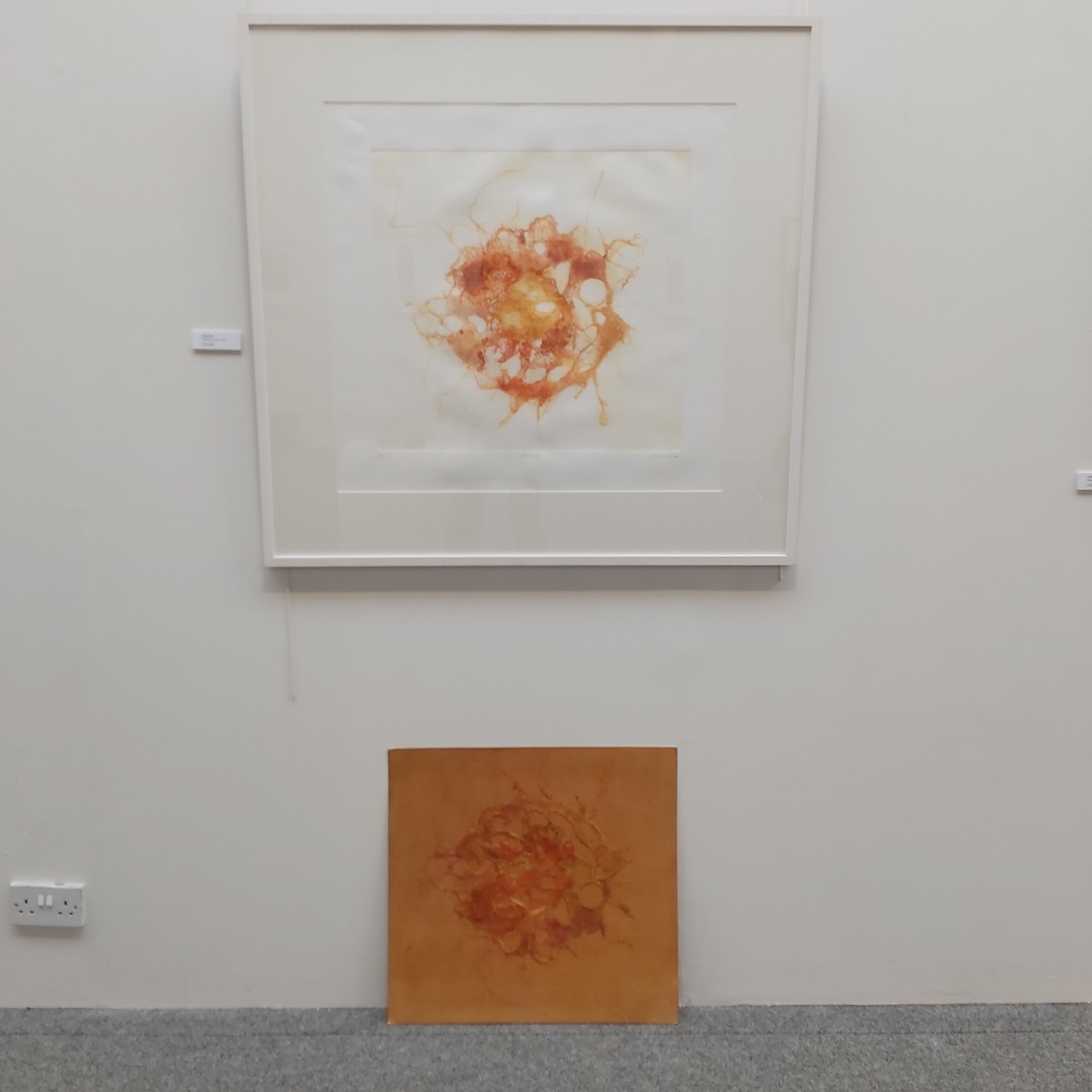
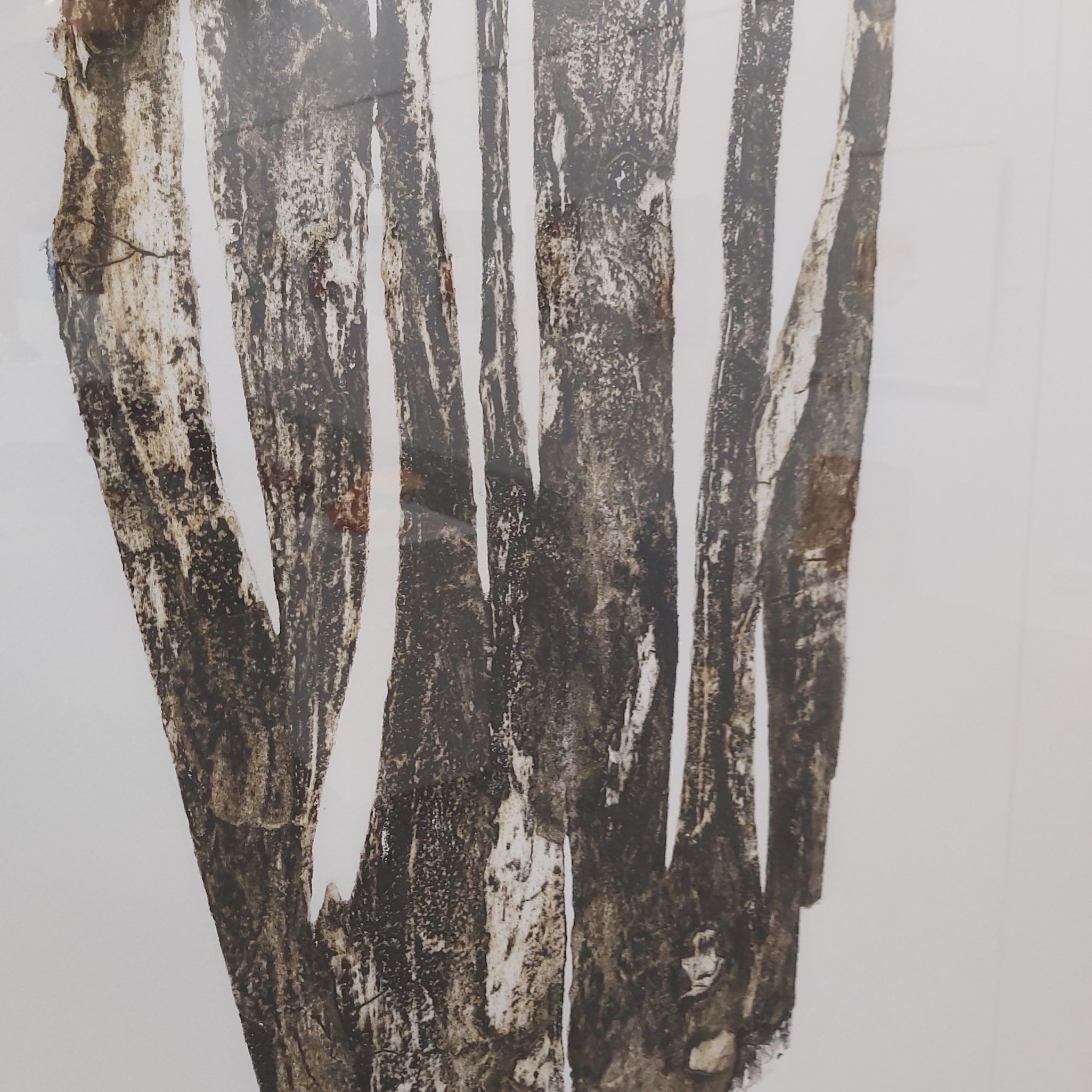
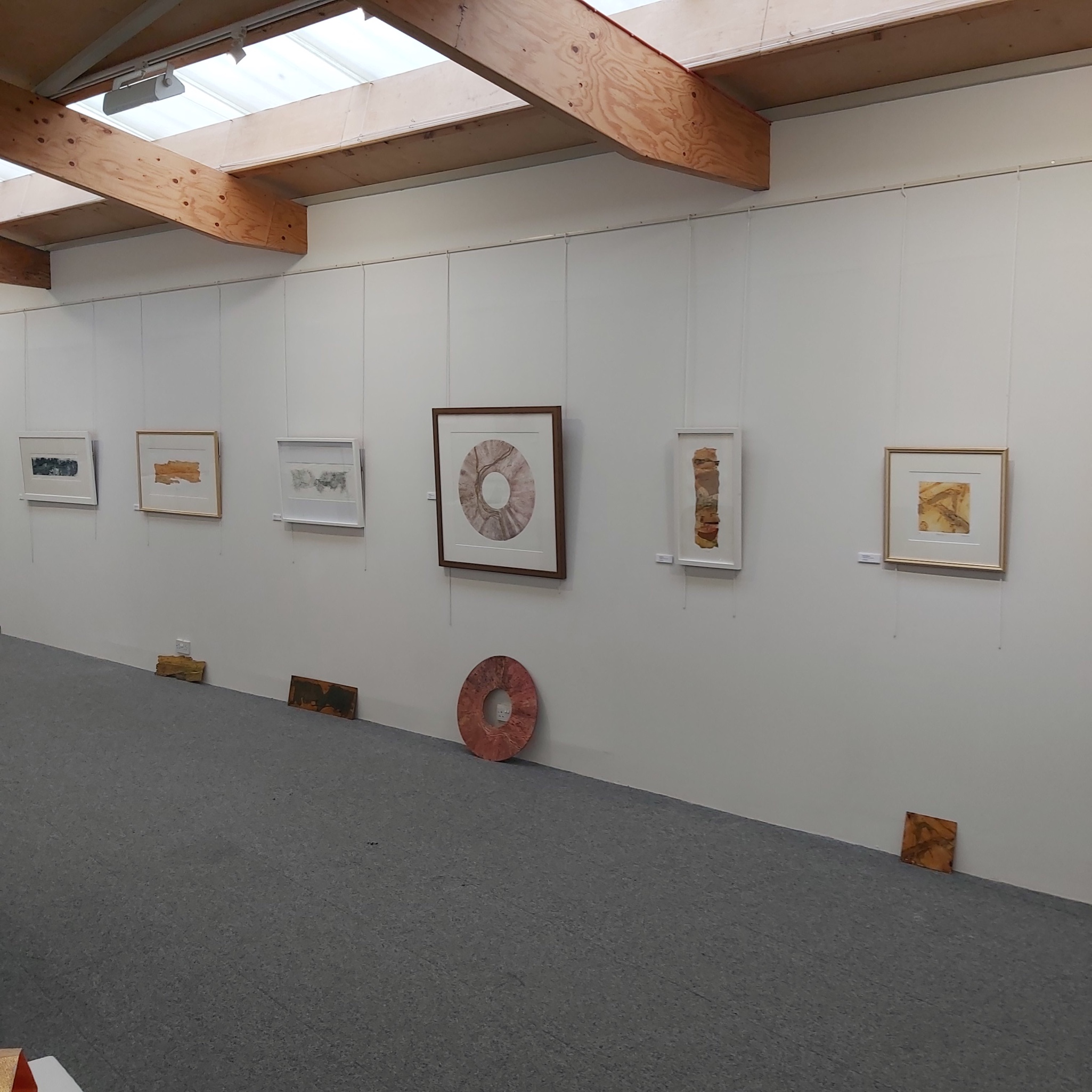
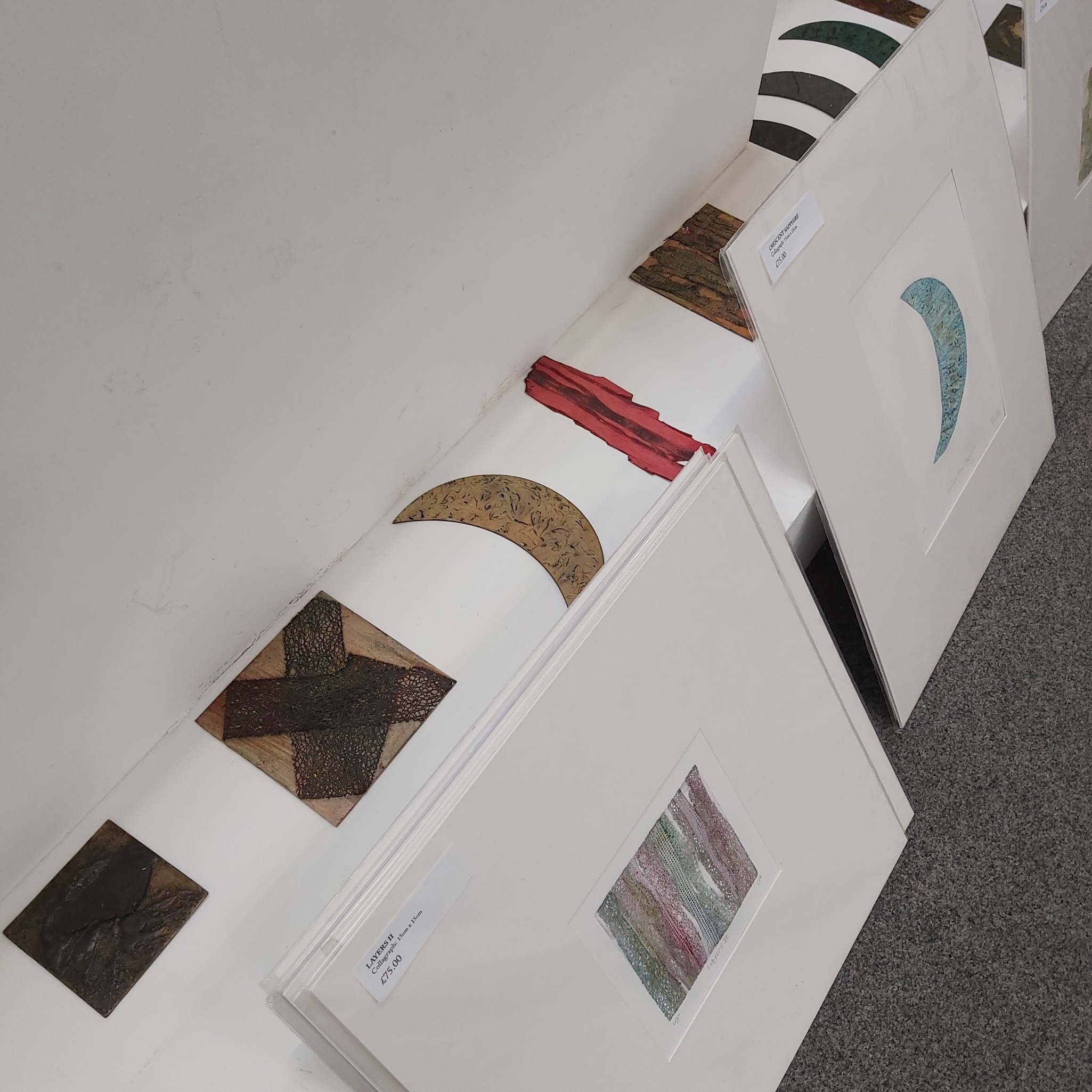
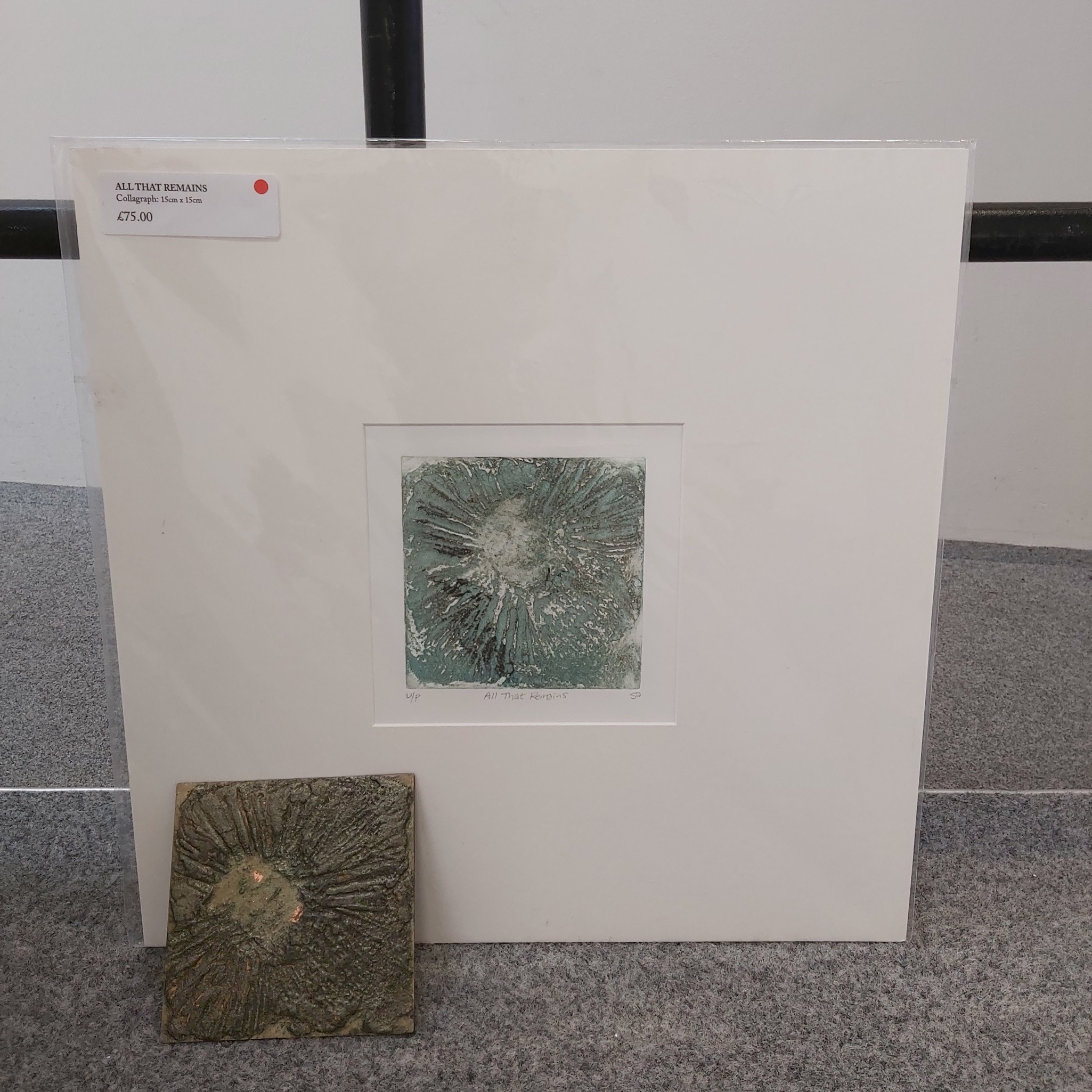
This exhibition provides a fascinating insight into the methods and materials that Sinclair uses as a printmaker and mixed media artist. What I found particularly interesting was seeing many of his beautiful, textural collograph plates, or lamina, which could themselves be hung as a work of art.

Circle I lamina 54cm x 54cm
Circle I was designed in response to the theme of “symbol” and decorated with raffia and hand stitched threads.
The Young Moon lamina
The Young Moon Print

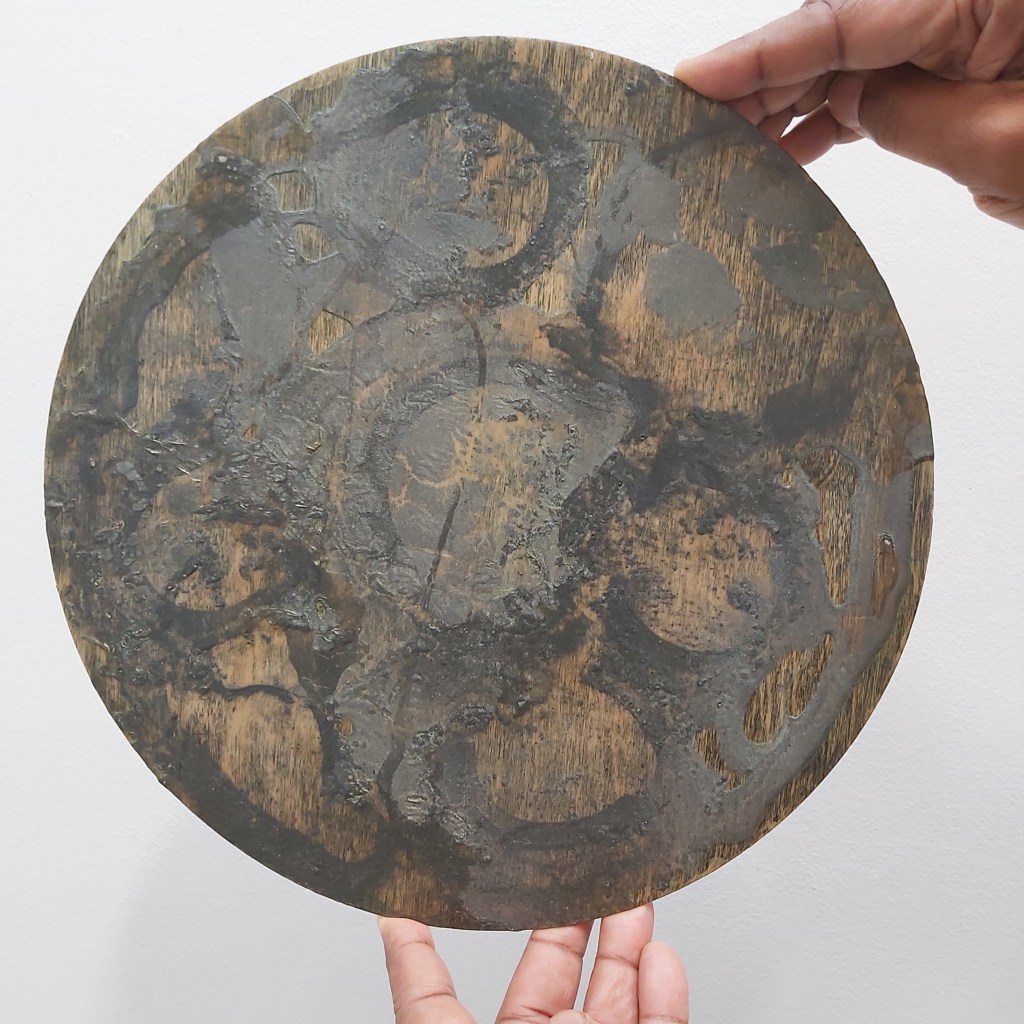
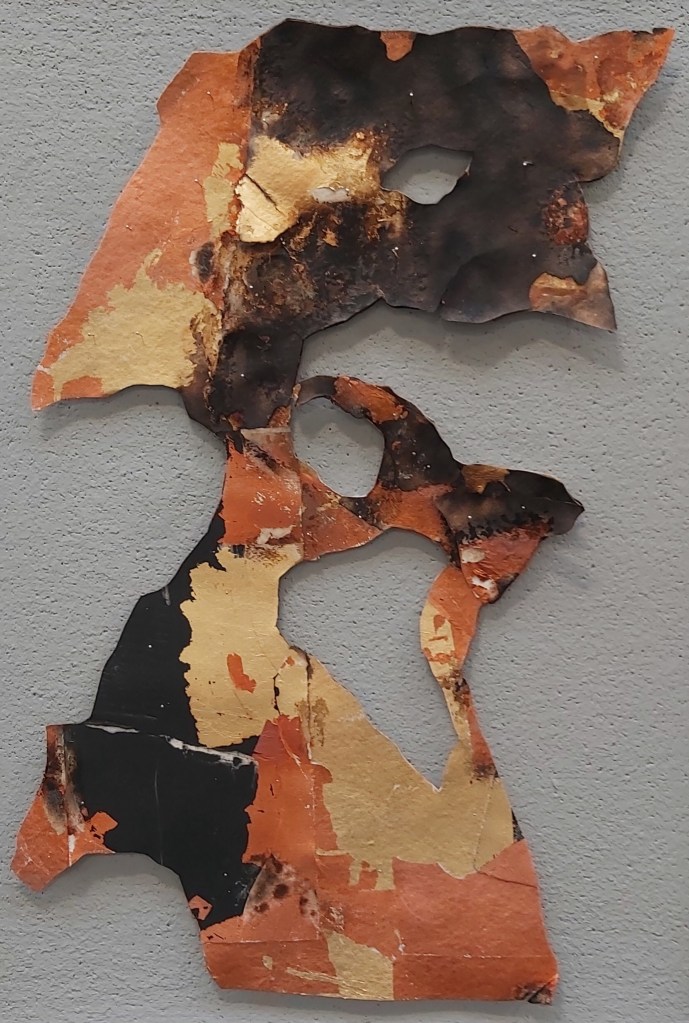
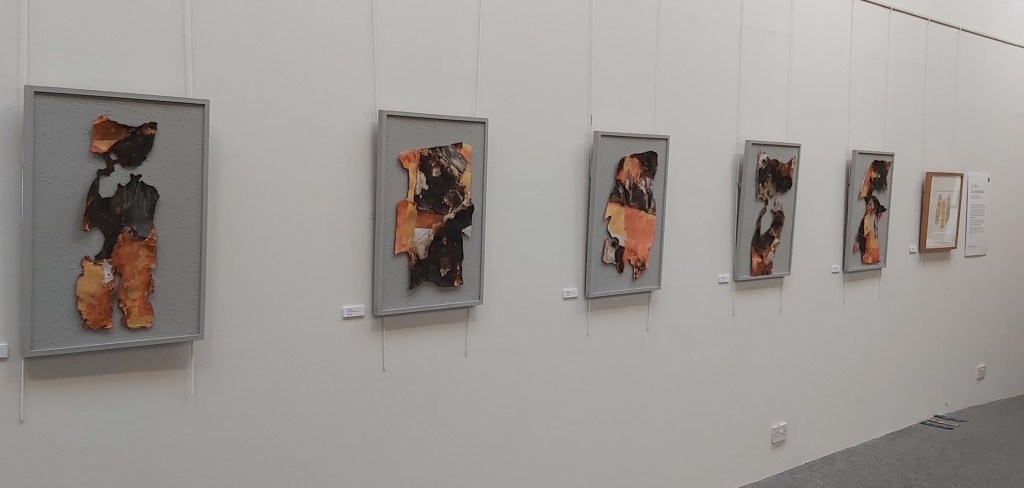
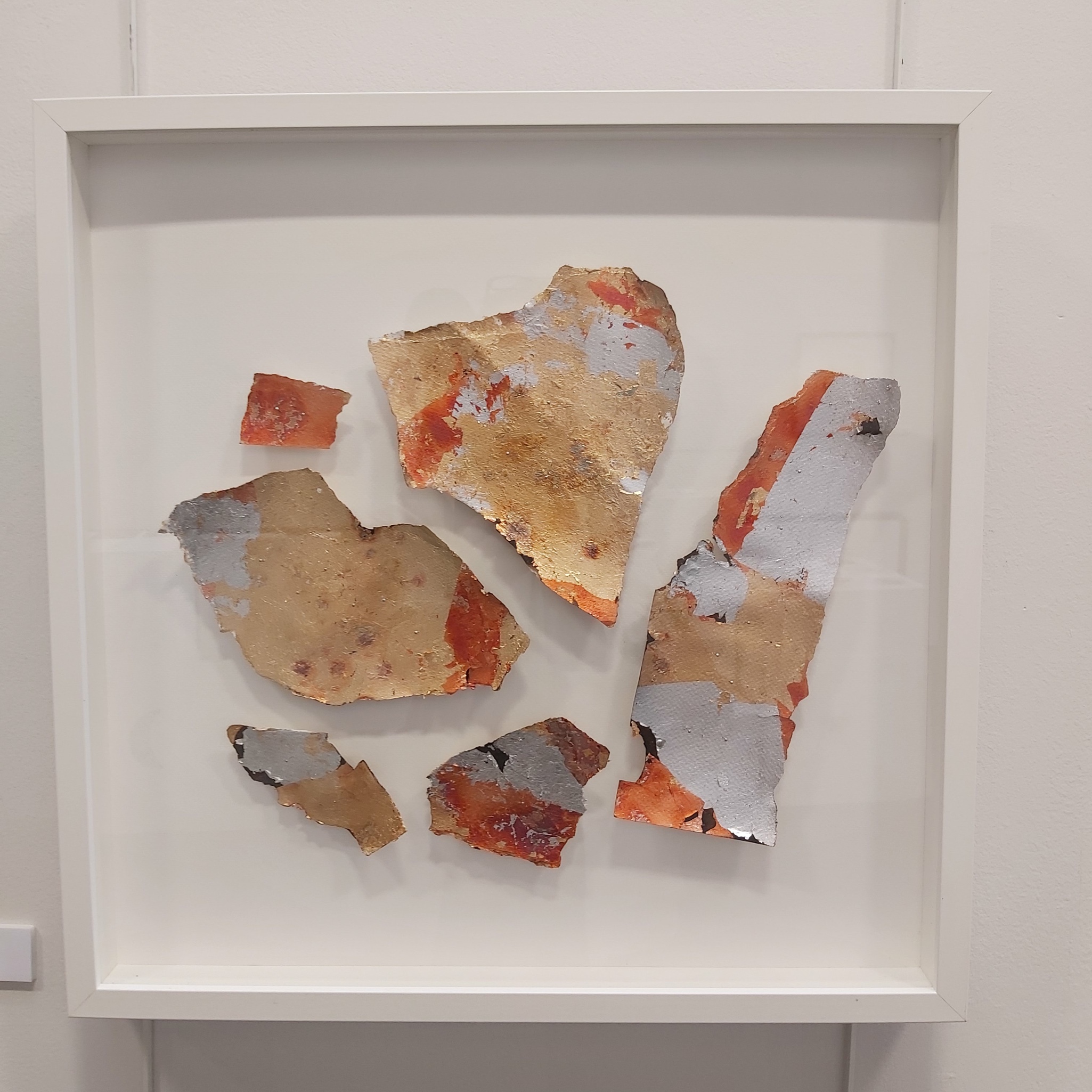
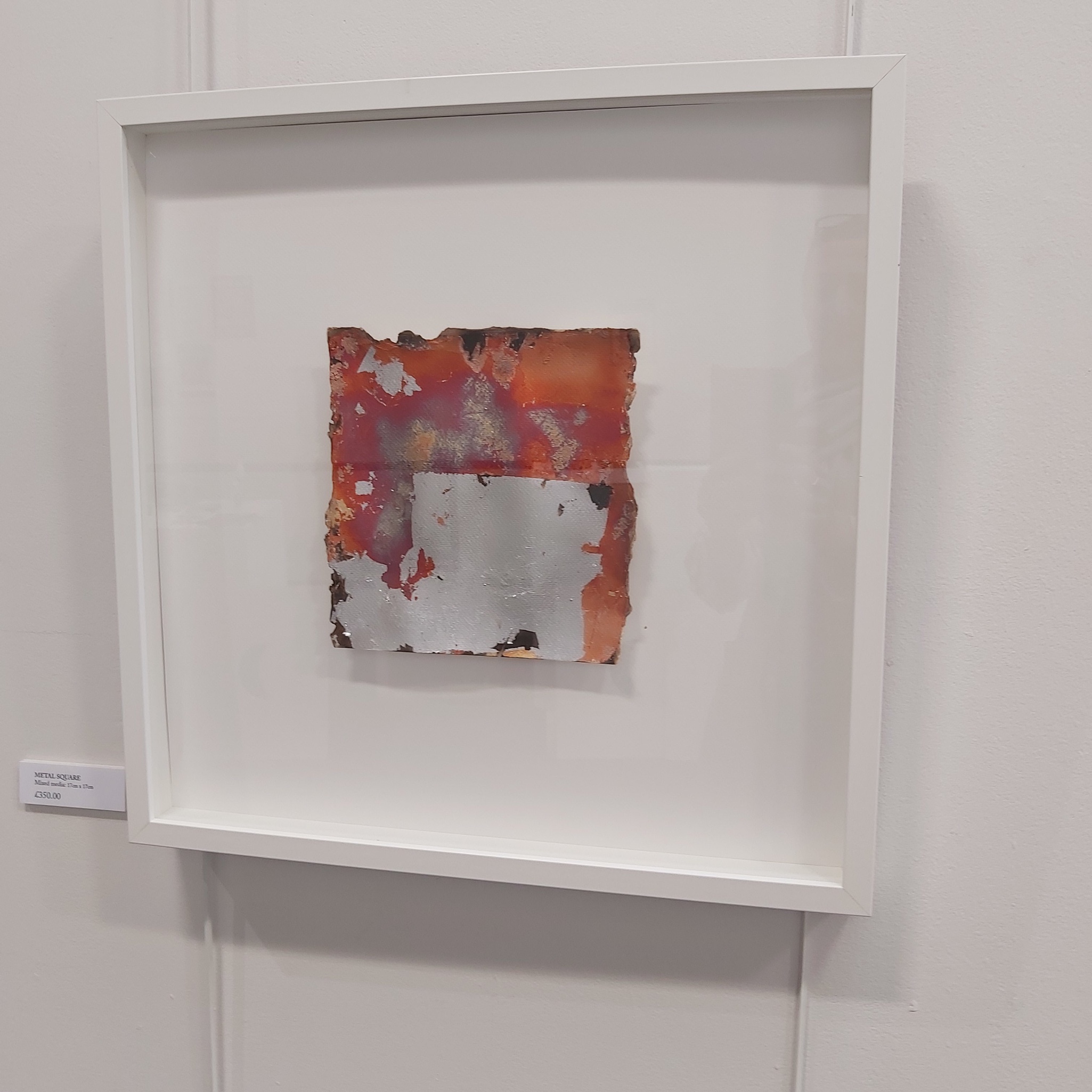
More recently he has been experimenting with applying intense heat to print paper and metal leaf to create the “Treasure” series. Heat from a paint stripper gun reacts with the composition of the leaf, resulting in vibrant, iridescent colours and singes the edges of the paper. “To date, ‘Treasure’ pieces have taken two different forms: images printed from multiple, segmented plates and non-printed pieces made with burnt copper, silver and gold metal leaf.”

Elemental 68cm x 47cm mixed media

Its an inspiring exhibition and it was great to get to speak with Sinclair about the different aspects of his work.

The Art of Transformation runs until the 7th November.

Final Show…..

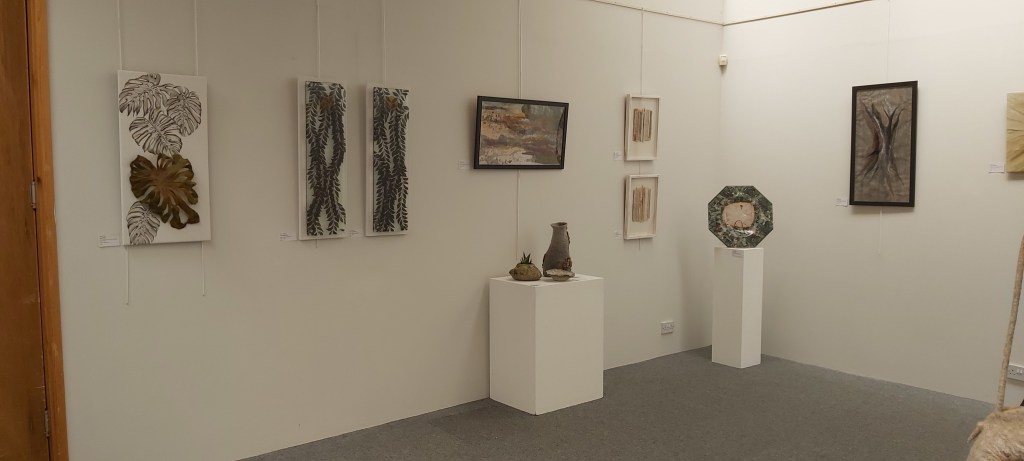
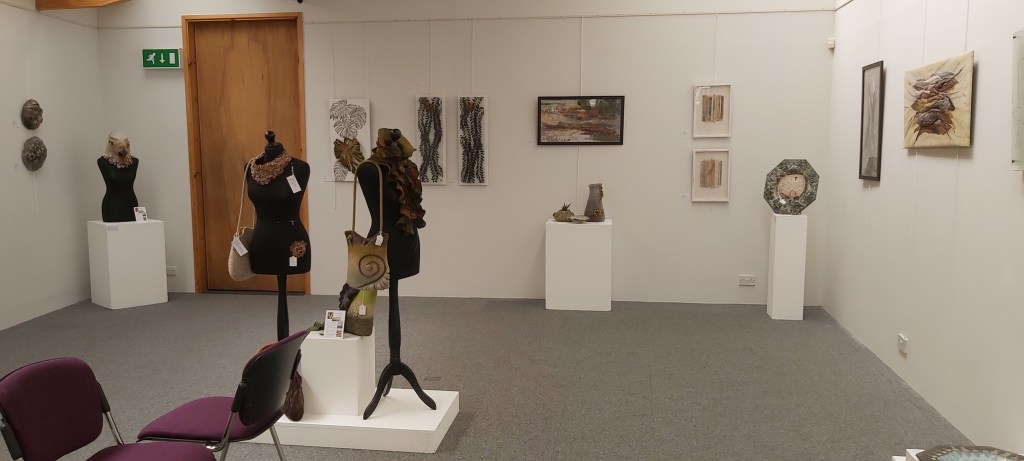
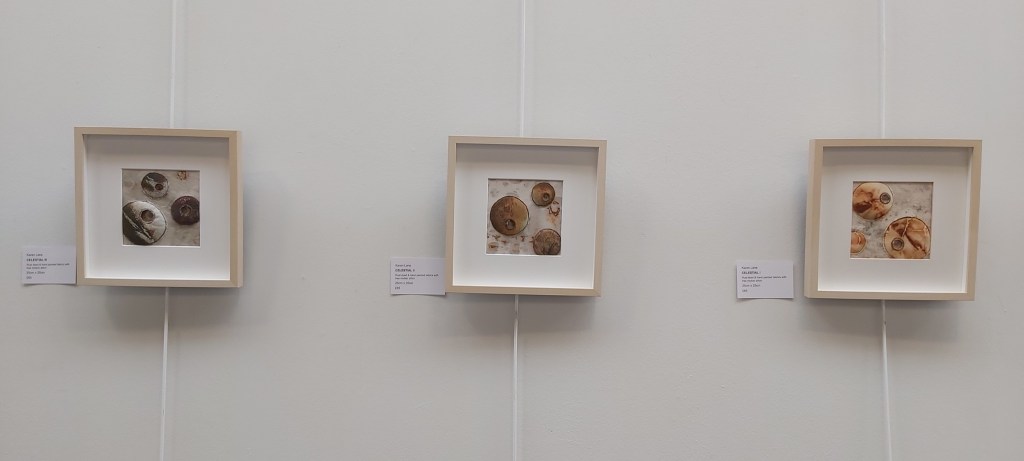
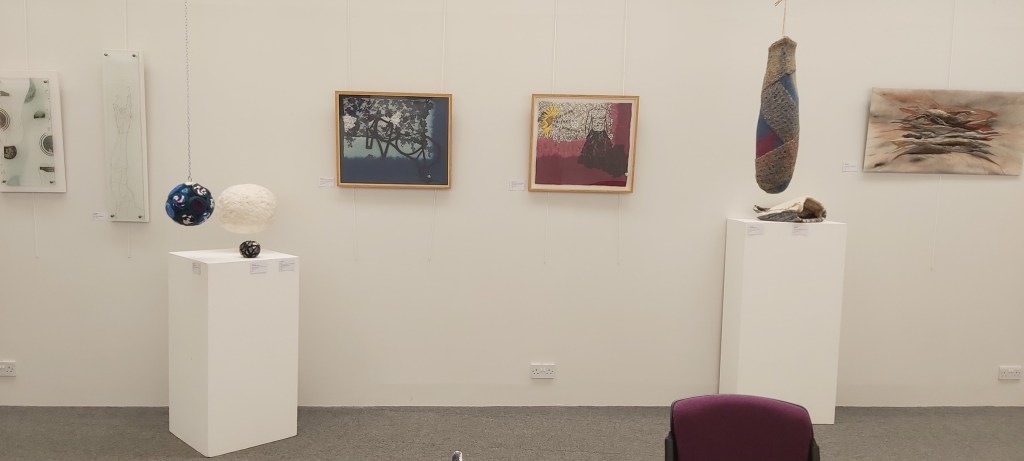
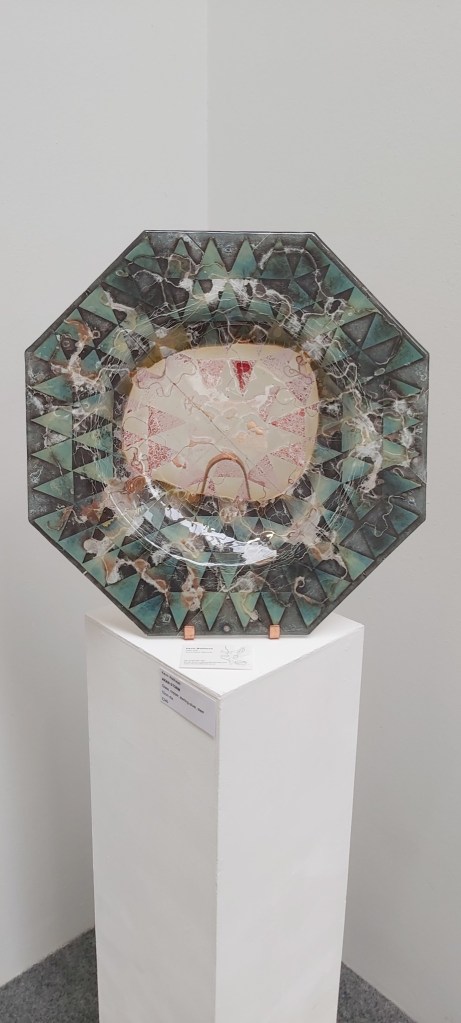
No, not my final show! This is the final show from members of the now defunct (CCN) Contemporary Craft Network. The group disbanded in 2019 but five of us have got together for one last time to exhibit at the beautiful Sam Scorer Gallery on Drury Lane in Lincoln’s Cathedral Quarter. The exhibition is free admission, open 10am – 4pm and runs from today until the 20th June. (There is a sixth person mentioned on the poster but unfortunately Andrew had to pull out at the last minute)

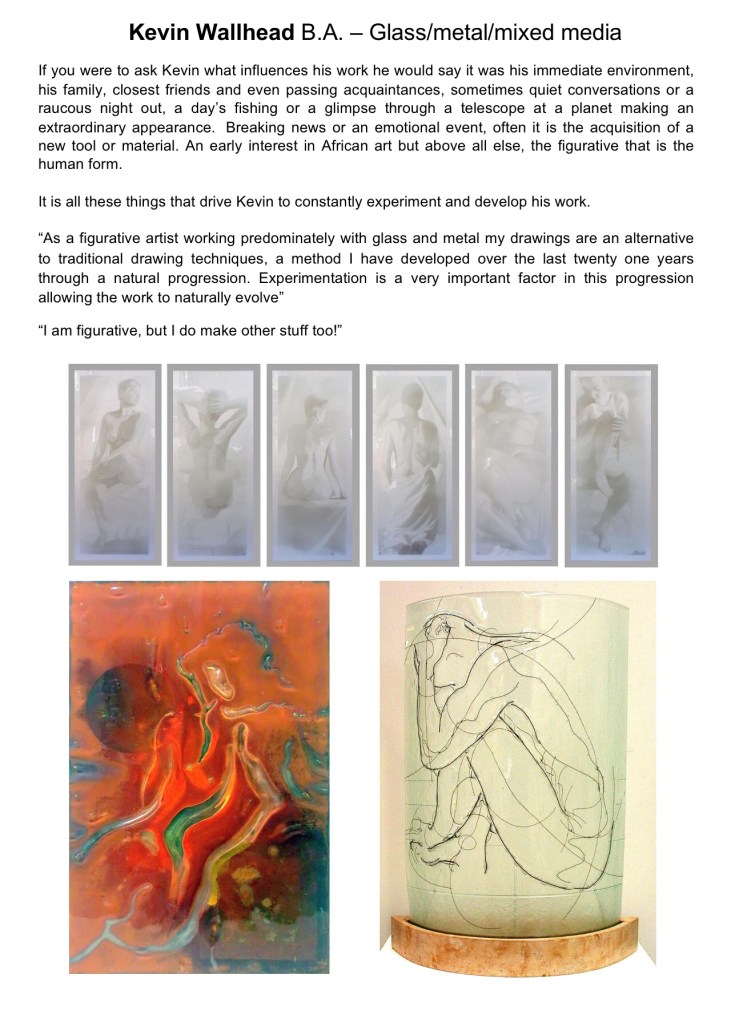
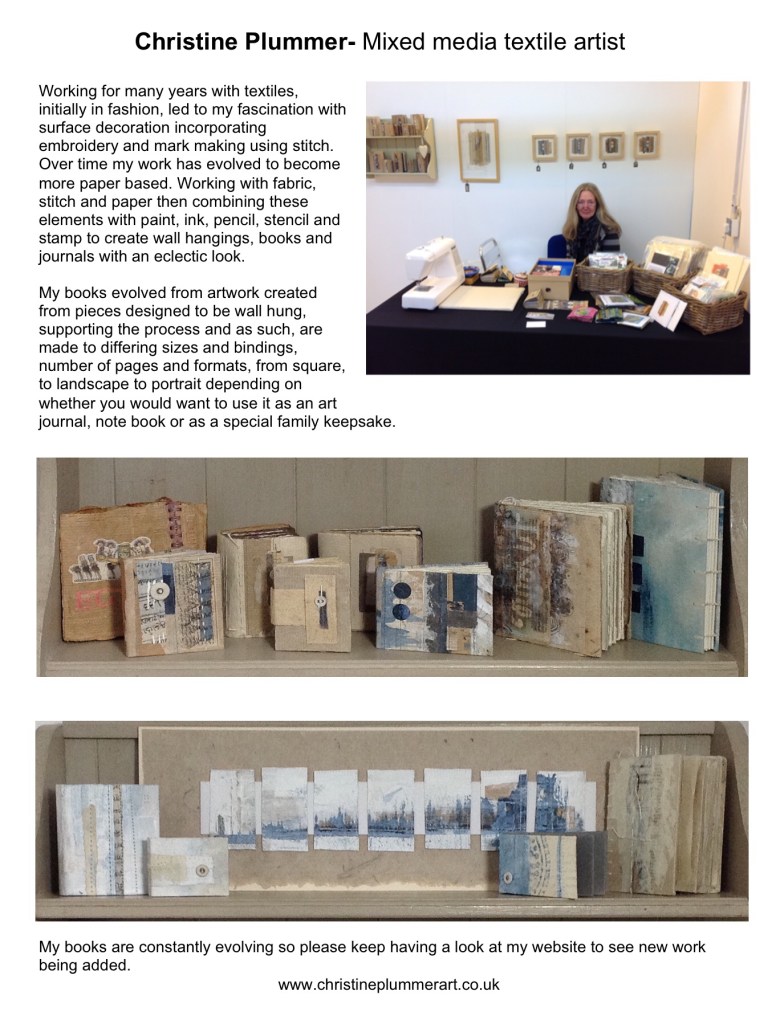
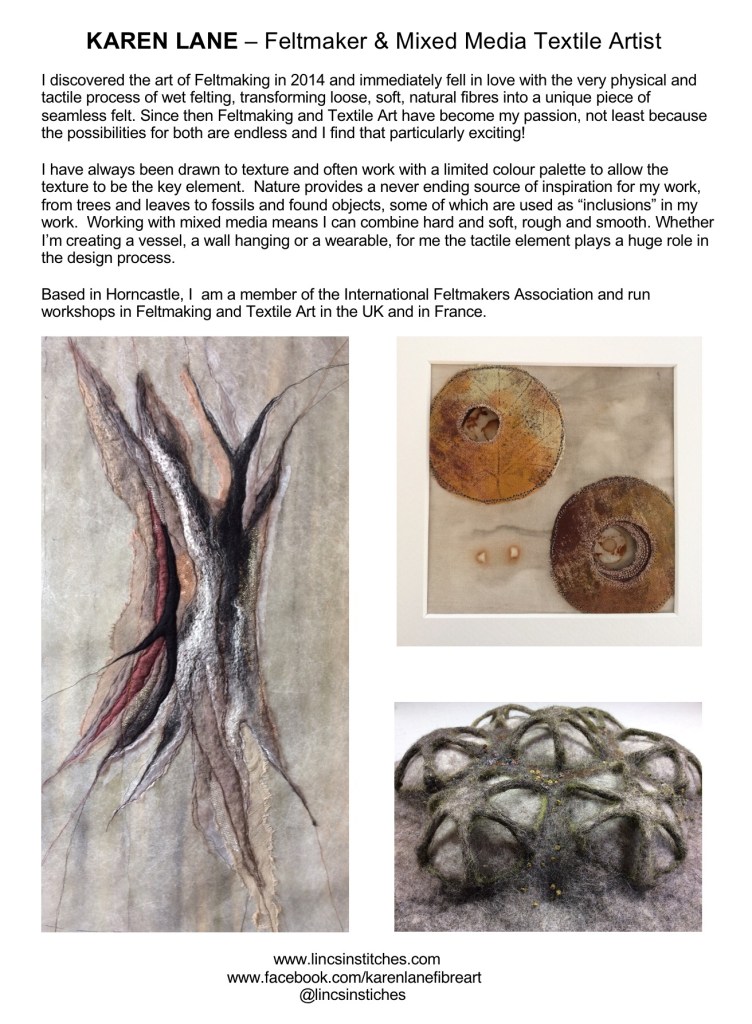
We set up yesterday and it’s looking great! There are two feltmakers, myself and fellow IFA member Moira West. There are two glass makers, Kevin Wallhead and Kate Sell, and two mixed media artists, myself and Christine Plummer. The nice thing is that although some of us share a passion for the same medium/craft, everyone of us has a totally different approach and a different style. When combined this has resulted in an interesting mix and what we are hoping will be a very successful show.

If you are reading this and you are local, or even further afield and fancy a day out in Lincoln, it would be great to have you visit. There are lots of other attractions in the area including a wealth of independent shops and bars, our fabulous Cathedral and Castle, the Little Red Gallery, St Martins Gallery and Harding House….all within walking distance of the Sam Scorer Gallery. With the exception of today and the 18th there will be a different artist on duty all day every day so why not come along, see their work and learn all about their craft.

NCCD Art Club…..

It’s been a thrill to have a piece of work on display at the National Centre for Craft and Design and, although the physical exhibition has ended, there is the chance for a wider audience to see the NCCD Art Club show as it’s now available as an online exhibition.

The exhibition was in response to Covid-19 to “unite our community through creativity to help us all respond, recover and look ahead to a new world. Through craft, design, making and performing we’re encouraging everyone to unleash their creativity and improve their health and wellbeing at this time.”

There is a huge diversity of work on display and it’s interesting to see how the different artists have responded to the four main themes which were Inside / Outside, Creative Healing, Joy & Happiness and What’s your daily medicine?

https://nccd.org.uk/exhibitions/nccd-art-club