Quilts in the Wolds….

This weekend saw the third “Quilts in the Wolds” show at Ludford Village Hall organised and hosted by the Lindsey Patchworkers and attended by around 300 visitors.

The two day event was a great success with a steady footfall throughout Saturday and Sunday. The four pounds entry included tea/coffee and a choice of delicious home made cakes which proved particularly popular with the male contingency……so much so anyone would have thought they didn’t get cake at home!

The two trade stands appeared to be doing good business.


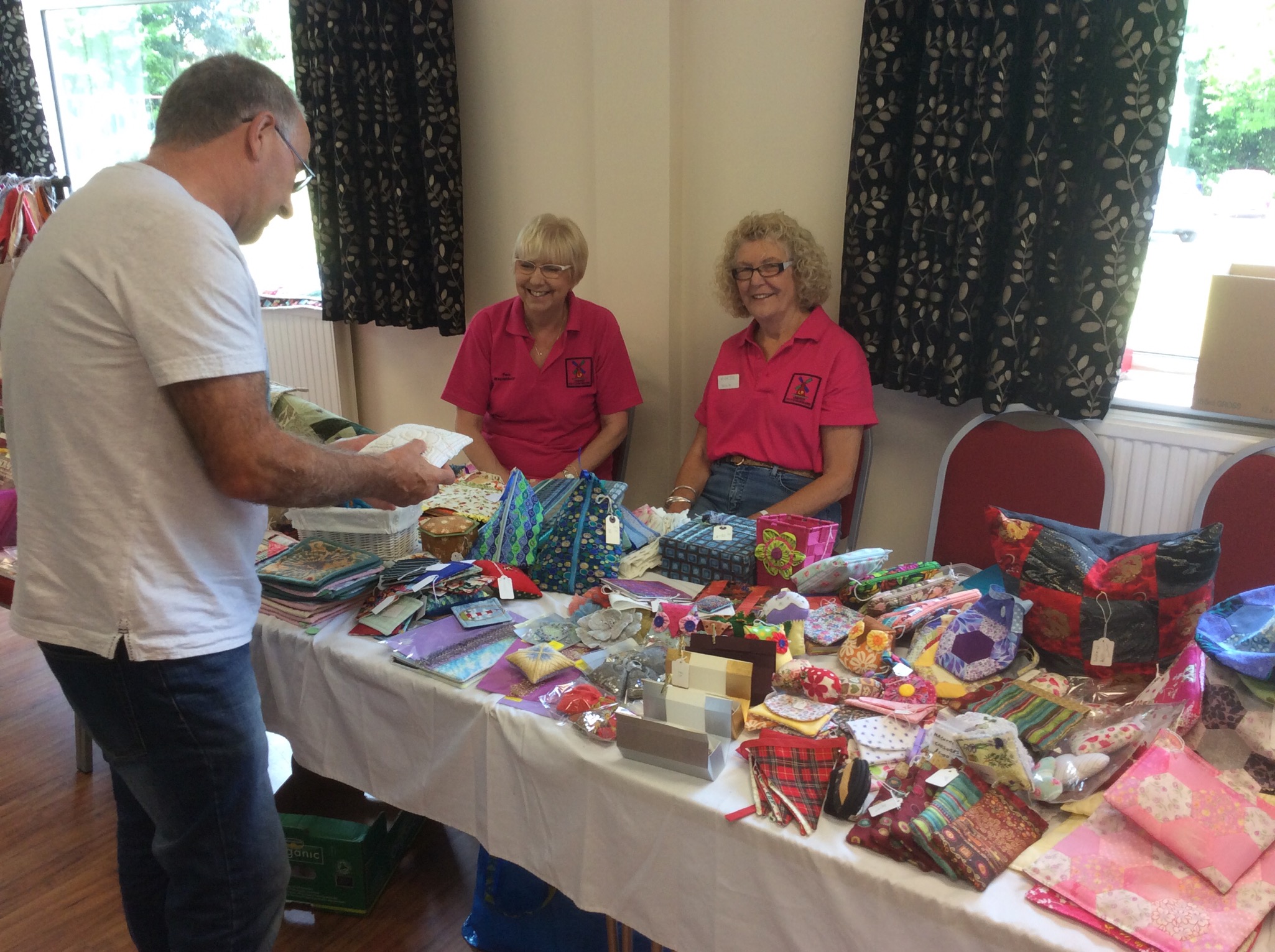
There was also a sales table brimming over with lovely items made by the group.
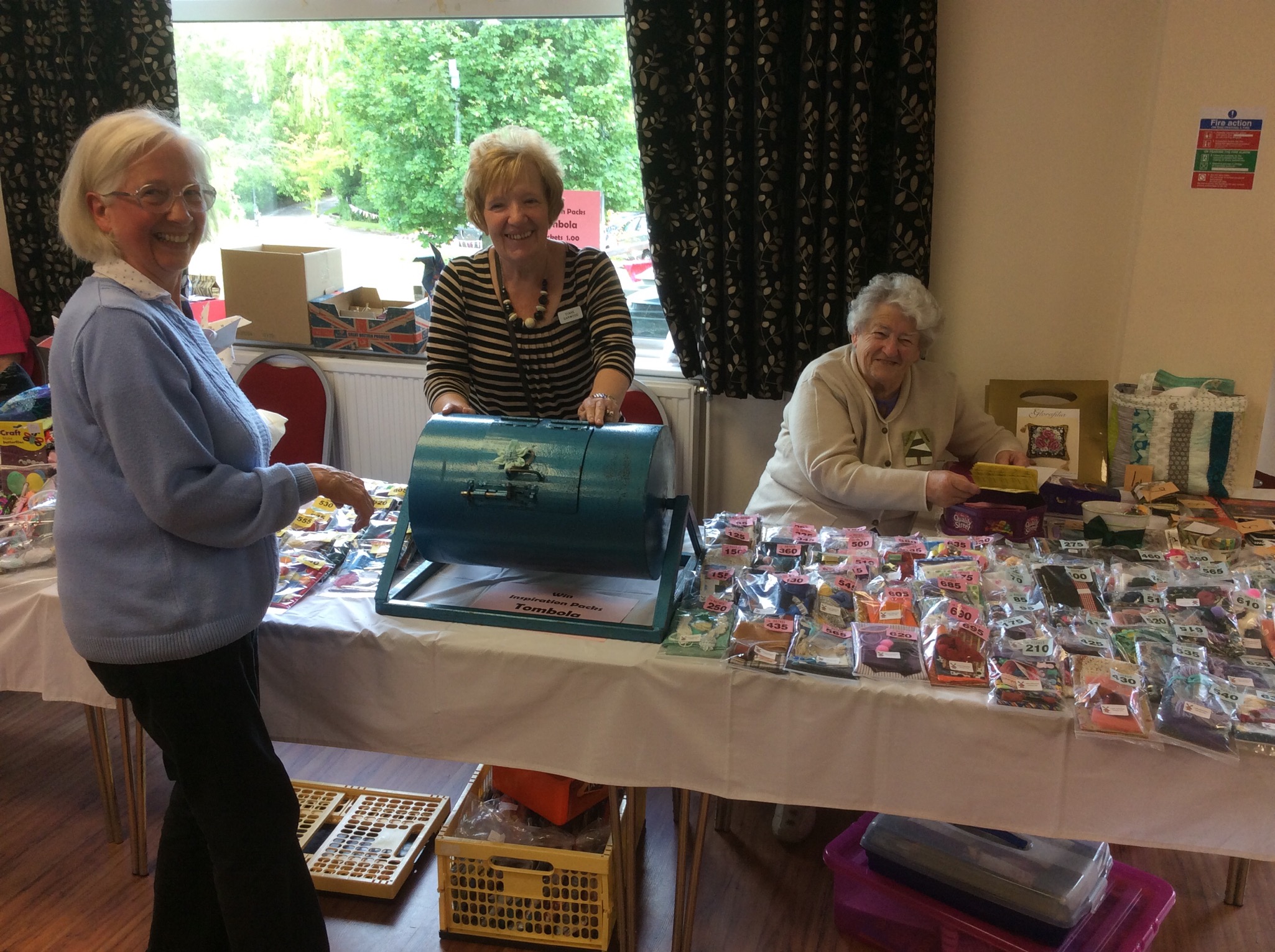
The “Inspirations” tombola was very popular – every prize consisted of a small bag containing colour coordinated fabric and notions, perfect for inspiring your next small project.
Throughout both days members also hosted talks, demonstrations and workshops on the stage at the rear of the hall. Pat Cave can be seen here demonstrating various methods of applying lettering to fabric.


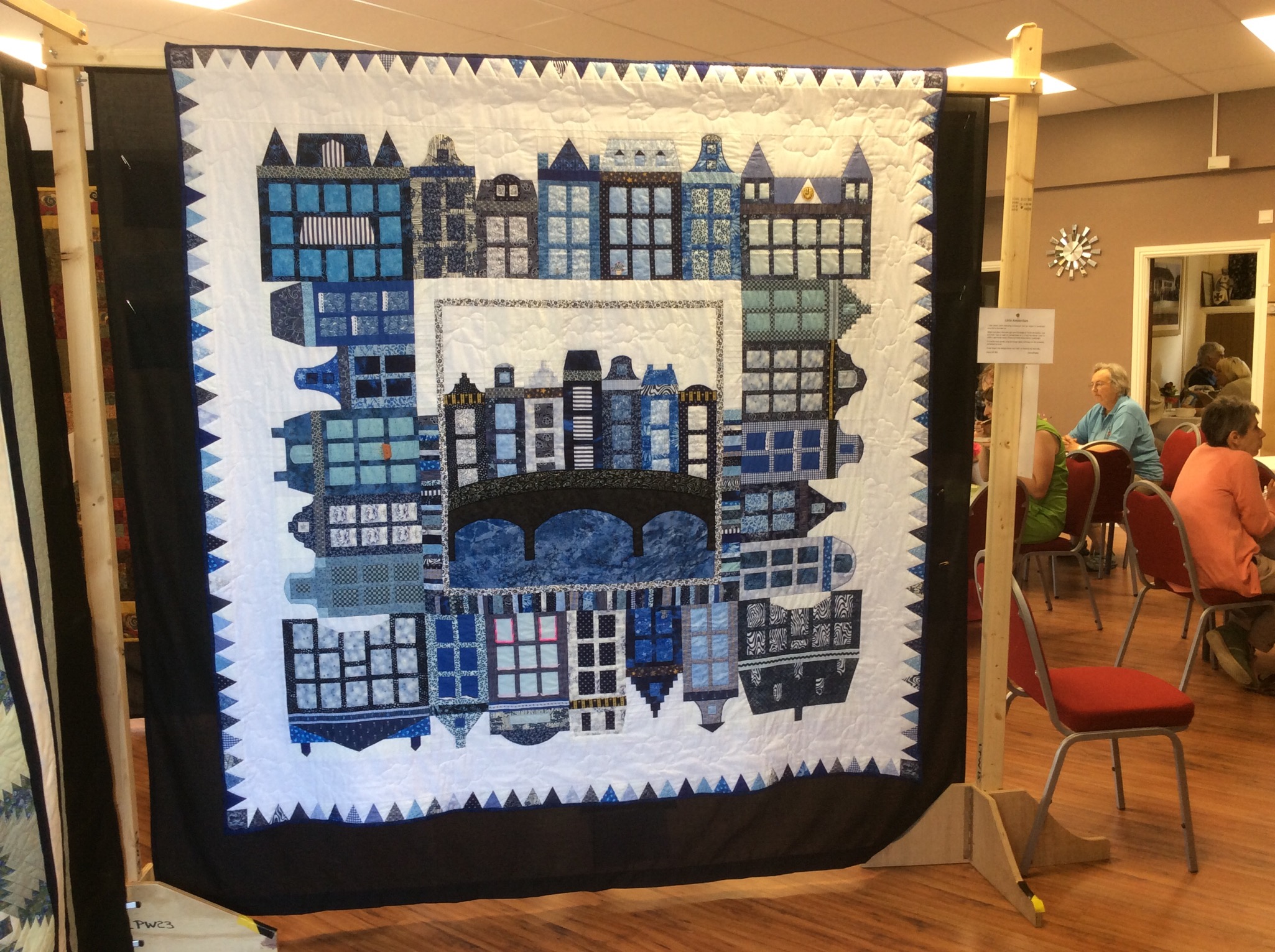
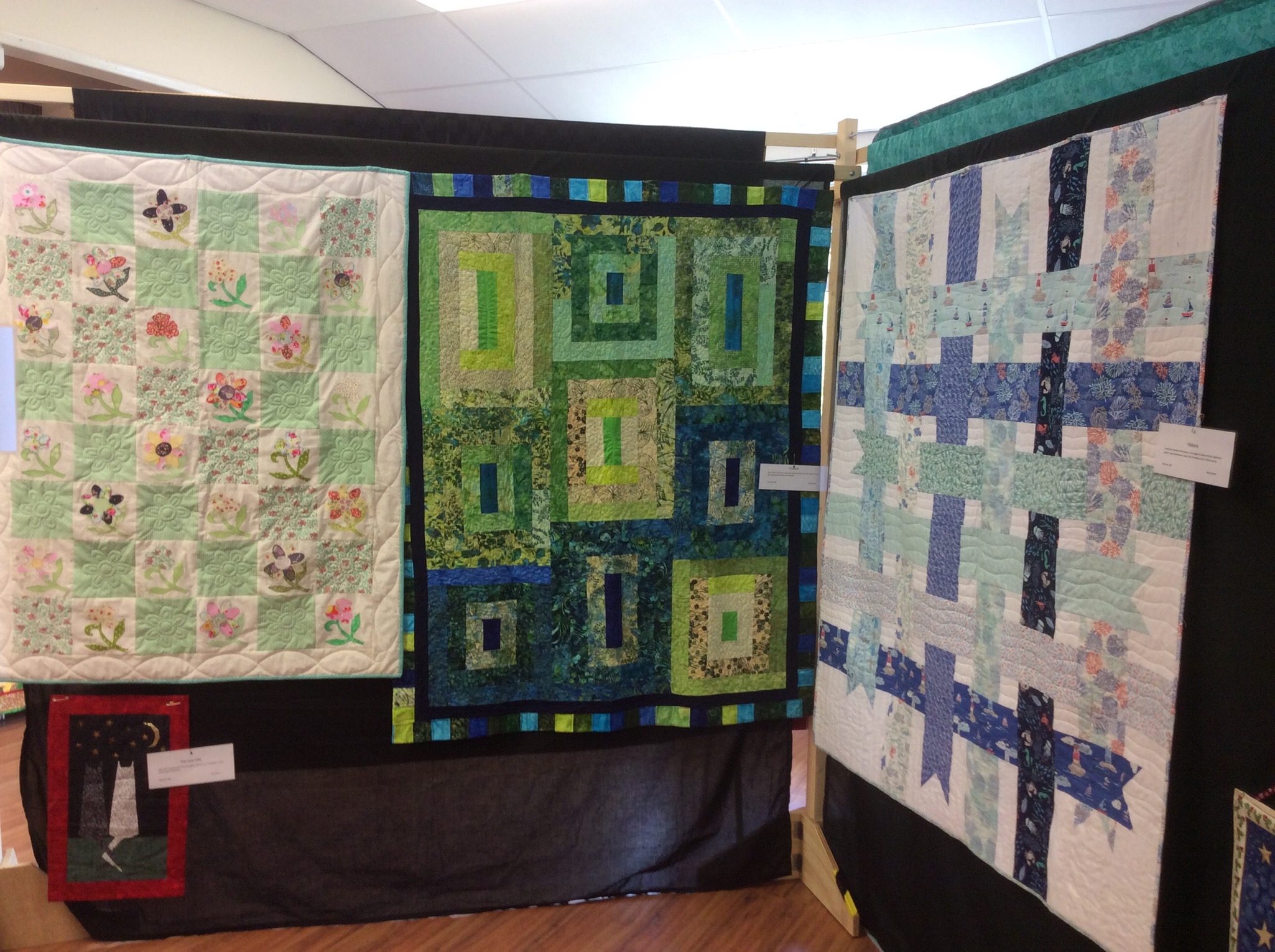
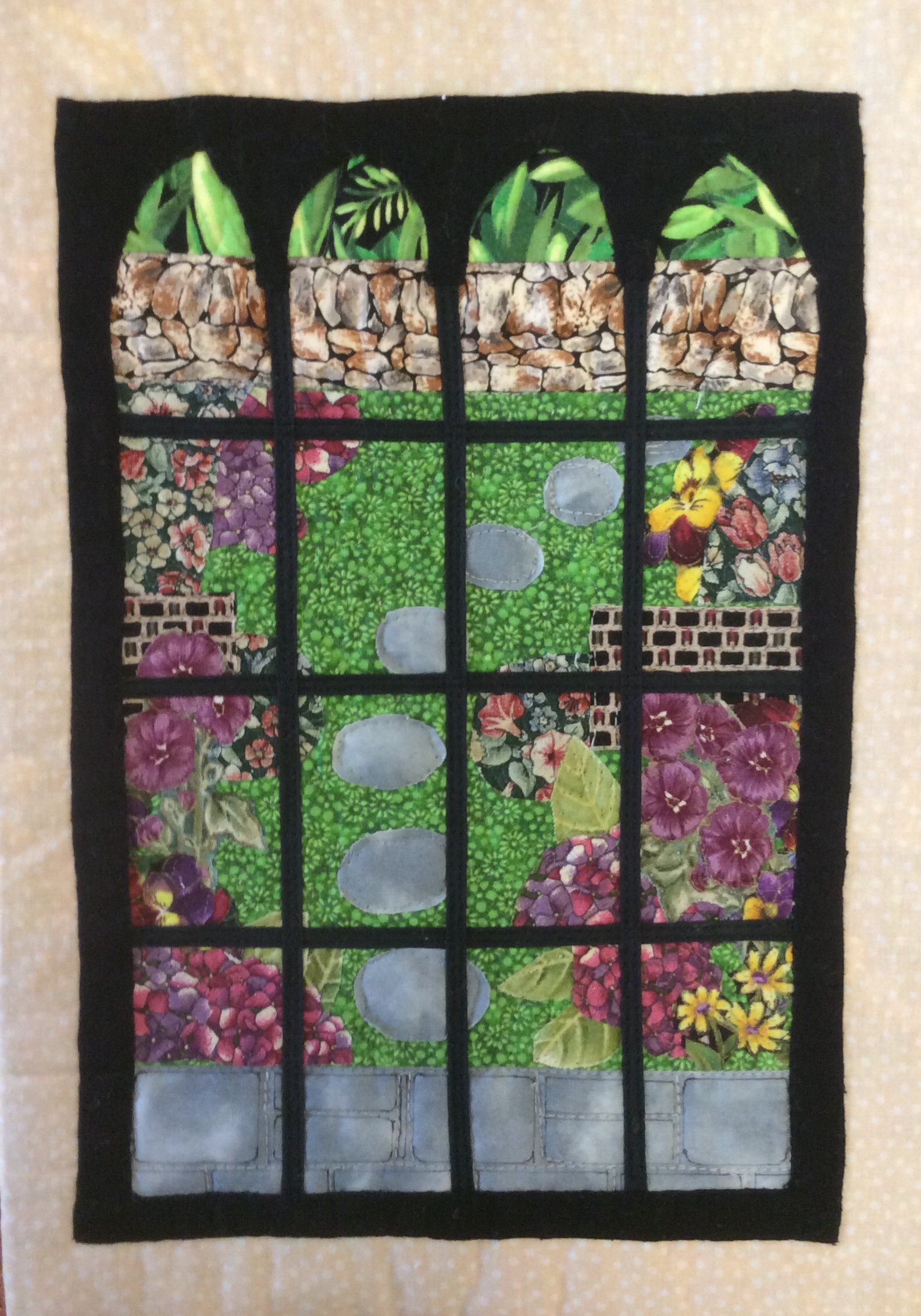
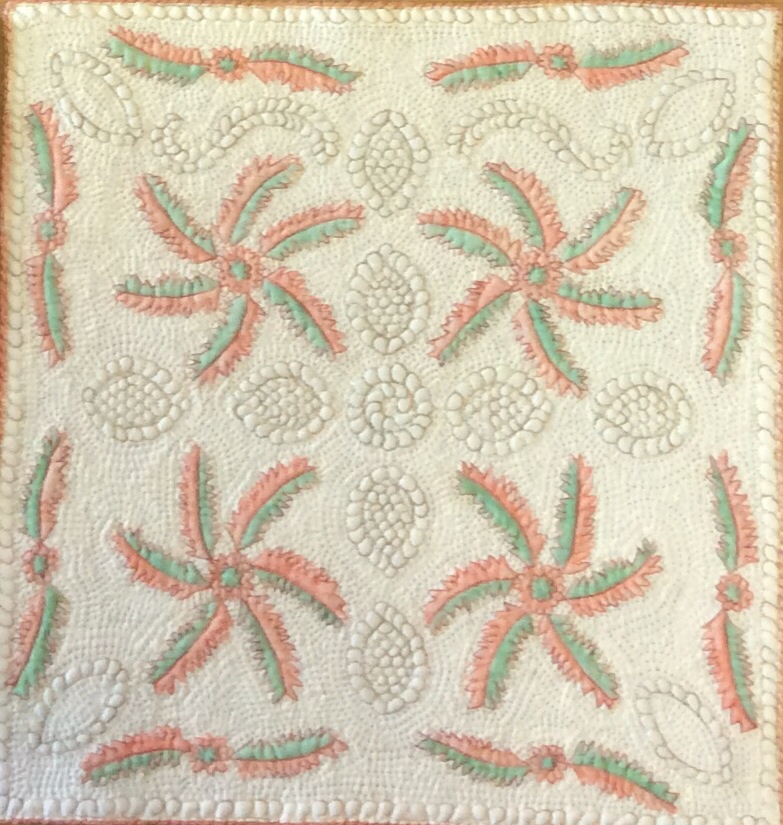
The Lindsey Patchworkers exhibits included an interesting mix of traditional, contemporary, miniature, and art quilts, some were machine stitched while others were completely done by hand.

All in all it was a wonderful weekend and lovely to see so many people enjoying the show. The following photos show a selection of the quilts that were on display.


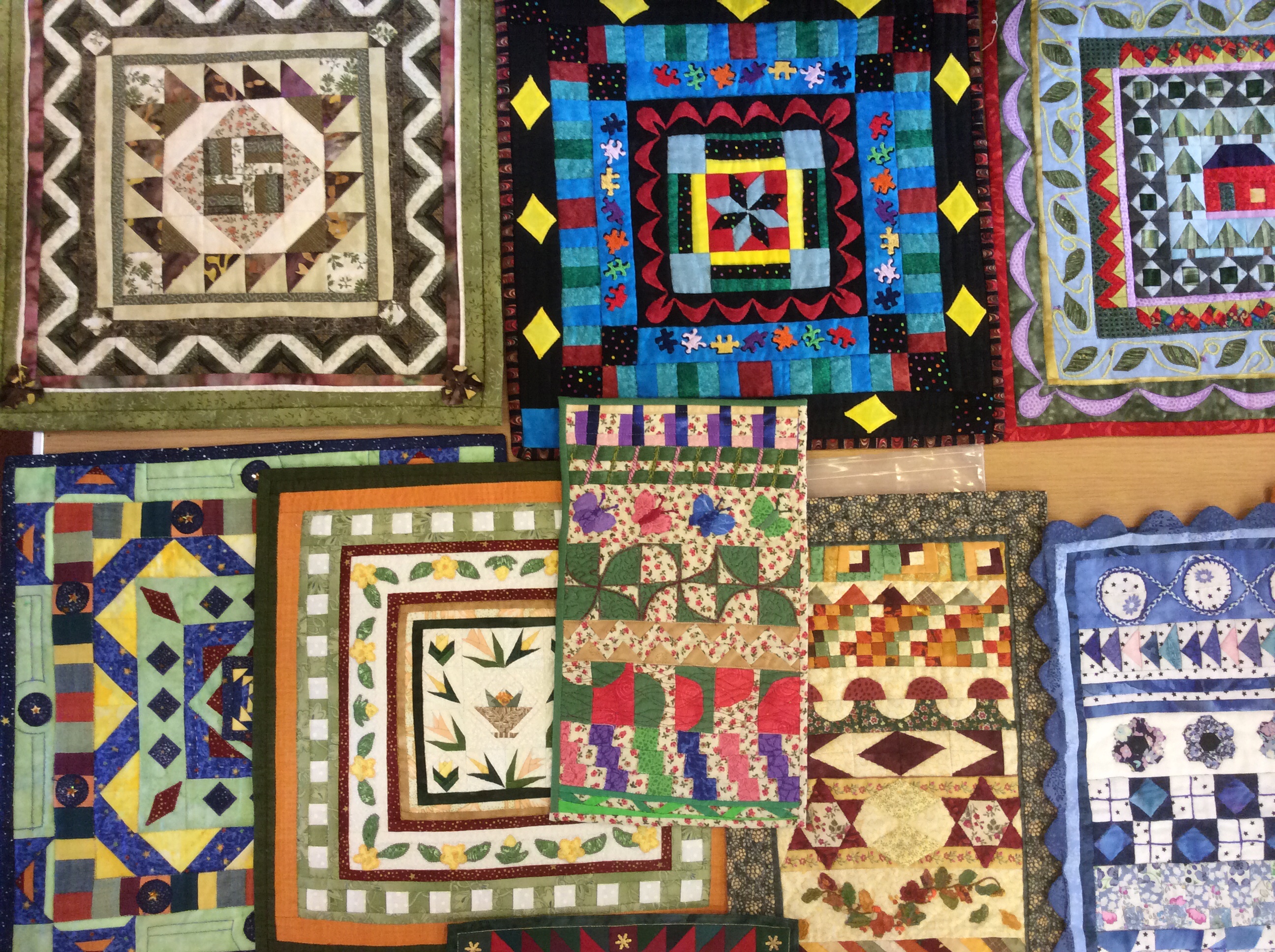
Miniature Quilts….

Last month I became a member of another sewing group, the Lindsey Patchworkers, who meet twice a month at the Conoco Rooms in Louth.    It’s a very varied group with some ladies preferring the traditional style of patchwork and quilting, while others are keen to work in a much freer and more contemporary style.

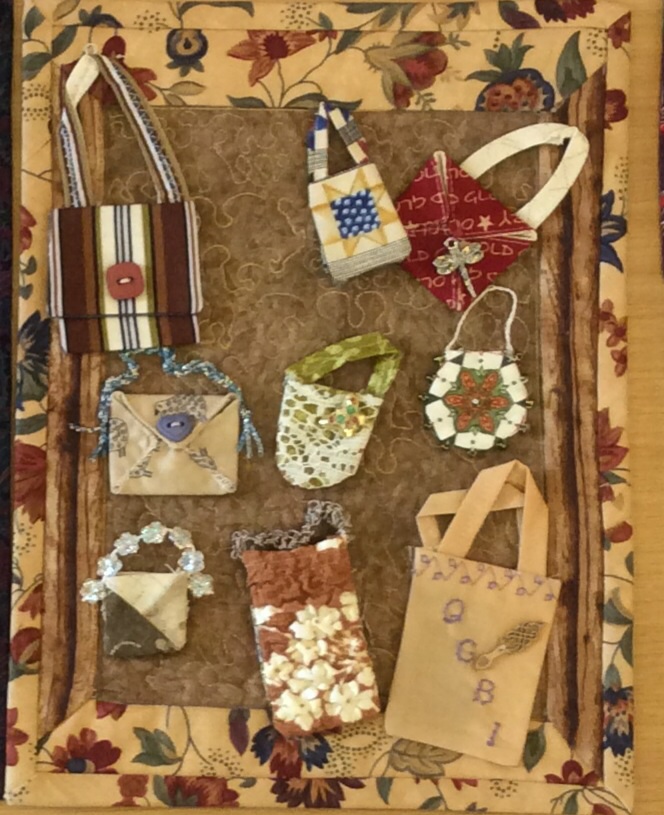
The Handbag Collection 3

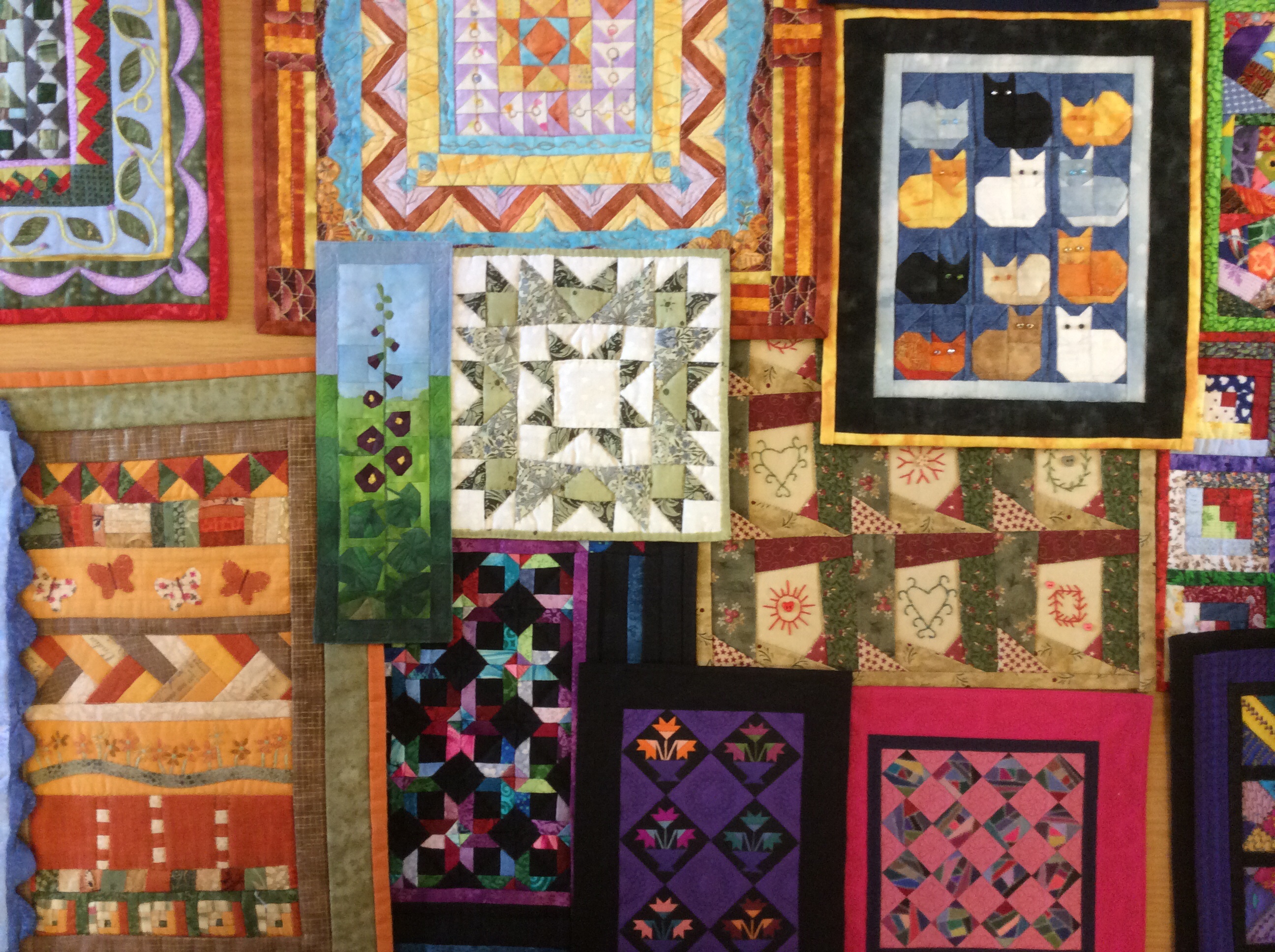
At today’s session we got to view an interesting collection of work entitled The Handbag Collection.  Created by The Miniature Quilt Group, one of five Specialist Groups that form part of  The Quilters Guild, ironically this is smallest of the specialist groups with 140 members nationwide.

The Handbag Collection 1

The minute detail in these pieces is impossible to appreciate from photos.  I couldn’t imagine working on such a minuscule scale and I’m sure tweezers must play an important part!  The techniques used in these miniatures are as varied as those for full size quilts but in order to achieve the necessary accuracy at such a small scale members often use foundation piecing or English paper piecing.  I believe all of the quilts we saw were no more than 30cm on any one edge, some being much smaller….incredible!

The Handbag Collection 2

According to the group the most successful fabrics for miniature quilts tend to be the finer cotton fabrics and it naturally follows that fine threads and needles, hand or machine, are also used.  For the sandwich layer the group recommend a very low loft wadding or one that can be peeled into thin layers.

The Handbag Collection 5

Further details about the Miniature Quilt Group can be found on The Quilters Guild website  www.quiltersguild.org.uk

The Handbag Collection 4


Playing with acrylics…..

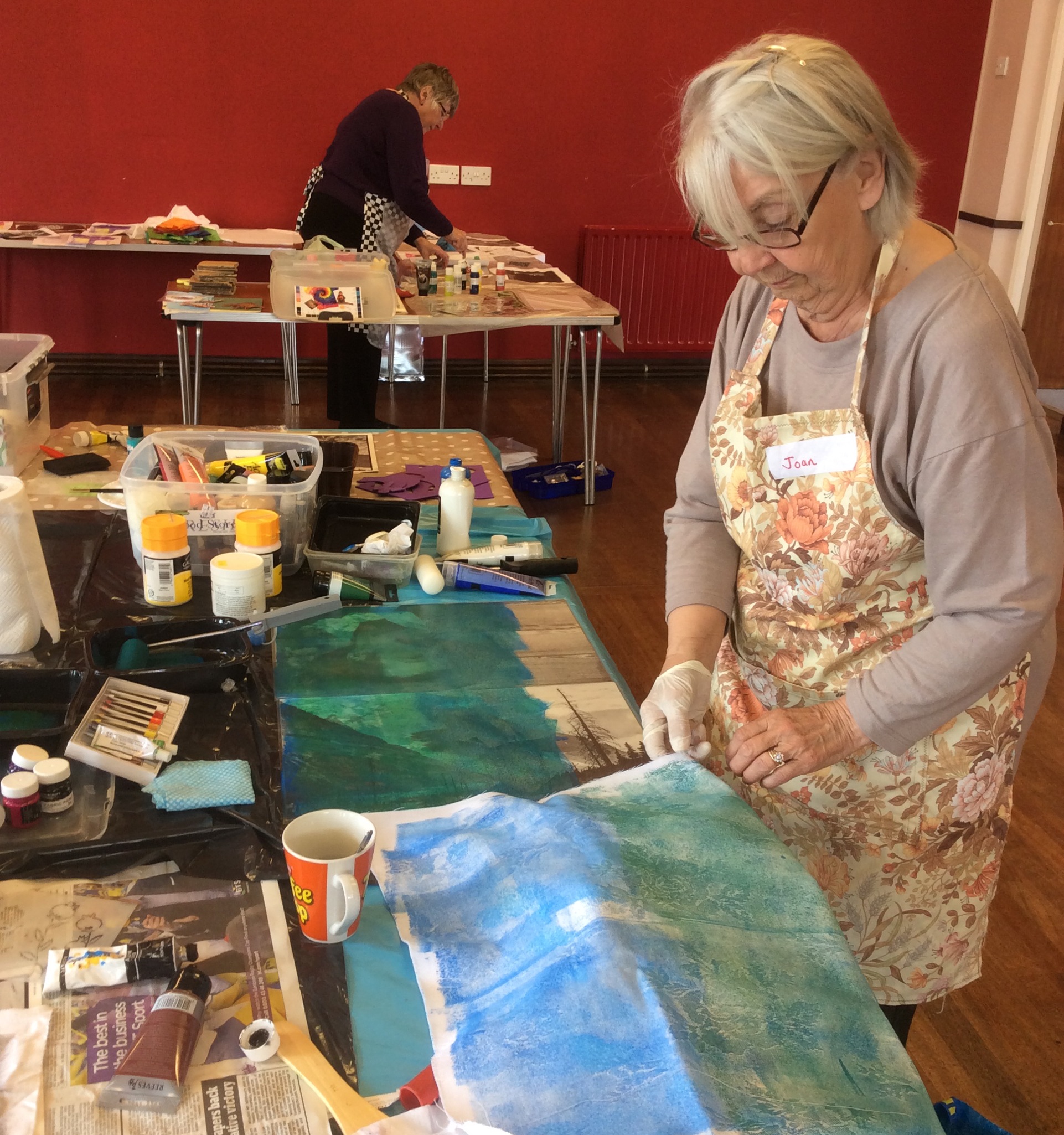
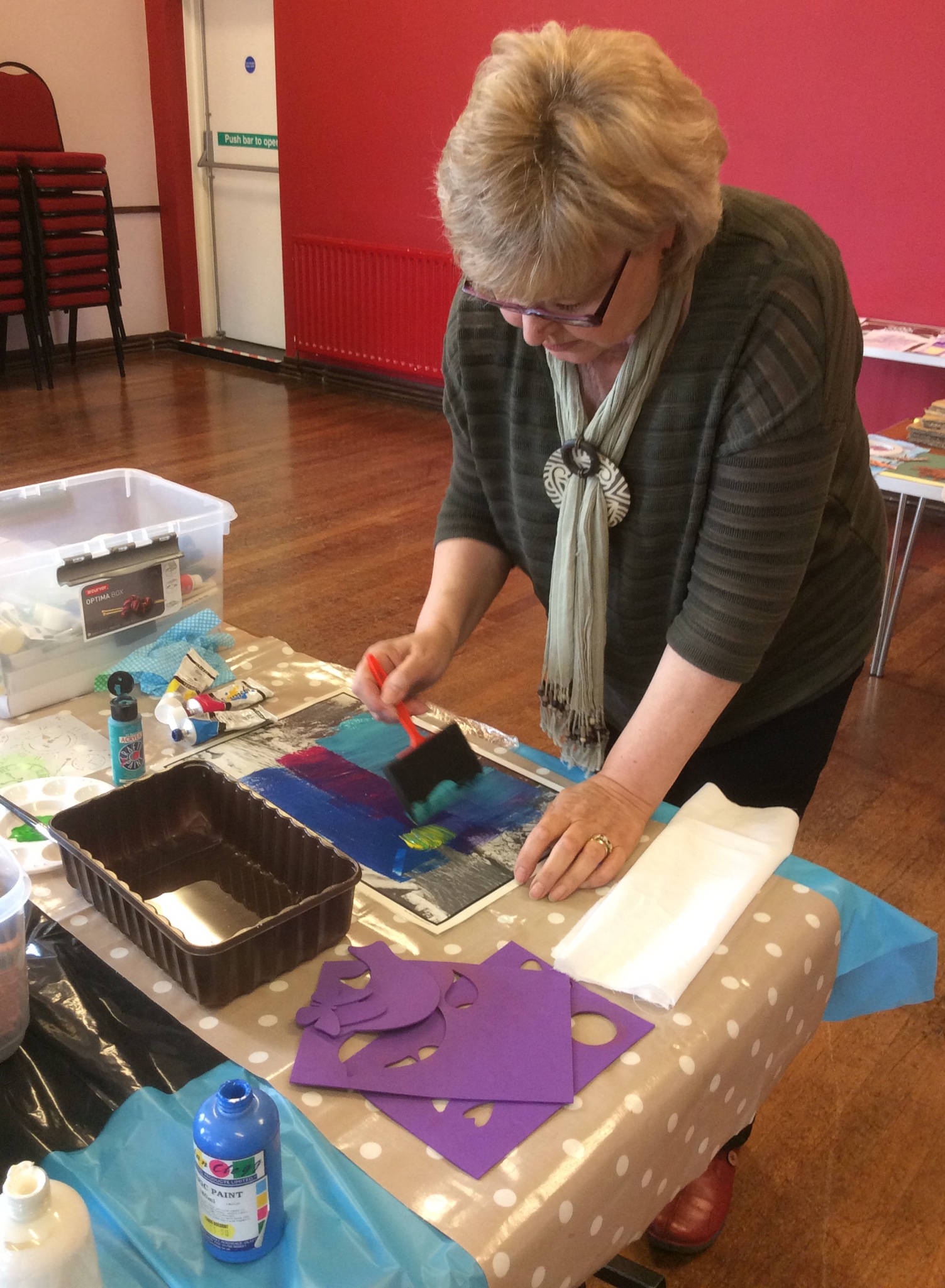
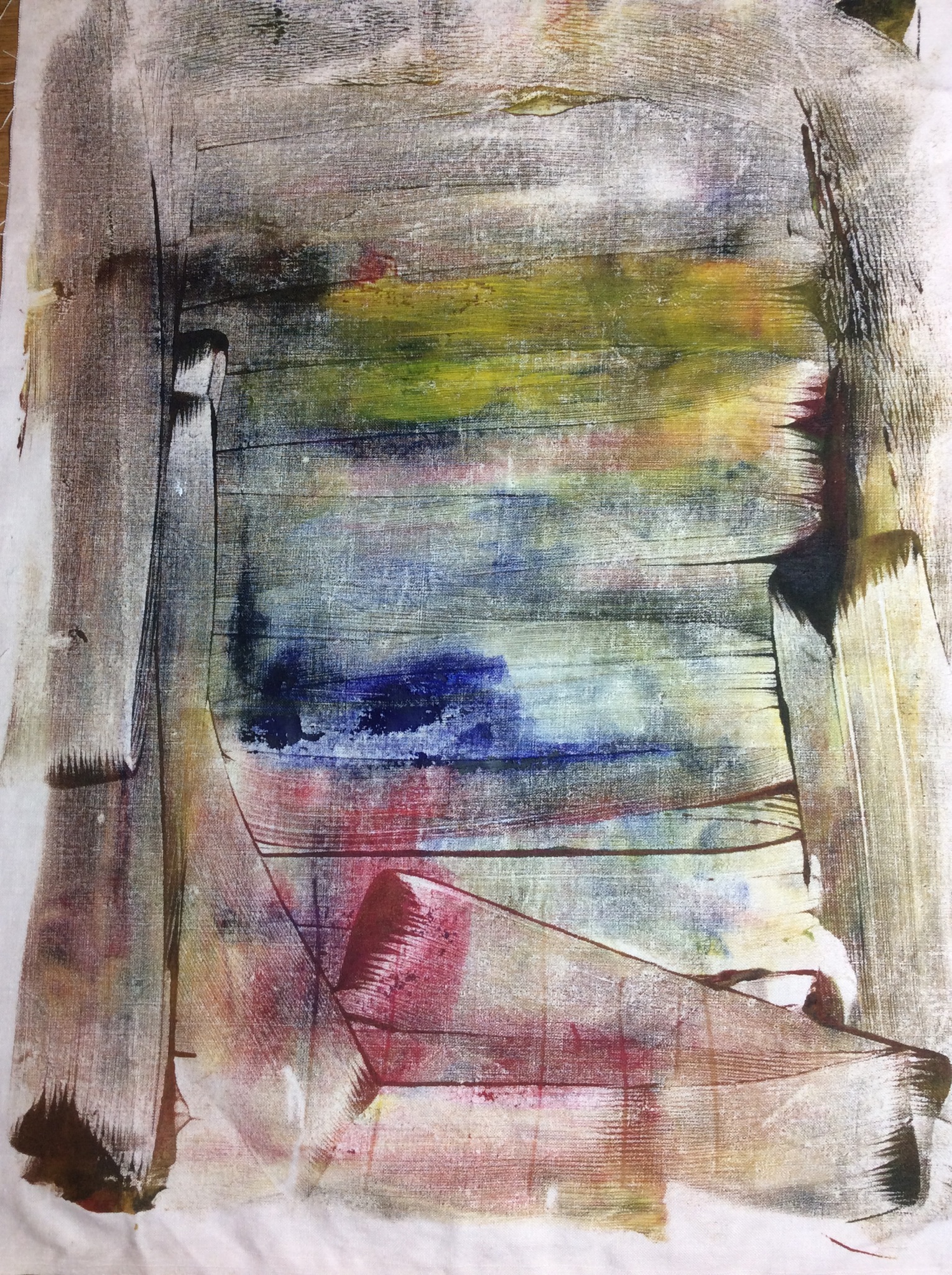
At today’s session of the Cranwell Contemporary Textile group some of us played around with acrylic paints, applying colour to gelli plates, glass placemats or an acetate sheet before transferring the colour to our fabrics and paper to create backgrounds for stitching onto.


Each quarter we are set a challenge and within that challenge we are asked to use two particular techniques.  Our latest challenge is to design and make a quilt with the title Flora and Fauna.  The two specified techniques to use are printing and stamping, hence the ‘play day’.   Although we were all using a similar technique the results were very different.

 I took along a small seam roller which I used to spread the paint onto my glass platemat.  Once printed I found that the roller had created texture and, (in my mind, if no-one else’s) two of my pieces have the look of distressed wooden planks similar to those you might see on an old house somewhere in the Mediteranean.  I am thinking of  adding moss, lichen, wild flowers, etc to create the look of an old door or boarded up window, overgrown and disused. A quick look on Google has confirmed that I can get away with adding insects as my ‘Fauna’ so one of these could be the basis of my challenge quilt sorted!

Why not join us…..

The Lindsey Patchworkers 3rd Exhibition in the Lincolnshire Wolds will be held on Saturday 20th and Sunday 21st June 2015 at Ludford Village Hall, Playingfield Lane, Ludford, Lincs LN8 6AJ

For textile enthusiasts the weekend will provide lots of inspiration, the chance to meet and chat with like minded crafters and the opportunity for some retail therapy!  We will have traders such as Cotton Dreams and White Cottage Country as well as Crafts, Demonstrations, and the now famous “Inspirations Tombola” which could form the start of your next little project!

photo credit: Closet stash via photopin (license)

The event will run from 10am through to 4pm on both days and the entrance fee of £4 includes tea, coffee and home made cake.  Entrance for children is free and the hall has Disabled Access. So why not make a day of it, bring your friends, bring your family, bring a picnic and enjoy a day in the heart of the beautiful Lincolnshire Wolds.

These are just a few examples of the work on display at a previous Ludford event.

Group member Pat Cave with her award winning quilt.

Seascape by Sandra Goldsbrough

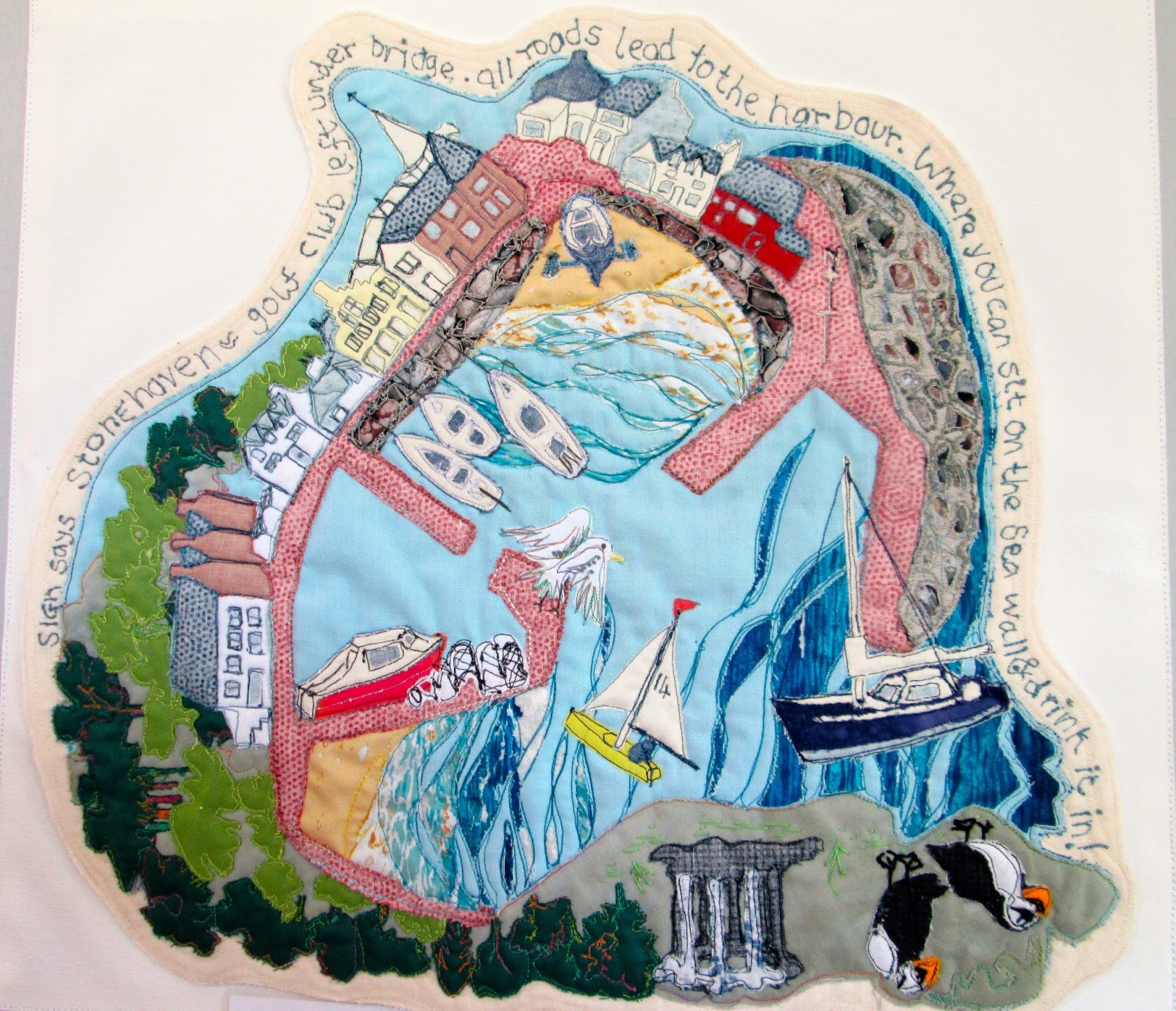
Stonehaven Harbour by Pat Cave

Group quilt


Woodhall Spa Art Quilt…..

My latest art quilt has been made in response to a challenge set by the Cranwell Contemporary Stitch group. The challenge was set in January and the theme was “what Winter means to me”. Being a new member meant I didn’t have much time to lose as the deadline for handing in the finished work was going to be the second week in April.

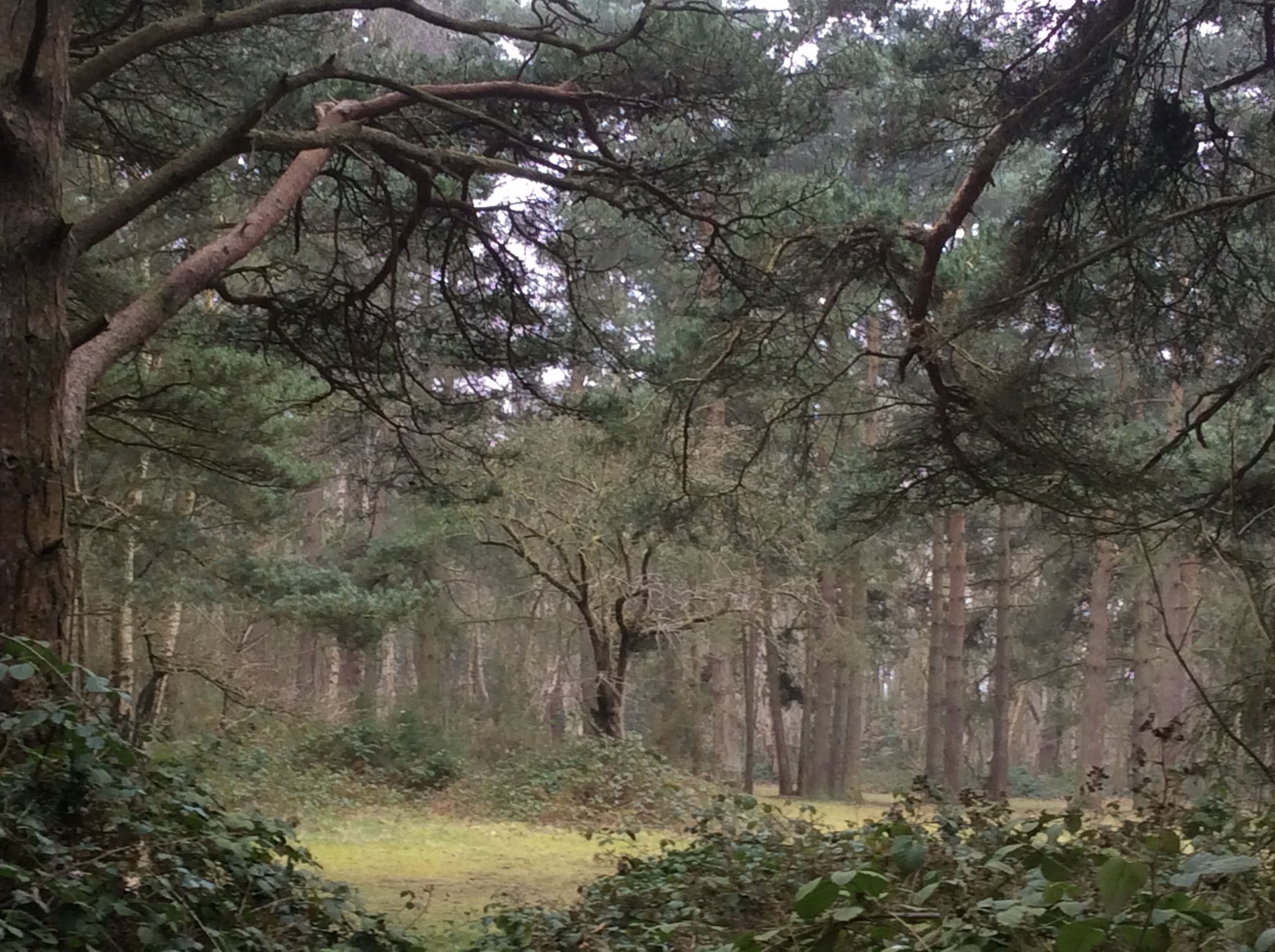
Since signing up for the David Hockney Challenge last year I have become very interested in depicting trees in my work and all through the Winter I have been noticing trees like I have never done before. With this in mind I knew immediately that I wanted to create another tree themed quilt so took my camera on a walk through the woods in Woodhall Spa. This is a beautiful spot and I came home with dozens of images which will provide me with inspiration for a long time to come!

IMG_1642

IMG_1625

IMG_1731
The image I chose to work with is the one shown below.

IMG_1720
I began by painting a very pale grey sky and a grey/green backdrop for the woodland using Procion dyes. I bought a starter kit of Procion dyes when I visited Artvango and this was my first attempt at working with them.

IMG_1721
The next step was to machine sew the background trees in shades of green and cream thread. I then added torn strips of green sheer fabric and a little black netting to create shadows. Silver embroidery thread was hand stitched to make the tall thin silver trees in the mid-ground.

IMG_1778
At this stage I machined the thin branches of the trees, added grey sheer fabric in patches over the top and held it in place with a criss-cross of hand stitches branches.

The woodland floor is hand stitched silver thread over dyed muslin which has been roughly cut and layered with small snippets of gold organza.

The three main tree trunks were formed from iron-on Vilene which was coloured with Procion and bark detail was added using Inktense pencils.

The finished piece measures 15″ x 20″ and unlike my last “tree” quilt, which was done with free machine stitching, all of the machine work on this one was done with the feed dogs up using a walking foot.

IMG_1777

The Finished Quilt…..

My Riverside Trees art quilt is now finished and just needs to be edged.  This 30cm x 40cm quilt was done as trial ahead of making a larger version at 30″ x 40″ for the David Hockney Challenge.  It’s just as well I had the dummy run as there are a few things I have learnt while doing this project.

Firstly, I must start using a sketchbook…..I tend to launch straight into something and make it up as I go along.  The sky would have been different, and I would have been happier with it, if I had planned it before I started.

Secondly, I naively thought that using iron-on Vilene would mean I didn’t have to sew the trees in place…….yeah, right!   The more I handled the quilt the looser the trees became so they all had to stitched down.  This leads me on to the third thing I learnt which is “remember to breath” while free machine stitching!

The fourth thing I found was that organza and net, although looking very effective when layered, can also be problematic as loose fibres sometimes migrate between the layers and are very fiddly to remove.   My fabrics were simply laid in place, pinned and stitched, I’m guessing that if I had ironed them onto Bondaweb before stitching I could have avoided this happening.

The finished quilt

The finished quilt


Hockney self portrait update…..

Thanks to Maggy for pointing out that I hadn’t posted a picture on here of my finished quilted version on Hockney’s self-portrait.   I have just added it to “Hockney gets a scarf” under the “Art Quilts” category.

If anyone reading this is interested to learn more about the Lincolnshire Quilters “David Hockney Challenge”‘, which is gaining momentum nicely, we have a blog at http://www.linqsblog.wordpress.com

Riverside Trees…..

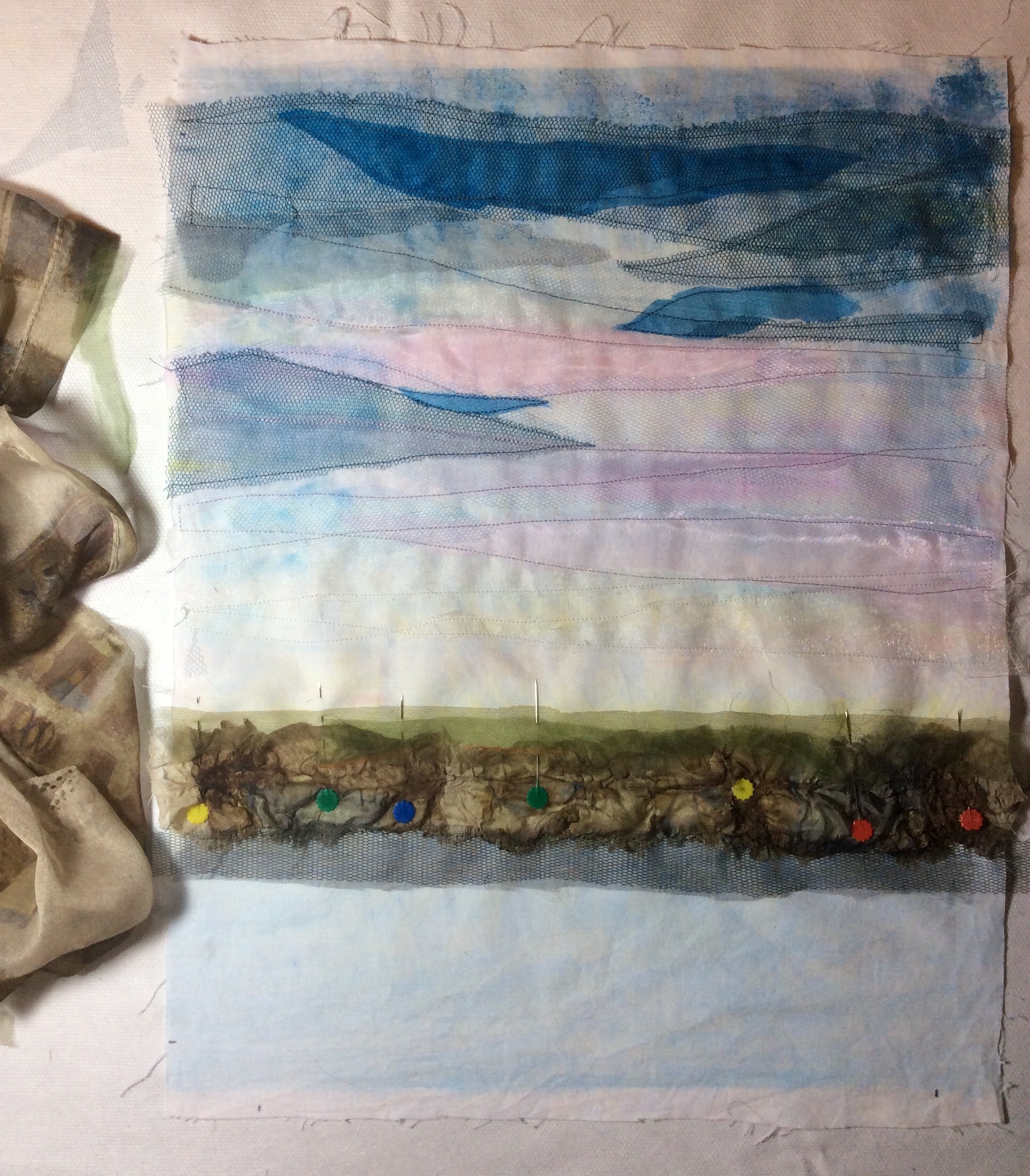
Having damaged my toe on Friday I’ve had the perfect excuse to shut myself away in my workroom and start on a new project.  I wanted to create an art quilt based on trees and reflections so last week, while out walking my dog, I took a series of photographs along the riverbank.  The aim is to make a 30 x 40 cm quilt as a prototype for a larger version as part of the David Hockney Challenge.  The thought of doing one 30″ x 40″ straight off was a bit too daunting!  The finished design isn’t intended to look like a Hockney but the influence is still there i.e. trees and reflections in water.

Trees on riverbank

I particularly liked this image but decided to simplify the layout for my quilt and position the riverbank “straight on”.

Yesterday I painted a wash of colour on my background fabric, layered it with organza and netting and machine quilted it to create the sky.  I’m not sure if I did the right thing by making it this colourful….I wanted a bit of drama behind the trees but might have gone a bit too strong with the blues!  We’ll see when the trees get added.

For the riverbank I remembered I had an old scarf which was the ideal colour so this was cut up and distressed using a heat gun before being sewn in place.

The background is ready for the trees to be added.

The background is ready for the trees to be added.

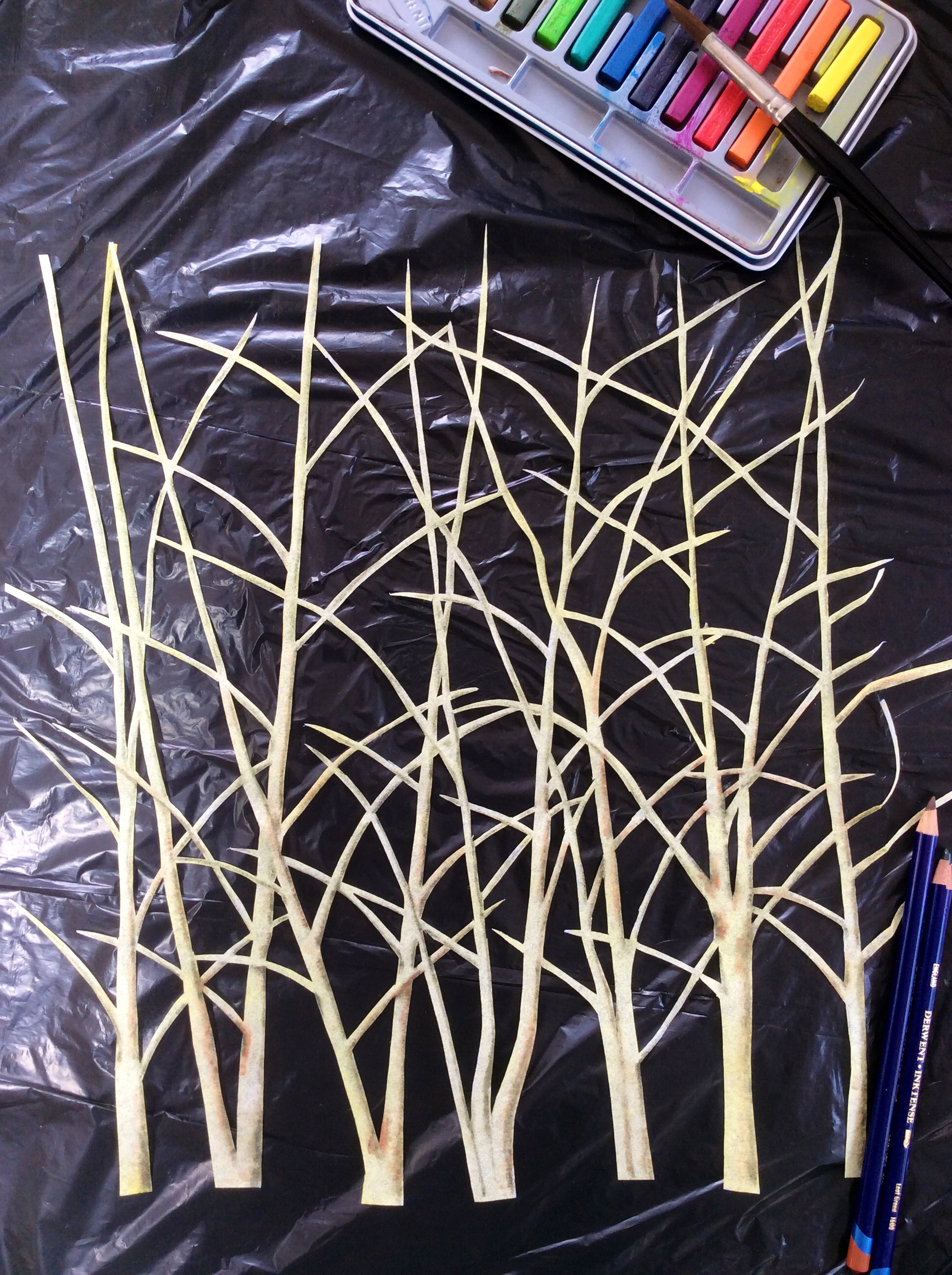
I figured an easy way to create the trees would be to draw them onto iron-on Vilene and cut them out using a craft knife.  With the branches criss crossing it enabled me to cut it as one piece rather than fiddling about with several individual trees.  I like using Vilene as it gives a crisp edge, it accepts paint really well and using the iron-on type means there’s no need for Bondaweb or spray adhesive.

The trees cut from Vilene.

The trees cut from Vilene.

The trees are now in the process of being painted and I will post an update as and when they are ironed in place.

Starting work on painting the trees

Starting work on painting the trees


Susan Denton comes to Lincolnshire…..

Last Saturday I was fortunate to attend the Quilters Guild Area Day at Sitting Ducks in Branston Booths where Susan Denton appeared as guest speaker. Having only just joined the Quilters Guild this is the first time I have attended such an event and I really didn’t know what to expect. What I wasn’t aware of when booking is that Susan is an internationally acclaimed quilter whose highly regarded work is displayed in shows and museums in a number of countries around the globe…..I was in for a treat!

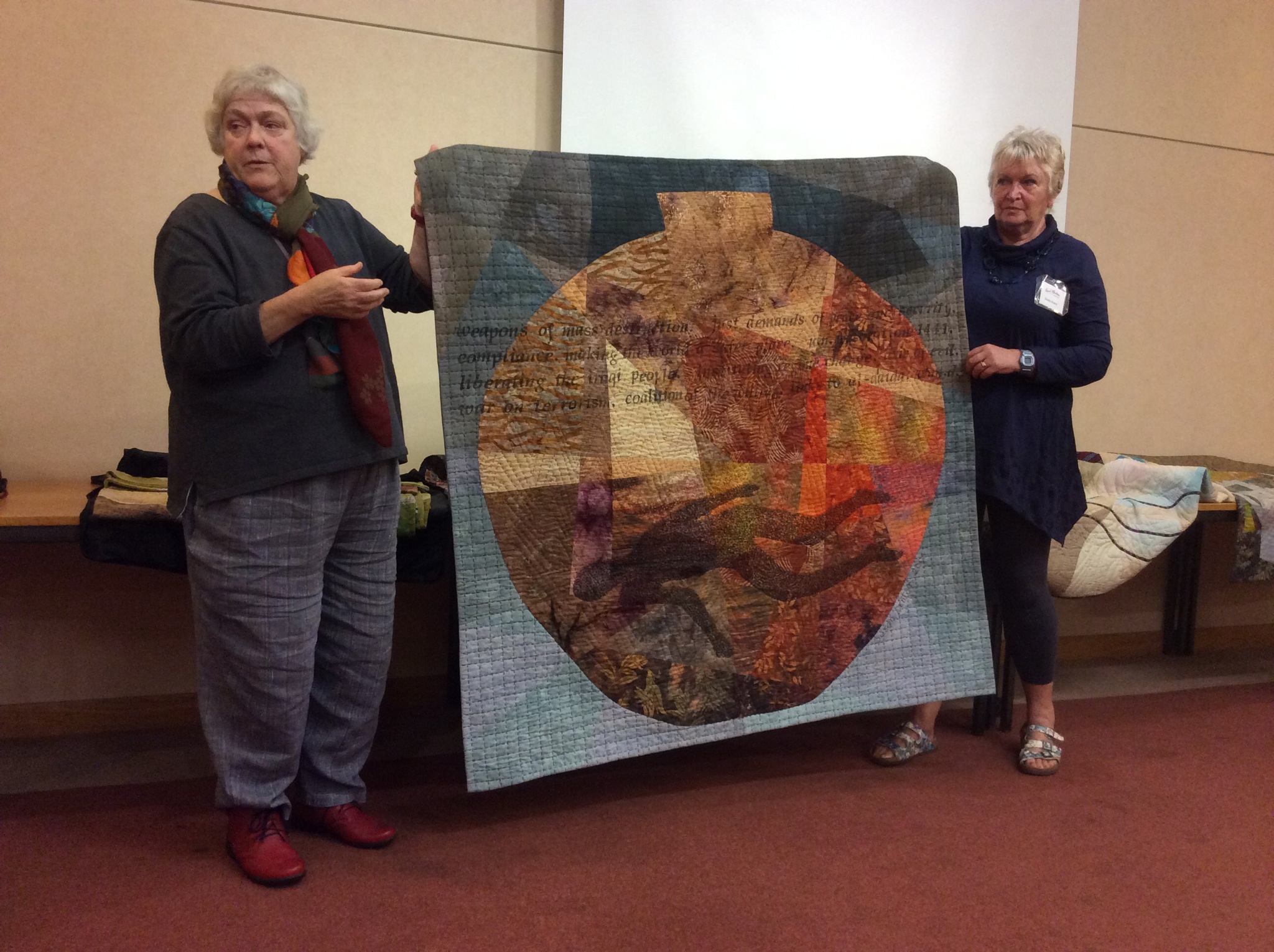
Susan’s talk took us on a journey from her home in Cornwall, up to the Western Highlands of Scotland and across the oceans to far flung places including Iran and Australia. Her travels, and the sights and people she has met, have inspired many of her wonderful quilts. The photograph below is one of a trio entitled “Making the World a Safer Place”. In this she has used the colours of oil, terracotta and turquoise (a combination often seen on mosques) to represent the invasion of Iraq in the form of looted, ancient vases. I found this particularly inspirational, both in design and execution.

Susan Denton and Sheila Evans hold up one of the quilts on show at the quilting workshop

Susan Denton shows a selection of her work at the Quilters Guild Area Day.
Everyone was intrigued by the next quilt depicting the seafront at St Ives.  We were fascinated by how Susan had created the sky and the sea, which was to become a little clearer during Sundays workshop when we learnt about using grids to create movement and perspective.

IMG_0571.JPG

During Sundays workshop Susan explained the process of foundation piecing and we all had the chance to try our hand at designing and sewing blocks using this method. We also learnt about tessellating blocks and using grids, both of which open up limitless possibilities for designing and quilting.

IMG_0580.JPG

IMG_0582.JPG

The weekend seemed to pass in a flash and during the journey home I found myself wishing I had booked onto Susan’s Colour Workshop which was being held in Louth the following day. Having spoken to Sheila Evans, the regional coordinator, I discovered there was a space available so, at the very last minute, I managed to get myself booked in!

Once again I wasn’t disappointed.  We spent Monday and Tuesday learning about how we can manipulate colour values to create schemes for our quilts.  Although I was aware of the colour wheel and have always felt confident with putting colour schemes together I have to say that Susan’s workshop allowed me to take my understanding of colour to another level. The following photos show the group hard at work and some of the fabulous colour schemes being developed over the two days.

IMG_0610.JPG

IMG_0612.JPG

IMG_0614.JPG

IMG_0622.JPG

IMG_0623.JPG

IMG_0624.JPG

IMG_0629.JPG

Olga’s work in progress…..

I wanted to share theses images showing the work of one of the ladies taking part in David Hockney challenge.  Olga explains in her own words the influence of Hockney and how she is interpreting this in her design.

“I first became aware of David Hockney through a television programme about his forthcoming exhibition at the Royal Academy in 2012. It was the colours he showed in the landscapes that made me look around and search for those colours. I found them in the surrounding landscape, but realised he paints them with more intensity and energy. I didn’t get to the exhibition but did splash out on the catalogue. At the same time I was getting into dyeing my own fabrics and using the cold primaries as in the Ives Colour Wheel.

IMG_0019.JPG
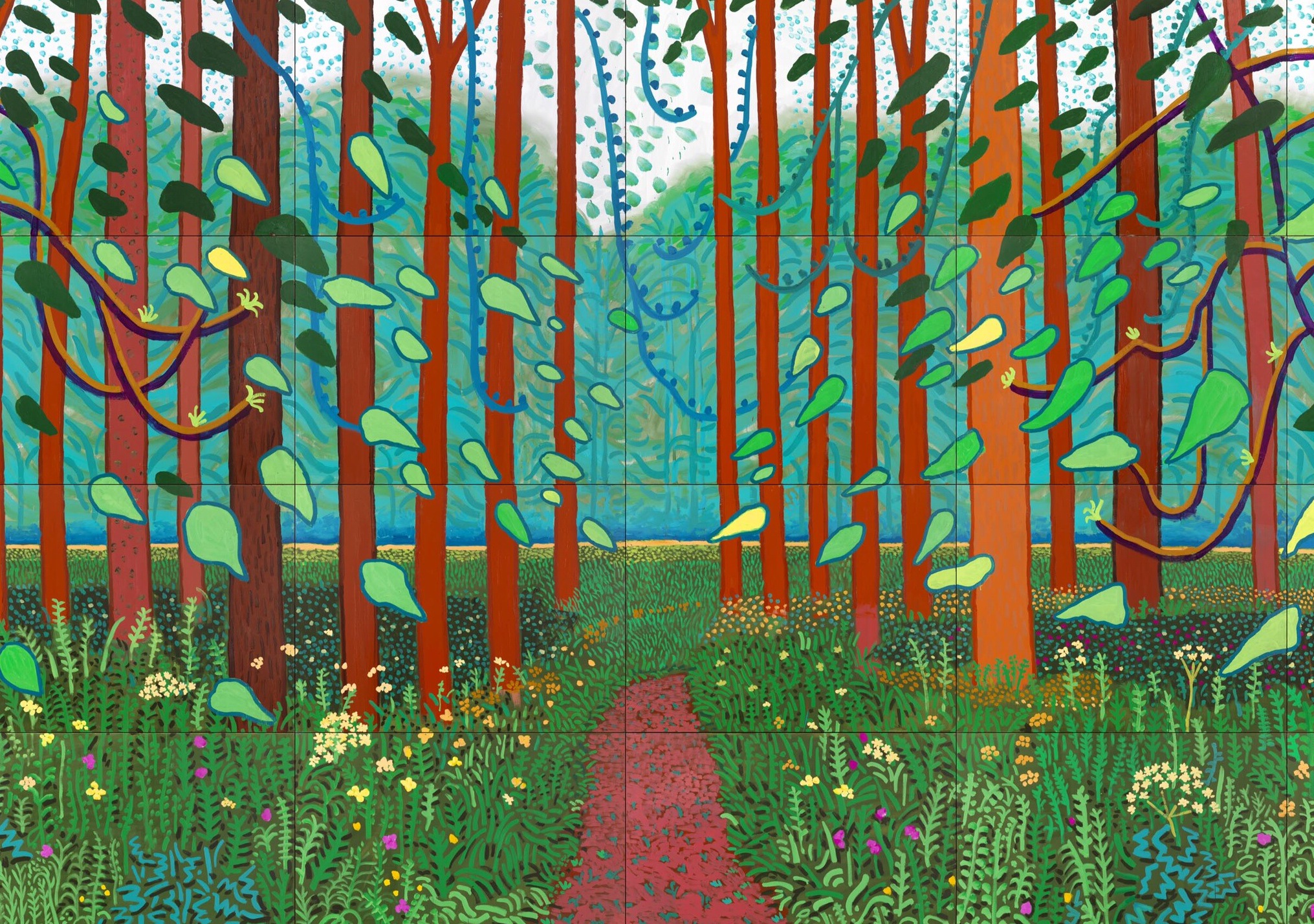
When this challenge came up I chose from the catalogue, the painting The Arrival of Spring in Woldgate Woods. I liked the vibrancy, energy and movement in the painting and those three elements are the inspiration for this quilt.

IMG_0456.JPG
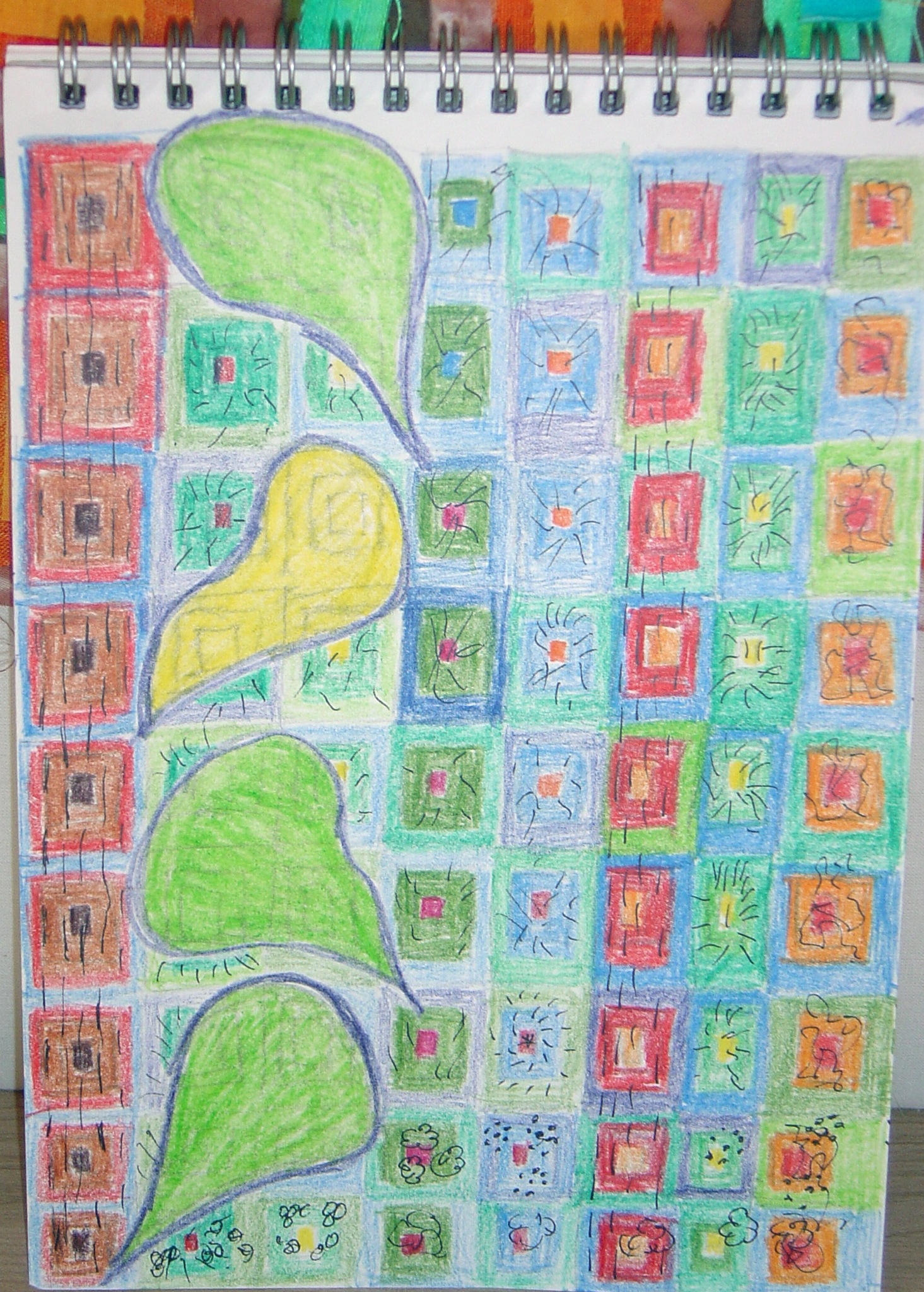
I like working with layered squares, and I like frayed edges. Initially, as can be seen in my sketch book page, the quilt was to have more colour, I was thinking about the colours of the tree trunks, and I tried lots and lots of different permutations, but wasn’t happy with the result, so settled for different shades of turquoise (Procion dyes) as the background, with a, light, dark, light, layering, and small amounts of brown/red, trying to make it POP, i.e. give it a bit of energy. In the painting the leaves falling from the trees are outlined in blue, and I am planning to have a strong vertical line of falling leaves, down one side of the quilt, with a balancing leaf on the right, possibly in sheer, layered fabrics, possibly Lutrador, and with a blue outline. In these photographs I am trying it out with translucent paper.

IMG_0458.JPG

IMG_0459.JPGAfter looking at one of my quilts Sandra Meech suggested to me that the strong vertical line could be a ‘signature’ of my work, but would need to be developed. It’s that development I am also trying to achieve in this quilt.”