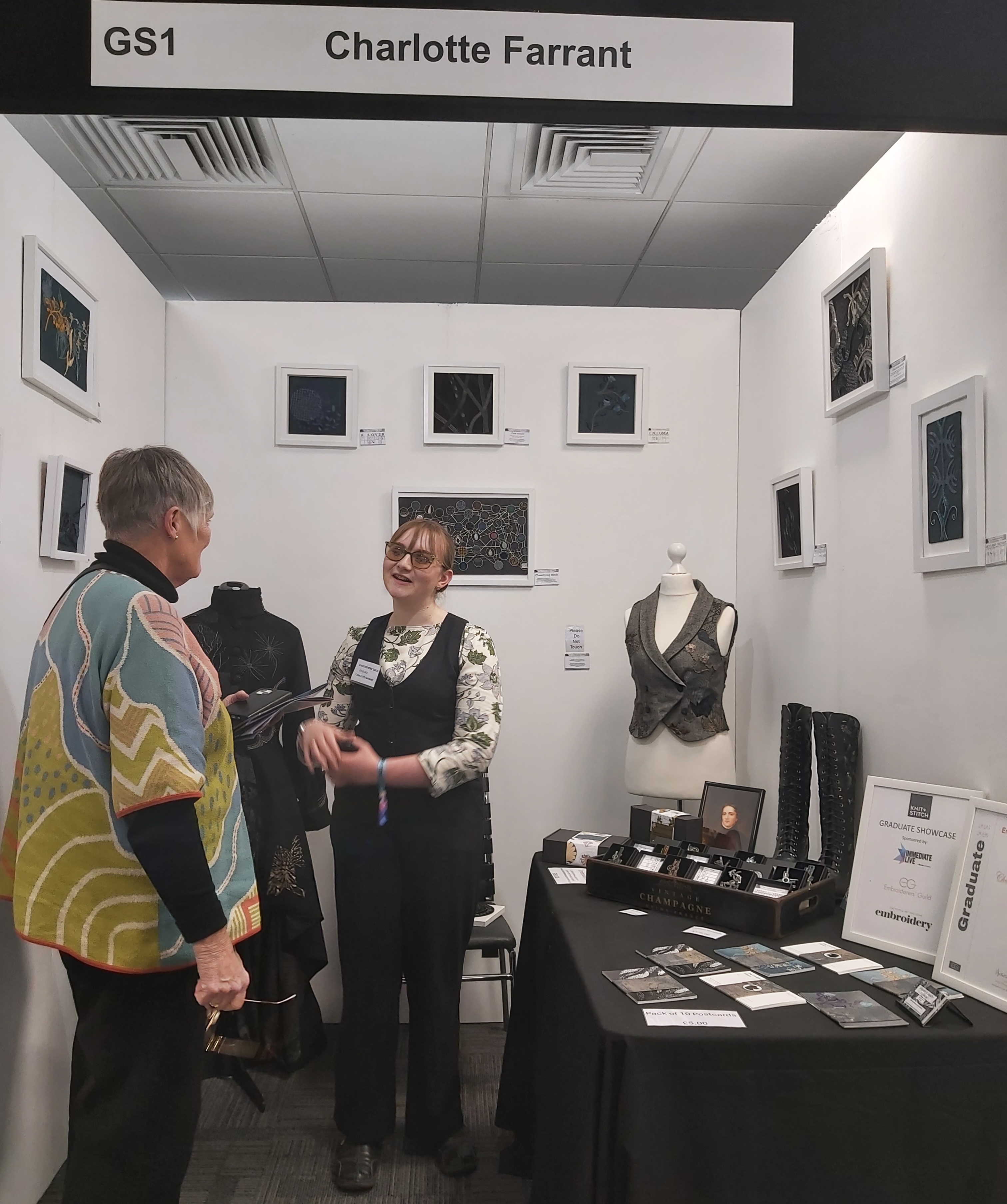
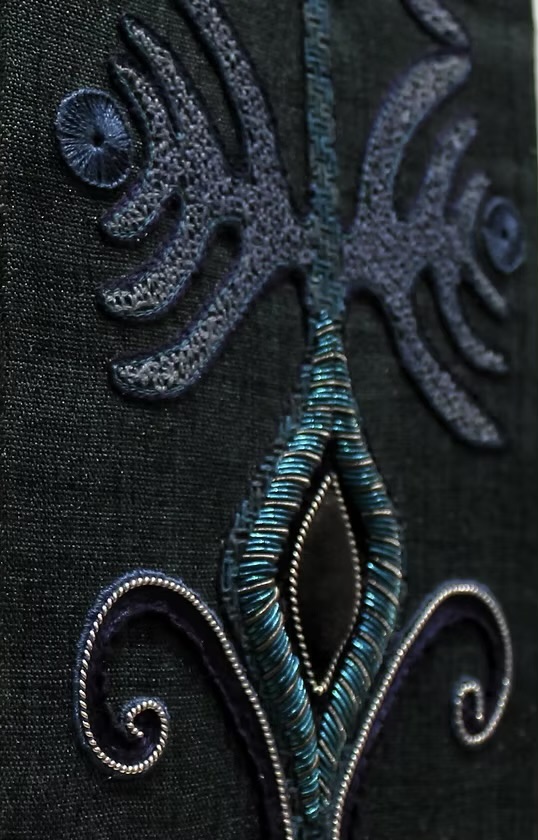
Charlottes “Codification of Stitch” is an innovative coded embroidery system developed by the textile artist herself and it is used to form hidden messages within the garments she designs, transforming textiles into wearable narratives. Specific embroidery stitches represent letters, forming hidden messages amongst the exquisite, decorative Goldwork, Blackwork, Whitework and Raised Work.
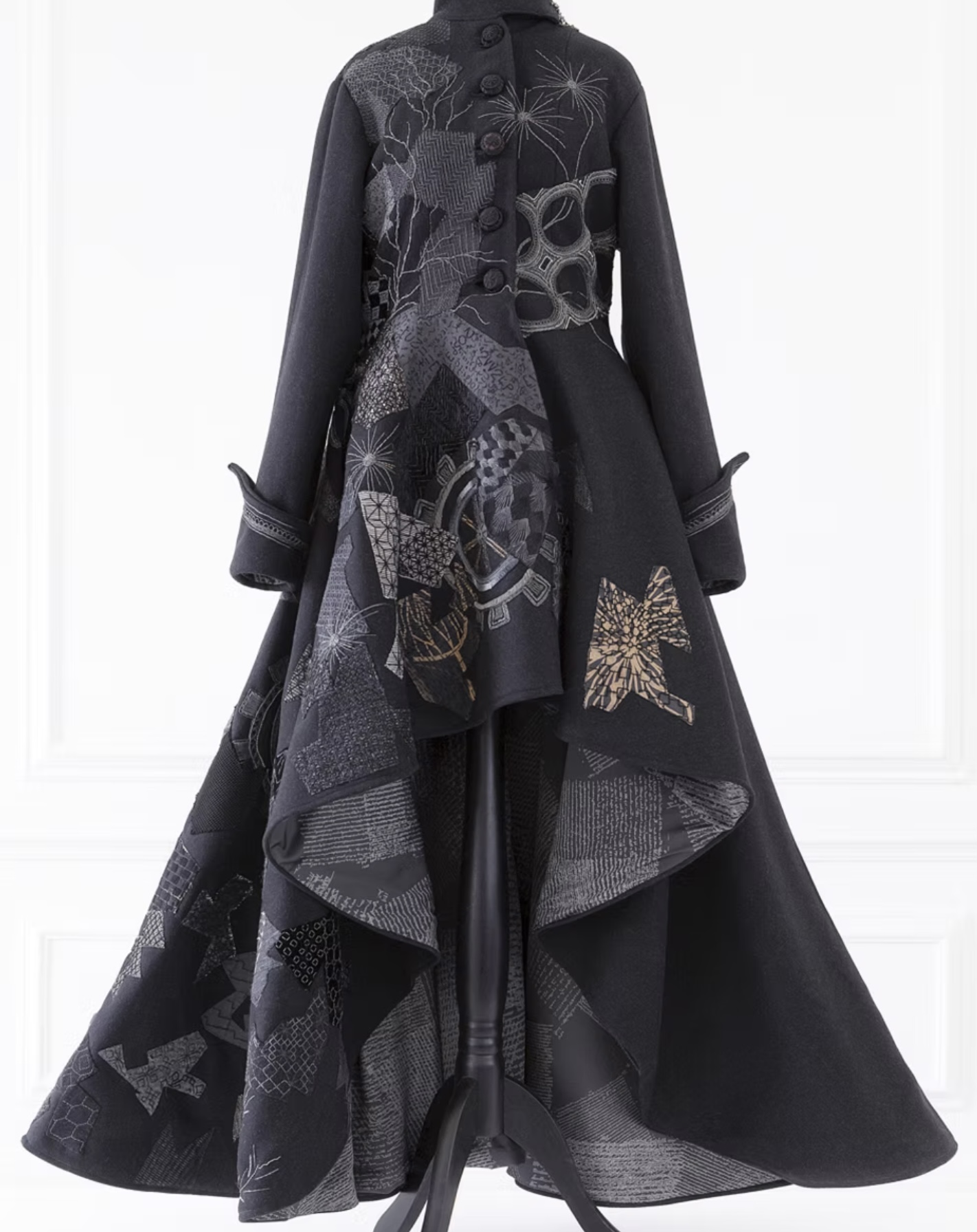
Ann Lister Coat
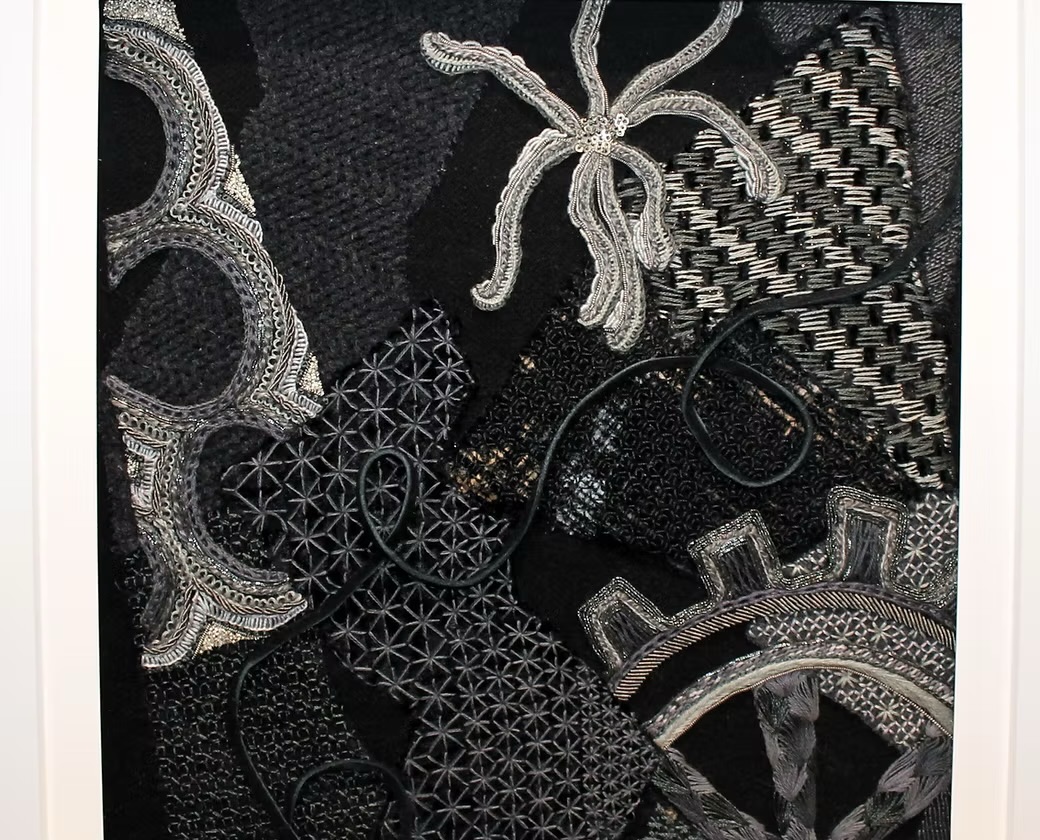
Sampler for coat
Another “Ann Lister” inspired piece on Charlottes stand was a waistcoat inspired by the diarists love of nature and the coded message on this garment reads “We are not alive if we’re not taking the odd risk now and again.”

Ann Lister Waistcoat
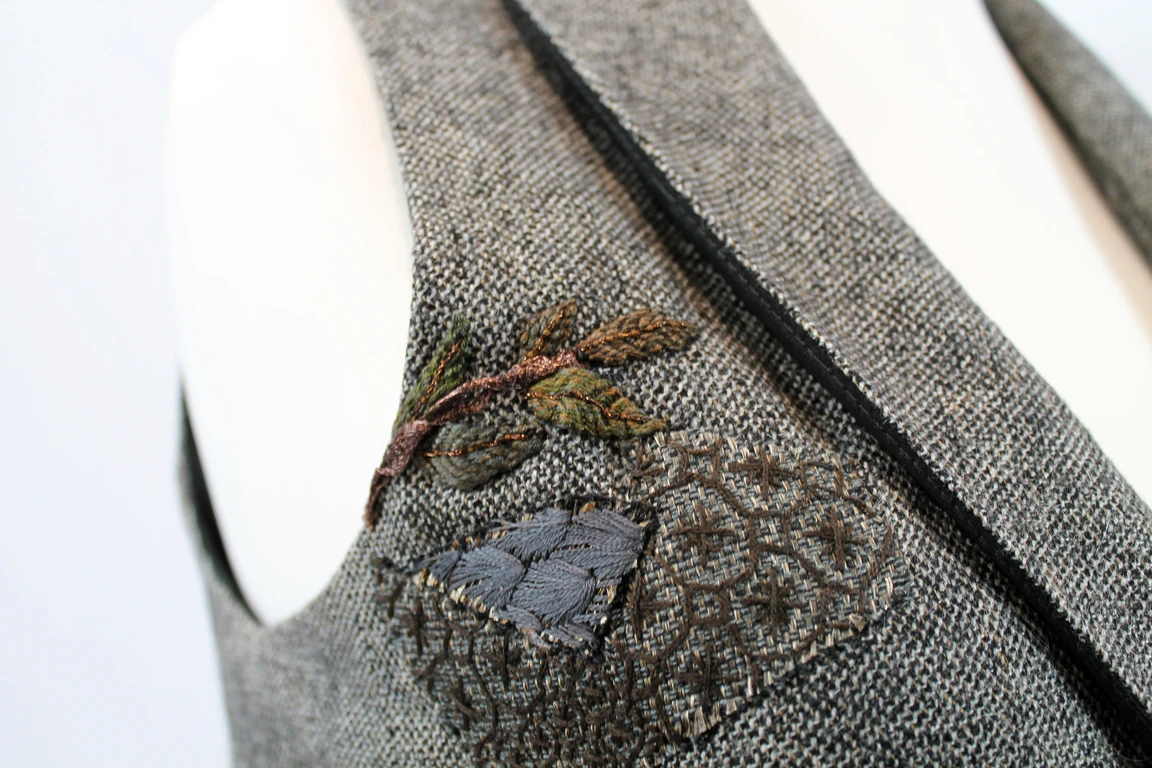
Detail of waistcoat
There was also a selection of beautiful intricately stitched, coded brooches on display, each with a printed label providing its deciphered message.

Check out Charlottes website charlottefarrantembroidery.com where you can see her portfolio of designs as well as her shop selling Coded embroidery kits, brooches and many other embroidered coded art works.


Throughout history textiles have been used not only for protection and comfort but also to communicate our personal values and identity. Long before the written word came in to use Ancient civilisations would use specific colours and symbols to convey their environment, spiritual believes and culture. In this way meaning could be woven, felted or stitched into rugs, blankets, clothing, etc. delivering visual messages that could be easily read by the people around them. Examples include the felted rugs created by ancient nomadic tribes which would embody powerful symbols across different cultures signifying the wish for good health, long life, prosperity, etc.

Examples of just a few of the Symbols used in Middle Eastern rug making.
On the other hand, hidden “coded” messages in textiles have been used for a very different, but very important role in history. While imprisoned Mary Queen of Scots embedded complex and personal symbols within her embroideries to express her frustrations, assert her claim to the English throne, and comment on her unjust captivity. This panel depicts a grapevine and a hand holding a pruning knife. It references Mary’s claim to the throne, suggesting the need to cut away the fruitless branch of the Tudor tree represented by the childless and ‘illegitimate’ Elizabeth. The point is driven home by the Latin motto ‘Virescit Vulnere Virtus’ (virtue flourishes by wounding). (source:vam.ac.uk)
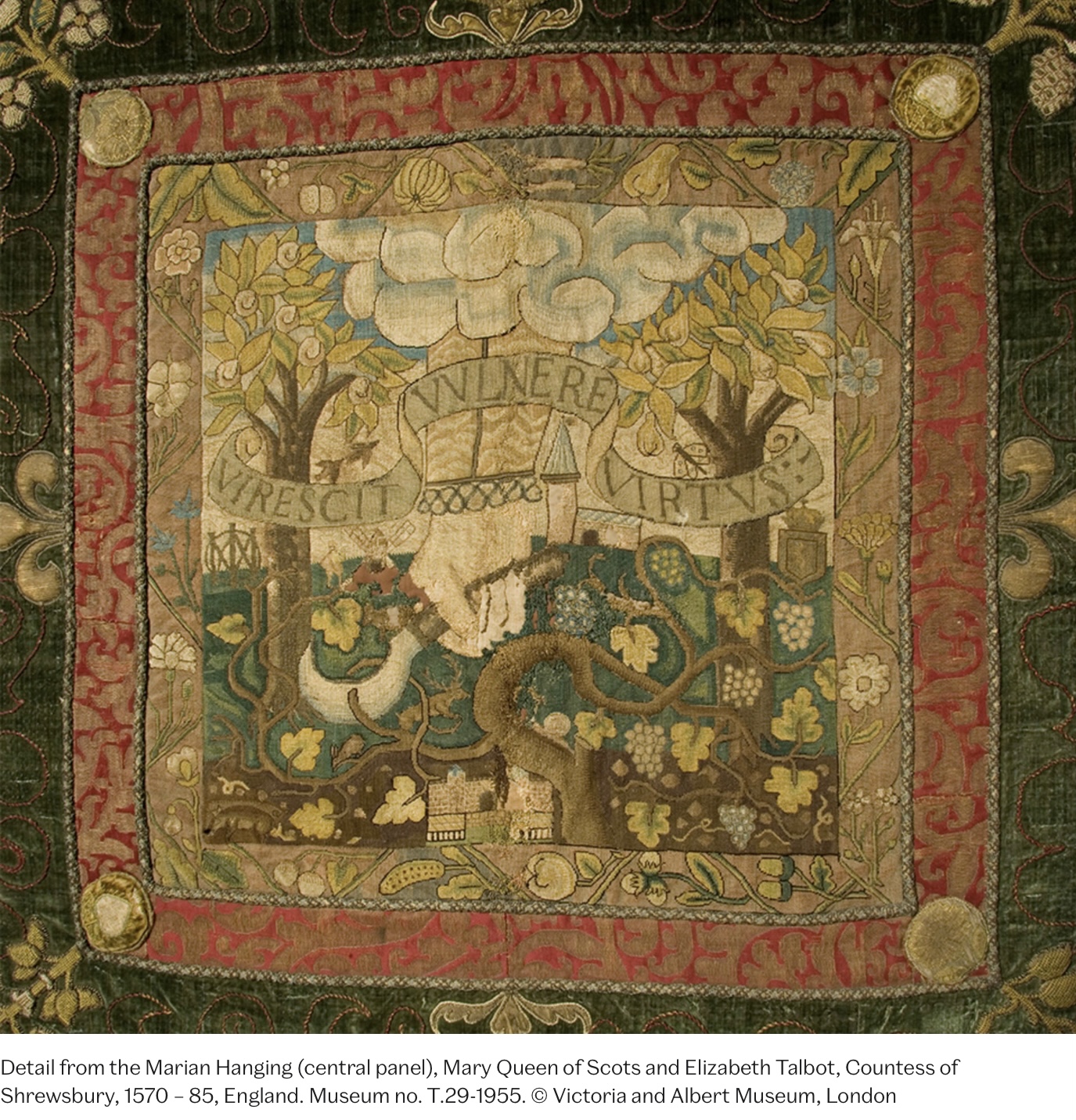
Embroidery also enabled Mary to communicate with her supporters by sending coded messages hidden in her needlework.
In the realm of espionage, traditional handicraft skills were to take on an even more covert dimension during the World Wars when prisoners, spies and resistance members used embroidery to pass on information under the noses of their enemies. After all, who would suspect that something as innocent as an embroidery or tapestry could offer any threat from the enemy? Morse code and binary code were easily represented using a combination of long and short stitches, or French knots and seed stitches, and these would go undetected when hidden amongst other decorative stitches. Other methods required the person receiving the work to “undo” the embroidery as messages were hidden in the padding of trapunto or concealed beneath a second layer of embroidery.
Knitting was another innocent looking but very useful craft when it came to espionage. Morse Code knitters employed single purl stitches for dots and sequences of three purl stitches for dashes. Their sequences translated into short and long coded signals. Some knitters used knots to conceal Morse code by tying specific configurations to represent dots and dashes, or varying the distances between their knots. These encoded messages could then be discreetly passed across enemy lines or integrated into knitted items such as hats and scarves to be decoded by the recipient. Written messages were also known to have been passed on, hidden in balls of wool!
This practise wasn’t exclusive to the allies. Using a system similar to Morse, German agents based in the UK also passed encoded messages using knotted yarn which was then knitted in to garments.
Although an extremely dangerous occupation it’s said that the practise of covert knitting became so prevalent during WWII, some countries actually banned the posting of knitting patterns aboard, fearing they may carry coded information to the enemy.
During times of war, a knitter was often more than just a creator of warm garments; they were also keen observers and messengers, their needles clicking away as they kept watch. (Source: Timoneillstudios.com)

Image Source: ww2wrecks.com
I will leave you with an embroidery created by one Major Alexis Casdagli. Alexis was captured and spent four years in a German POW camp where he passed the time in the innocent pursuit of cross stitch. He also set up a stitch school, teaching other POWs to embroider. Of the many embroideries he made this piece was so admired by his captors that they proudly hung it in the castle where he was being held and subsequently had it displayed in three other camps.
The prisoners must have found it very amusing that the guards had no idea of the defiant message hiding in the Morse dots and dashes stitched around the borders which read “God Save The King” and “Fxxx Hitler”. Fortunately it was never deciphered during those four years and so the embroidery, and the Major survived the war. He told his son on his return that the Red Cross saved his life but embroidery saved his sanity!
 Lincs In Stitches
That is certainly a very tempting rabbit hole to get into myself! Charlotte’s work is new to me but I will be having a good look at what she does and thank you for such an utterly fascinating post.
LikeLiked by 1 person
Oh yes, I can see this being right up your street Alex! Glad you found the post interesting.
LikeLiked by 1 person
Thank you for this fascinating information.
LikeLiked by 1 person
My pleasure Mariss, meeting Charlotte led me down a very interesting rabbit hole!
LikeLiked by 1 person